
Quick Answer: What Is a Bordeaux Wine Glass?
A Bordeaux wine glass is a tall, large-bowled stemmed glass designed for full-bodied red wines. Its generous bowl gives wine room to breathe, its gently tapered rim concentrates aromas, and its long stem keeps the wine cooler while you hold it.
The Bordeaux format works best with wines that have structure to match:
- Cabernet Sauvignon — the definitive pairing for this glass
- Merlot — rich, fruit-forward reds that benefit from aeration
- Classic Bordeaux blends — wines built on Cabernet Sauvignon, Merlot, and Cabernet Franc
- Petit Verdot and Malbec — structured varietals with firm tannins
- Other bold, tannic reds — including Montepulciano d'Abruzzo, Aglianico, and Tannat
If you'd rather not build a shelf of varietal-specific stemware, the Audacem Aequilibrium Wine Glass (from $42.99) is worth knowing. It’s a single hand-blown crystal glass with a pivoting base built to aerate structured reds without locking you into one shape.
Why the Shape of Your Wine Glass Matters
More than a vessel, wine glasses are a delivery system. The shape of a glass controls three things:
- how quickly the wine picks up oxygen
- how concentrated its aromas feel as they reach your nose
- where the liquid lands on your palate first
Change any of those variables, and the wine can taste different, even from the same bottle.
In 2015, a Japanese research team published a study in Analytical Chemistry that used a camera sensitive to ethanol vapor to photograph the air inside different wine glasses. The results showed that bowl shape directly influenced where aromatic compounds gathered near the rim. Different shapes delivered different concentrations of aroma and different tasting experiences from the exact same wine.
The Bordeaux glass supports bold, structured reds through purposeful design. Every part of its design has a job to do.
The Anatomy of a Bordeaux Wine Glass
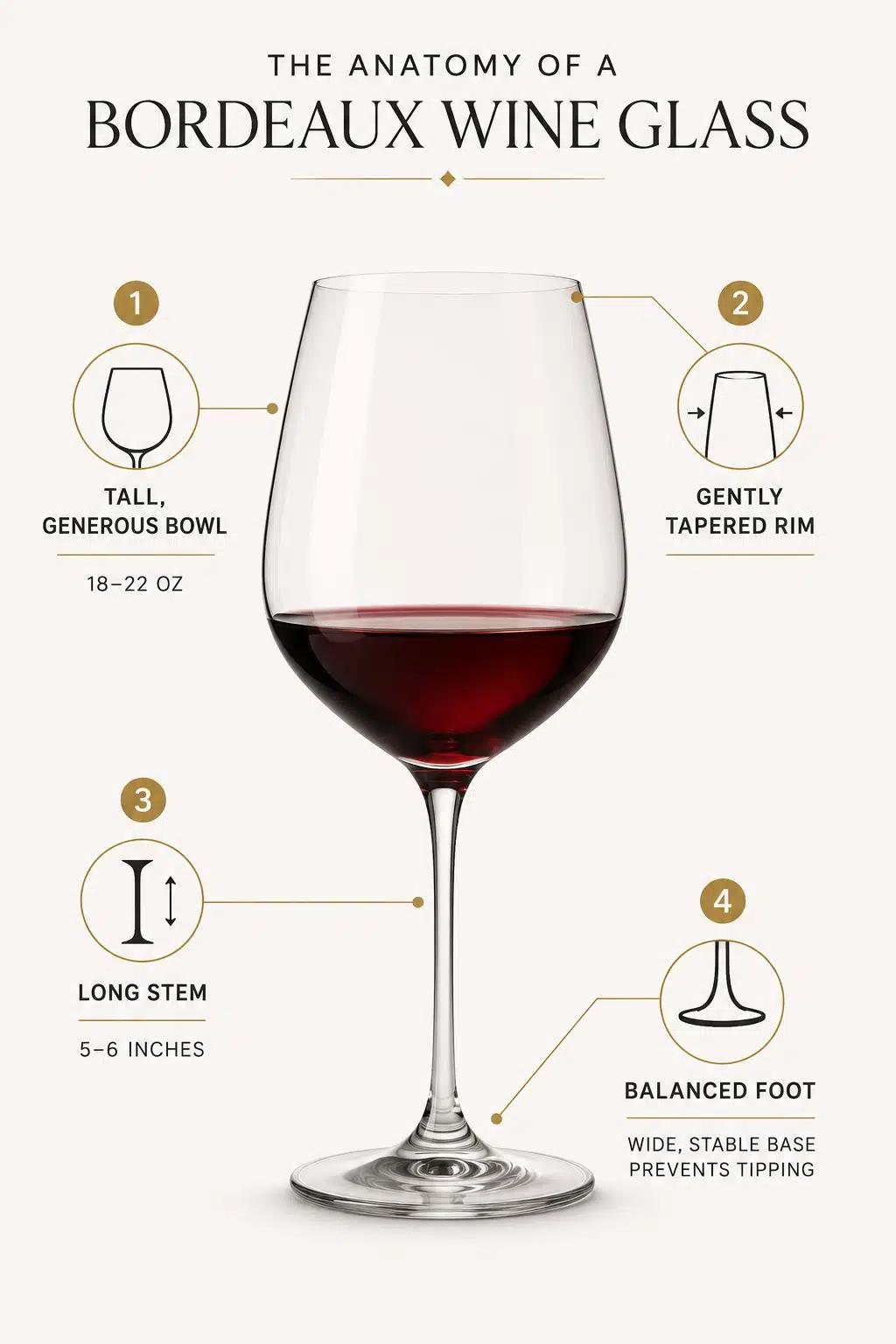
A proper Bordeaux wine glass has four defining characteristics:
- Tall, generous bowl. The bowl holds 18 to 22 ounces and stands taller than other red wine glasses. That volume gives structured wines room to breathe, allowing tannins to soften and fruit aromas to develop more fully.
- Gently tapered rim. The mouth of a Bordeaux-style glass is wide but not flared. It narrows slightly from the bowl's widest point toward the opening, which concentrates aromas without letting them dissipate too quickly.
- Long stem. The stem keeps your hand away from the bowl, so the wine stays at the right temperature longer. Most Bordeaux glasses have stems of at least five to six inches.
- Balanced foot. A wide, stable base prevents tipping, practical for a tall red wine glass that can feel top-heavy when empty.
Experience a Different Kind of Anatomy: The Aequilibrium
-
Red WineRegular price From $42.99 USDRegular priceUnit price per
$86.00 USDSale price From $42.99 USDSale -
Spirits & LiquorsRegular price From $39.99 USDRegular priceUnit price per
$80.00 USDSale price From $39.99 USDSale -
UniversalRegular price From $42.99 USDRegular priceUnit price per
$86.00 USDSale price From $42.99 USDSale -
Spirits & Red WineRegular price From $110.00 USDRegular priceUnit price per


Very good quality, and a surprise when guests see me pouring wine in the moving glass.
What Wines Work Best in a Bordeaux Glass?
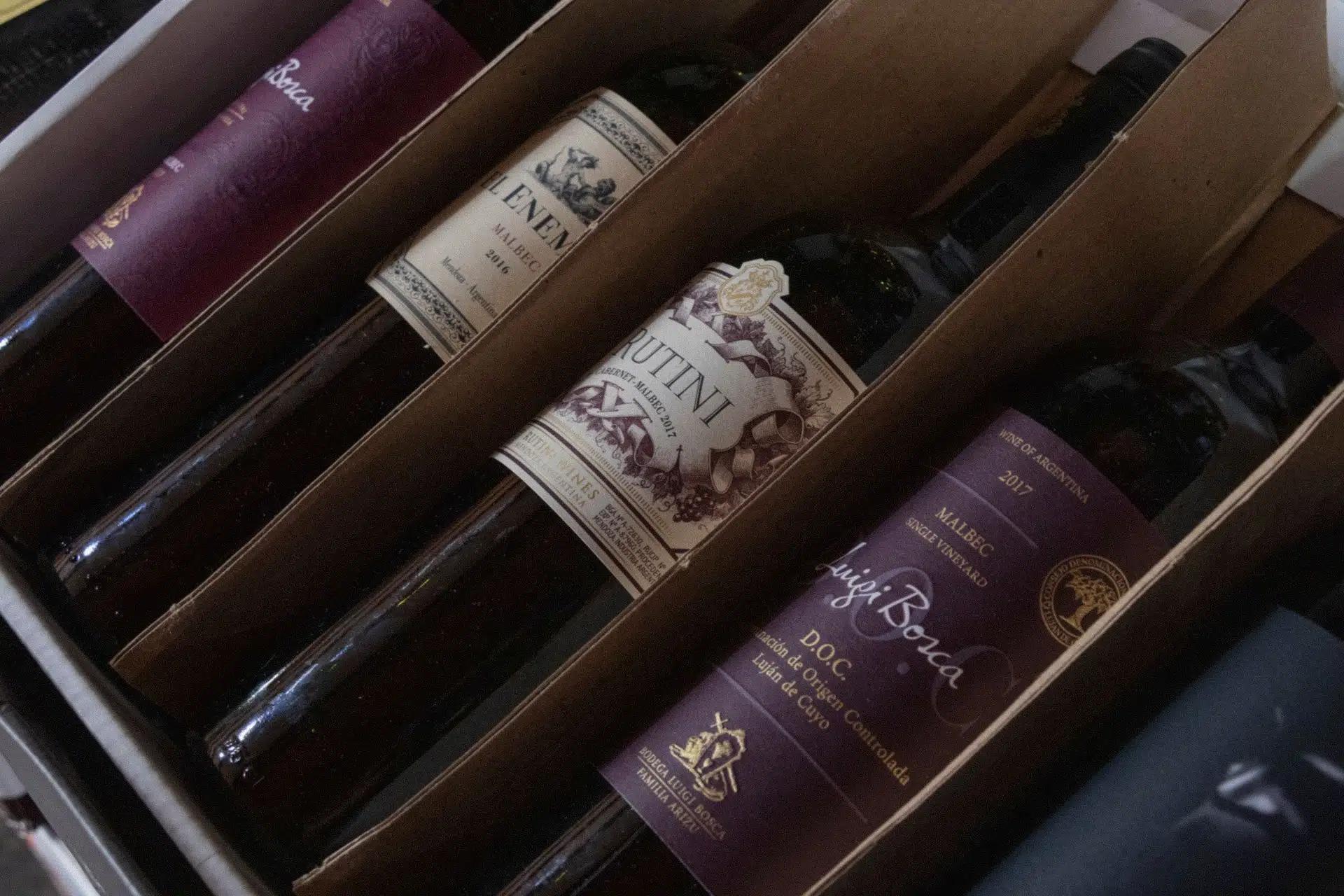
The Bordeaux glass was originally designed for the wines of Bordeaux, France (blends built primarily on Cabernet Sauvignon and Merlot). But its design suits any full-bodied, structured red wine with firm tannins.
Cabernet Sauvignon
Cabernet Sauvignon is the definitive match for a Bordeaux-style glass. It is a wine known for dark fruit, firm tannins, and notable structure.
The tall bowl gives it the headspace to breathe, which helps tannins soften over time. The tapered rim pushes blackcurrant, plum, and cedar aromas toward the nose. Serve it in this glass, and the wine will feel more polished and generous.
Merlot
Merlot is softer and more fruit-forward than Cabernet, but it still benefits from the Bordeaux format.
The bowl's wide surface area encourages the wine to open up, releasing red fruit and cocoa notes that can feel muted in a smaller glass. Young, tight Merlot especially responds well to the extra room.
Classic Bordeaux Blends
Great Bordeaux, such as wines from Pauillac, Margaux, and Saint-Émilion, is almost always a blend of Cabernet Sauvignon, Merlot, Cabernet Franc, Petit Verdot, and sometimes Malbec.
These wines are complex and layered. The Bordeaux wine glass, with its generous volume, lets those layers coexist without crowding each other.
Other Bold Reds Worth Trying
The Bordeaux glass works well with any full-bodied, tannic red wine, not just French ones. Try it with:
- Malbec (especially from Mendoza, Argentina)
- Montepulciano d'Abruzzo (Italy's underrated, grippy bruiser)
- Aglianico (structured and earthy, from southern Italy)
- Tannat (bold and powerful, from Uruguay and southwestern France)
- Cabernet Franc (particularly from the Loire Valley or Napa)
One rule of thumb: If a red wine is light and aromatic (a Pinot Noir, a young Gamay, or a pale Grenache), the Bordeaux glass will overpower it. Save those for a Burgundy-style glass.
Beyond Bordeaux: The Aequilibrium — A Versatile Glass Option
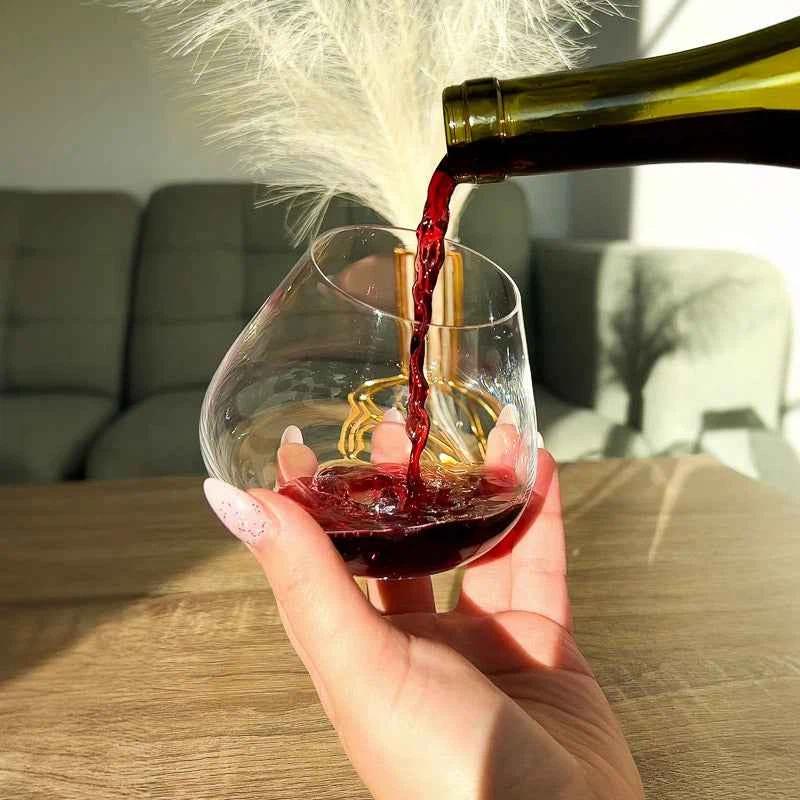
A dedicated Bordeaux glass is ideal for Cabernet Sauvignon, Merlot, and other structured reds. However, some wine drinkers prefer versatile glassware that works across different styles.
The Audacem Aequilibrium Wine Glass offers a solution.
The hand-blown lead-free crystal construction and pivoting design focus on balance, aroma, and everyday usability.
For collectors who prefer fewer, well-designed pieces, the Aequilibrium provides a refined alternative.
- 30-day warranty
- Free shipping over $65
- 2,200+ verified reviews
One Glass. Every Bottle You Open.
Hand-blown lead-free crystal with a pivoting base built to aerate structured reds — no varietal-specific set required.
Shop the Aequilibrium Wine GlassThe Best Bordeaux Wine Glasses to Buy
The market for Bordeaux glasses ranges from sub-$20 everyday options to hand-blown crystal that costs more per glass than a decent bottle.
To select the best Bordeaux wine glasses, we considered key factors that influence both performance and value: bowl shape, rim quality, material, durability, and overall craftsmanship. Here are four of the most reliable choices at different price points.
*Prices indicated are estimates and may change over time.
1. Riedel VINUM Bordeaux/Cabernet Sauvignon Glass
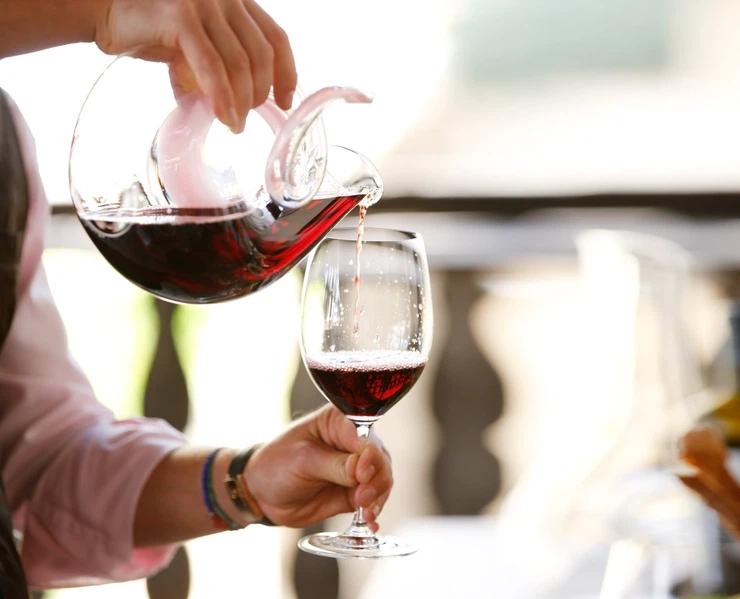
Riedel is the brand that made varietal-specific stemware mainstream. The VINUM Bordeaux glass remains one of their most enduring designs. It is machine-made from lead-free crystal, which keeps the price sensible without sacrificing clarity.
The bowl is tall and well-proportioned. Meanwhile, the rim is thin enough to feel refined.
Best for: Cabernet Sauvignon, Bordeaux blends, and everyday use
Material: Lead-free crystal
Dishwasher safe: Yes
Approximate price: $40–$65 per set of two
2. Schott Zwiesel Pure Cabernet Glass
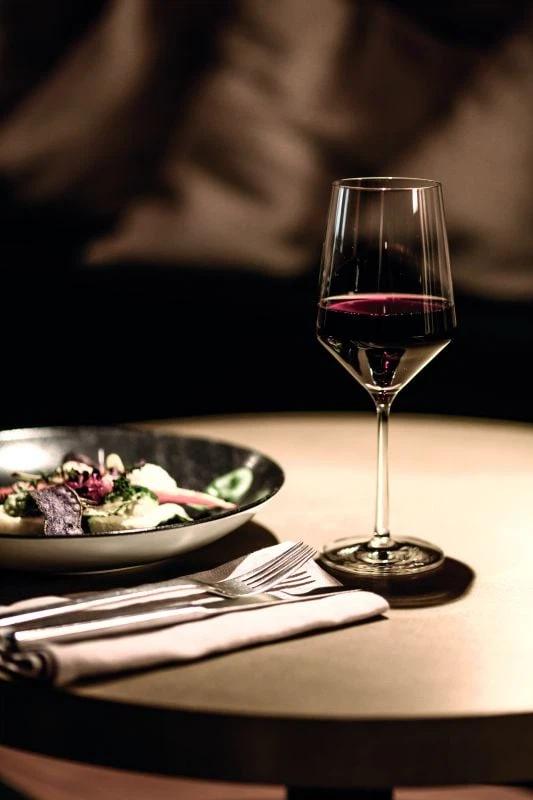
Schott Zwiesel's Tritan crystal is a German-engineered material. It is significantly more break-resistant than standard crystal.
The Pure Cabernet glass has a tall, wide bowl with sharp modern angles and a clean contemporary look. It runs heavier than some competitors, but that weight comes with durability.
Best for: Cabernet Sauvignon, Merlot, and high-traffic households
Material: Tritan crystal (break-resistant)
Dishwasher safe: Yes
Approximate price: $17–$36 per glass
3. Zalto Denk'Art Bordeaux Glass
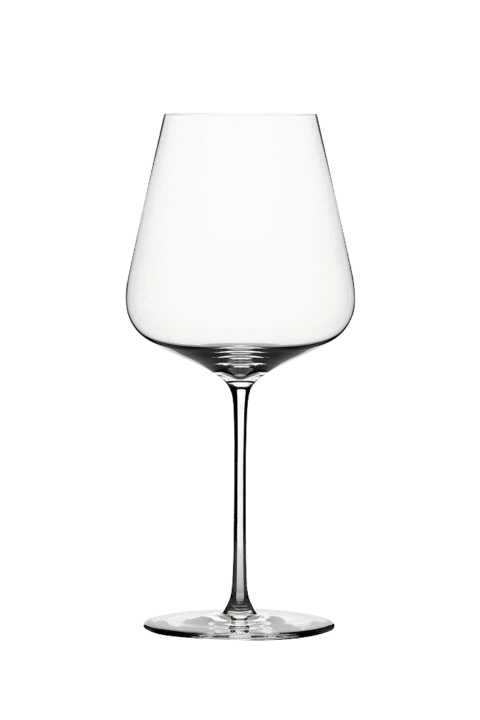
Zalto is a cult favorite among sommeliers and serious collectors. The Bordeaux wine glass in this line is hand-blown from extremely thin lead-free crystal, making it almost weightless in the hand. The rim is paper-thin, and some drinkers find that detail alone transforms the experience.
It is fragile, requires care, and is expensive. For those who want the best possible glass for a great Bordeaux, it remains one of the most respected options in its category.
Best for: Premium Cabernet Sauvignon, aged Bordeaux blends, and special occasions
Material: Hand-blown lead-free crystal
Dishwasher safe: Yes (with care)
Approximate price: $65–$85 per glass
4. Spiegelau Authentis Cabernet Glass
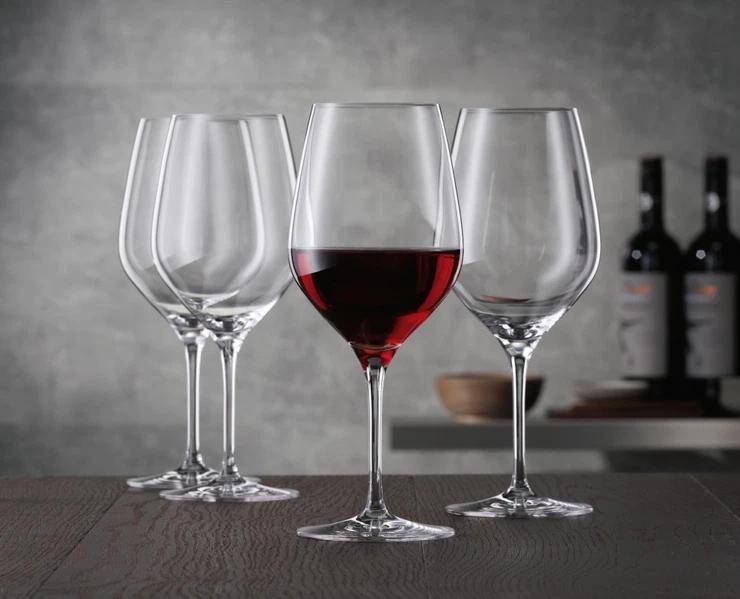
Spiegelau offers a reliable entry point into performance crystal. The Authentis Cabernet is hand-blown lead-free crystal at an accessible price.
It is not as refined as the Zalto or as sturdy as the Schott Zwiesel, but it effectively balances quality and practicality. It is a solid choice for wine drinkers who want a meaningful step up from standard glassware.
Best for: Everyday Cabernet Sauvignon, Merlot, and regular wine nights
Material: Handblown lead-free crystal
Dishwasher safe: Yes
Approximate price: $15–$25 per glass
Also read: Best Red Wine Glasses, Tested and Reviewed
Bordeaux vs. Burgundy Wine Glass: The Essential Comparison
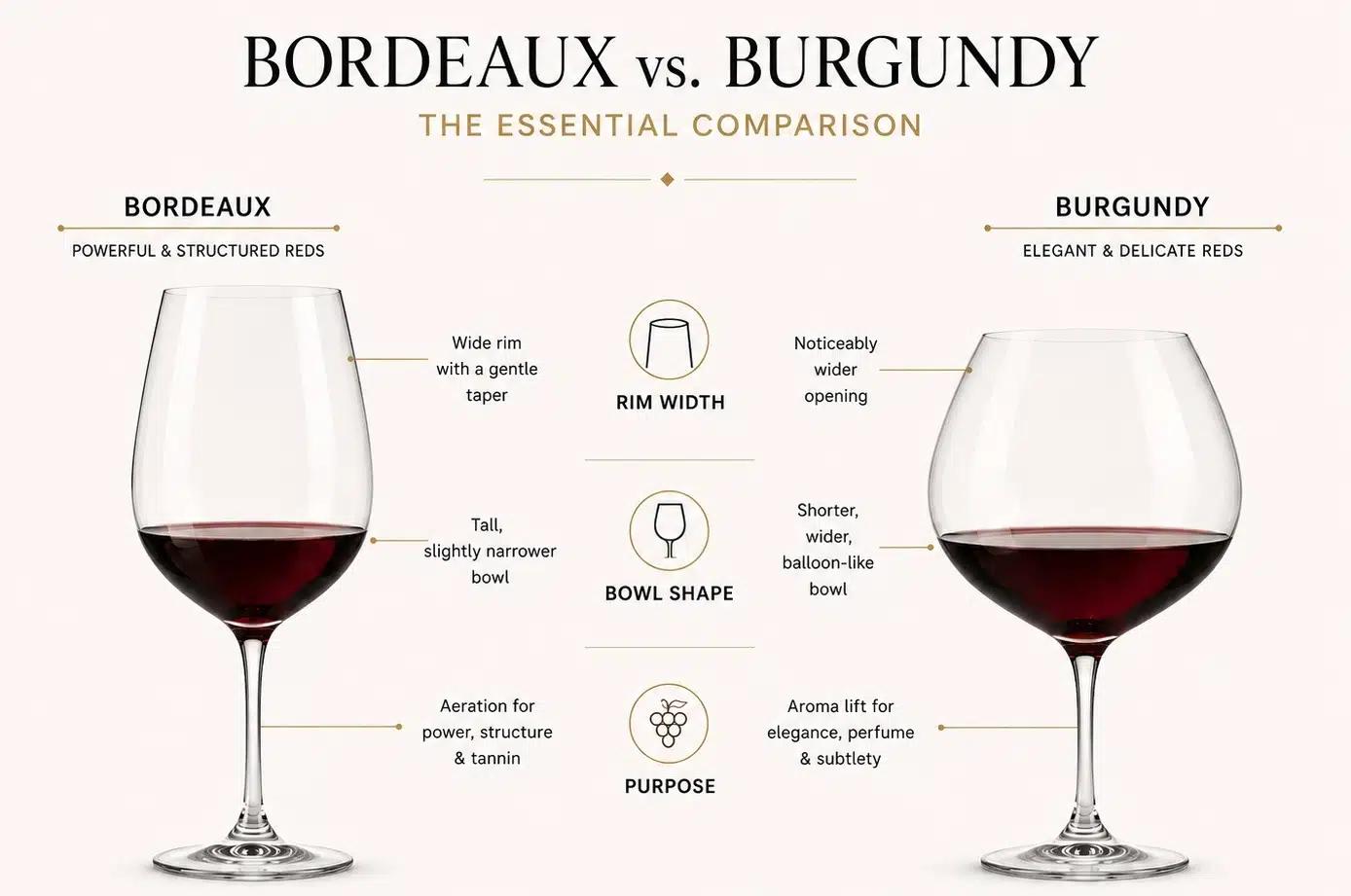
The Bordeaux and Burgundy wine glasses are the two most important glass shapes for red wine. They are often sold as a pair because they are complementary tools, each built for a different kind of red.
Here is how they differ:
- Bowl shape: A Bordeaux-style glass has a tall, slightly narrower bowl. A Burgundy glass (also called a Bourgogne glass) has a shorter, wider, balloon-like bowl. This shape creates a larger surface area for delicate aromas to gather and lift.
- Rim width: The Bordeaux glass has a wide but gently tapered rim. The Burgundy glass tends to have a noticeably wider opening that delivers wine broadly across the palate and allows very fine aromas to drift upward.
- Purpose: The Bordeaux glass suits powerful, structured, tannic reds that benefit from aeration and focused delivery. The Burgundy glass suits elegant, delicate reds like Pinot Noir or Gamay. It emphasizes perfume and subtle aromas over structure.
The two glasses are rarely interchangeable. Drink a Pinot Noir from a Bordeaux glass, and its delicate aromas get lost in the large bowl. Drink a Cabernet Sauvignon from a Burgundy glass, and the wide rim can make the wine feel scattered and unfocused.
Also read: Wine Glass Types: A Complete Guide to Every Style
What to Look for When Buying Bordeaux Wine Glasses
With so many options on the market, choosing the right Bordeaux wine glass comes down to a handful of practical factors.
Crystal vs. Regular Glass
Crystal is the preferred material for quality wine glasses. It is thinner, clearer, and can form finer walls and rims than standard soda-lime glass.
A thinner rim feels less intrusive between the wine and your palate. Crystal also shows a wine's color more vividly, which is a small but real part of the experience.
Standard glass is heavier and tends to produce thicker rims.
For a glass category built around aroma and flavor delivery, the material choice is crucial. The right glass allows you to experience the wine as the winemaker intended.
Also read: Crystal vs Glass: What’s the Difference?
Rim Thickness
A thick rim pulls your attention away from the wine. A thin, fire-polished rim disappears against your lip.
Look for glasses described as having a "seamless" or "thin" rim. The difference is subtle in description and noticeable in practice.
Stem Length and Balance
A Bordeaux wine glass should feel balanced when held by the stem. Stems of five to six inches give you enough distance to keep your hand's warmth away from the bowl.
Before buying, check that the glass does not feel top-heavy when empty. A poorly balanced glass can make swirling awkward and increase the risk of spills.
Capacity
Most Bordeaux wine glasses hold between 18 and 22 ounces. You will usually pour four to five ounces of wine, leaving generous headspace above the surface for aromas to gather.
Avoid glasses smaller than 16 ounces for this style. They undercut the purpose of the design.
Dishwasher Safety
Hand-blown crystal, especially the thinnest glasses, is often not dishwasher-safe. If you plan to entertain regularly or want low-maintenance stemware, prioritize glasses rated for machine washing.
Schott Zwiesel's Tritan crystal is specifically engineered for the dishwasher, making it a reliable choice.
How to Care for Your Bordeaux Wine Glass
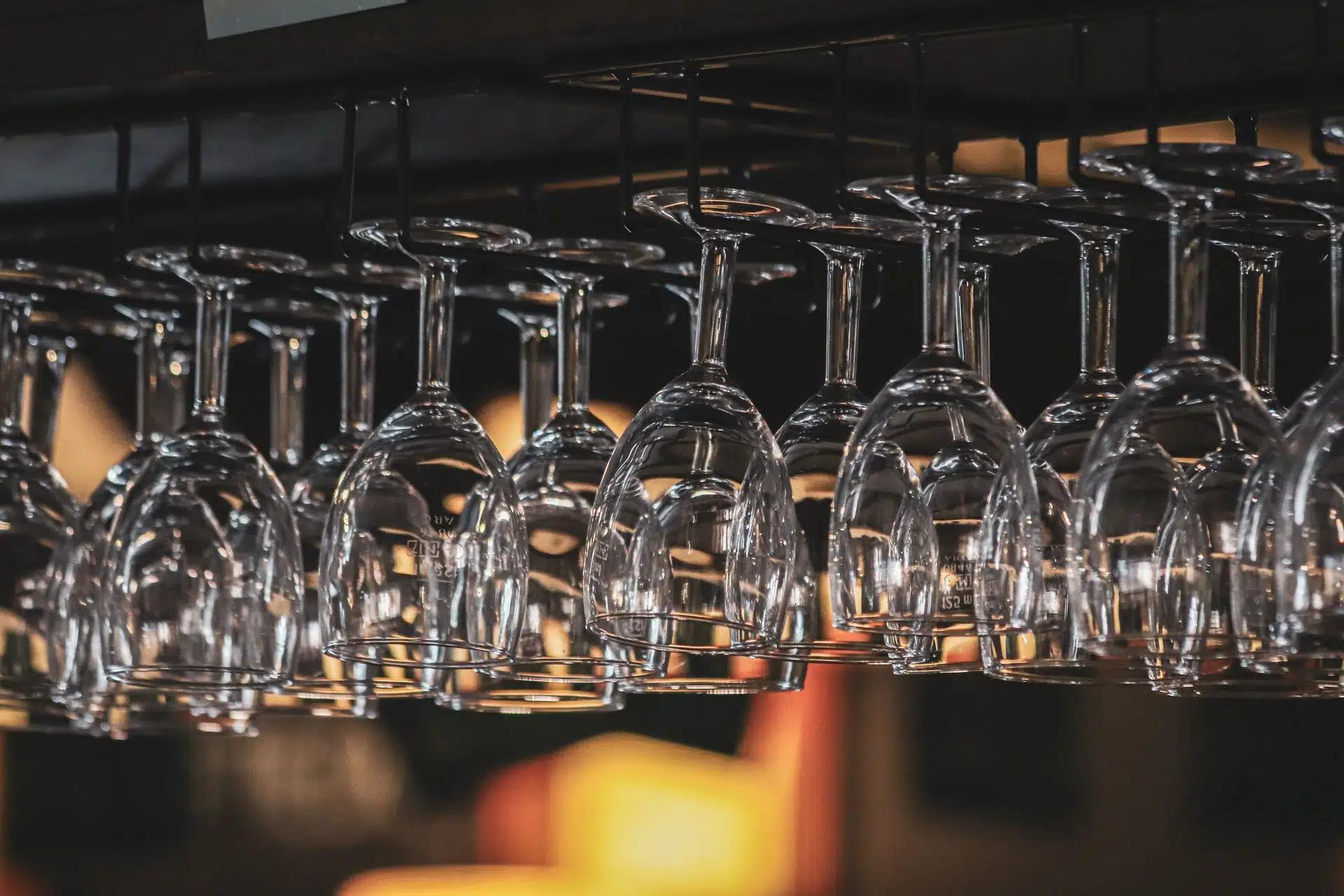
The Bordeaux glass is the tallest glass in most people's collections. That height creates a few care challenges worth knowing about before you invest in a good set.
Washing
For dishwasher-safe crystal, the machine is often safer than hand-washing. Hand-washing tall glasses in a crowded sink risks knocking them against other items, chipping the rim, or torquing the stem at the base.
If you hand-wash, use warm water, a soft cloth, and a small amount of mild dish soap. Avoid sudden temperature changes. Running a warm glass directly under cold water stresses the crystal.
Drying
Let Bordeaux glasses air-dry upside-down on a proper rack. Alternatively, dry them immediately with a lint-free linen cloth to prevent water spots.
Avoid leaving them rim-down on rough surfaces for extended periods. Doing so can stress the thin glass of finer stems.
Storage
Store Bordeaux glasses upright unless you have a rack designed for inverted hanging. Storing rim-down on a rough surface risks chips and cracks. A hanging rack by the stem is a clean solution when cabinet space is not enough.
Polishing Before Service
Before setting the table, hold each glass over a bowl of hot water until the steam warms the inside, then polish with a clean, lint-free cloth. It removes water spots and fingerprints and gives the crystal a clear, bright appearance that makes the first pour look as good as it tastes.
Final Thoughts: Getting the Glass Right
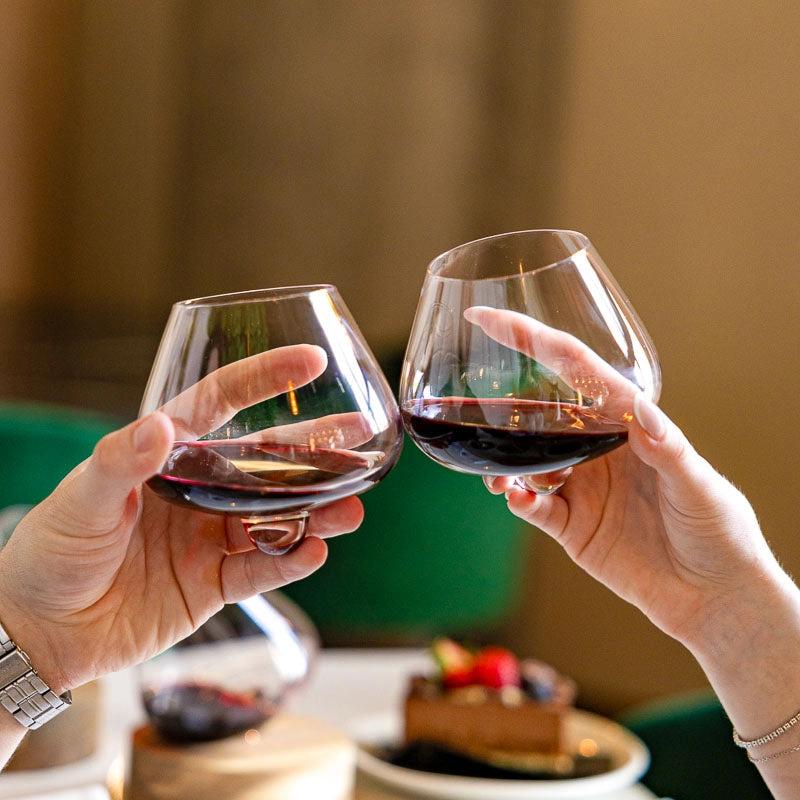
The Bordeaux wine glass’s tall bowl and tapered rim change how a structured red opens up in the glass. If Cabernet Sauvignon or a classic Bordeaux blend is a regular part of your evenings, a dedicated glass earns its place on the shelf.
But not everyone wants a cabinet organized by varietal, and not every wine night calls for a specific bowl. Sometimes, the better fit is a single glass built to do the work differently.
That's the idea behind the Aequilibrium Wine Glass: hand-blown crystal with a pivoting base designed to keep the wine in motion, aerating structured reds without locking you into one shape.
Whichever direction you choose—dedicated Bordeaux stemware or something more versatile—the goal is the same. Let the glass do its job, so the wine can do the rest.
Frequently Asked Questions
What is a Bordeaux wine glass used for?
A Bordeaux wine glass caters to full-bodied red wines, particularly Cabernet Sauvignon, Merlot, and classic Bordeaux blends. Its tall bowl and generous volume give these wines room to breathe, which softens tannins and amplifies fruit and oak aromas over time.
Can I use a Bordeaux glass for other wines?
You can, though it is not ideal for everything. Light-bodied reds like Pinot Noir work better in a Burgundy glass, which has a wider, rounder bowl. White wines are better served in smaller glasses that preserve temperature and concentrate delicate aromas. That said, a Bordeaux wine glass works fine in a pinch for most full-bodied whites like oaked Chardonnay.
What is the difference between a Bordeaux glass and a standard red wine glass?
A Bordeaux glass is taller and holds more volume than a standard red wine glass (around 18 to 22 ounces versus 12 to 16). It is specifically designed for wines with high tannin and alcohol, providing more headspace for ethanol to disperse and more surface area for aeration.
Do more expensive wine glasses make wine taste better?
Yes, to a point. Thinner rims, well-proportioned bowls, and quality crystal do improve the drinking experience by delivering aromas more precisely and feeling less intrusive. That said, there is a point of diminishing returns. A quality $20-per-glass crystal option will outperform basic mass-market glassware. But the jump from $40 to $200 per glass is harder to justify for casual drinking.
Is a Bordeaux wine glass a good gift?
It is one of the more practical and appreciated gifts for wine drinkers. Unlike consumables used only once, a quality wine glass becomes part of someone's lifestyle. Premium crystal glassware tends to leave a lasting impression. It suits birthdays, housewarmings, client gifts, and any occasion where you want to give something both beautiful and useful.
How should I hold a Bordeaux wine glass?
Hold a Bordeaux wine glass always by the stem, not the bowl. Holding the bowl transfers heat from your hand to the wine, which changes the temperature and affects the aroma. Pinch the stem between your thumb, index, and middle fingers for a stable grip.
Can I use a Bordeaux glass for spirits?
Some people do, and it can work well for aged spirits like Cognac or a full-bodied Bourbon, where aeration and aroma concentration are welcome. For most spirits, though, a purpose-built spirit glass or a universal glass is a cleaner choice. The Audacem Aequilibrium Collection offers both options, with a distinctive design that delivers both liquids beautifully.
Shop the Aequilibrium Glass Collection
-
Red WineRegular price From $42.99 USDRegular priceUnit price per
$86.00 USDSale price From $42.99 USDSale -
Spirits & LiquorsRegular price From $39.99 USDRegular priceUnit price per
$80.00 USDSale price From $39.99 USDSale -
UniversalRegular price From $42.99 USDRegular priceUnit price per
$86.00 USDSale price From $42.99 USDSale -
Spirits & Red WineRegular price From $110.00 USDRegular priceUnit price per