
At a Glance: Types of Wine Glasses
The right wine glass type depends on the wine you're serving. Here's a quick breakdown of the most common styles and what they're best for:
- Bordeaux Glass — Tall, large bowl, best for Cabernet Sauvignon, Merlot, and full-bodied reds.
- Burgundy Glass —Wide, balloon bowl, best for Pinot Noir and aromatic reds.
- Chardonnay Glass — Medium bowl, best for full-bodied whites and oaked Chardonnay.
- Sauvignon Blanc Glass — Narrow, smaller bowl, best for crisp, aromatic whites like Sauvignon Blanc and Riesling.
- Champagne Flute — Tall, narrow, preserves bubbles in sparkling wine.
- Champagne Tulip — Slightly wider than a flute, balances bubble retention with aroma expression.
- Rosé Glass — Slender, tapered, highlights fresh fruit aromas in dry rosé.
- Universal Glass —Medium bowl, gentle taper, works well across most red and white wines.
- Fortified Wine Glass — Small, tapered, designed for Port, Sherry, and dessert wines.
If you only own two styles, a universal red and a universal white will cover most occasions. The sections below explain how each glass type works and why the shape matters.
Why Wine Glass Shape Matters When Drinking
Most of what we call taste is actually smell. When you bring a glass to your nose, the bowl shape controls how aromas collect and travel upward. A wider bowl increases the wine's surface area. This helps volatile aroma compounds lift out of the liquid. A narrower rim concentrates those aromas as they reach your nose.
The rim diameter also affects where the wine lands on your palate. A wider opening delivers wine broadly across the tongue. This can make fuller wines feel generous and round. A narrower opening focuses the flow, which helps aromatic whites or structured reds feel more precise.
The Three Parts of a Wine Glass
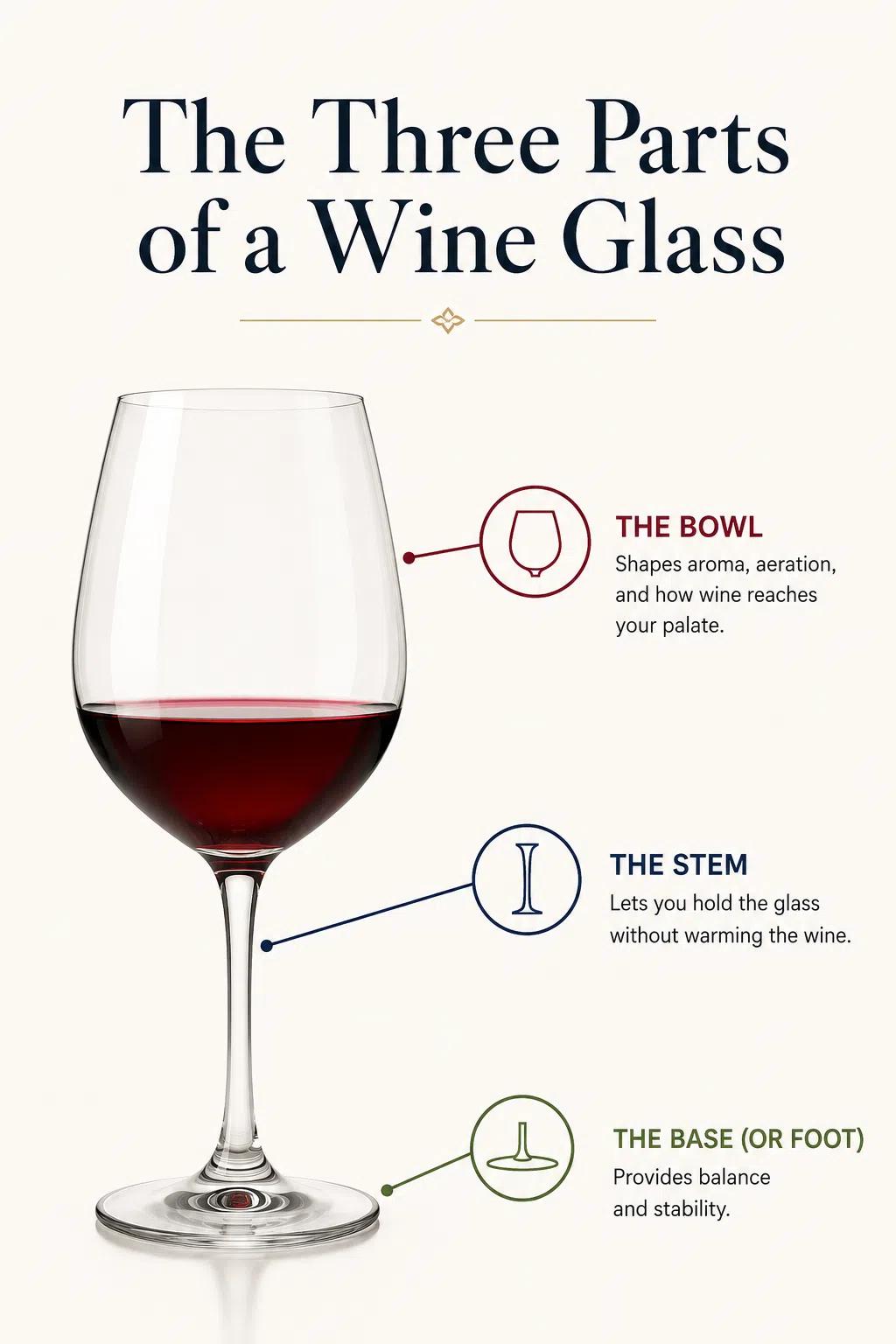
Every wine glass has three components. Each one plays a critical role in the drinking experience.
- The Base (or Foot). Keeps the glass stable on the table.
- The Stem. Gives you something to hold without warming the bowl. This matters most for white and sparkling wines served cold.
- The Bowl. The working part of the glass. Its size, shape, and rim diameter determine how the wine smells, how it aerates, and how it lands on your palate.
How Much To Pour
Pour only up to the widest point of the bowl. That gives the wine enough surface area to breathe and enough headspace to swirl without spilling.
Swirling is not just for show. The movement helps aroma compounds lift out of the wine and reach your nose more effectively.
Red Wine Glass Types
Red wines call for larger bowls. More surface area means more oxygen contact, which helps tannins soften and aromas open up. The differences between red glass types come down to how much air the wine gets and how the rim shapes the sip.
Bordeaux Glass
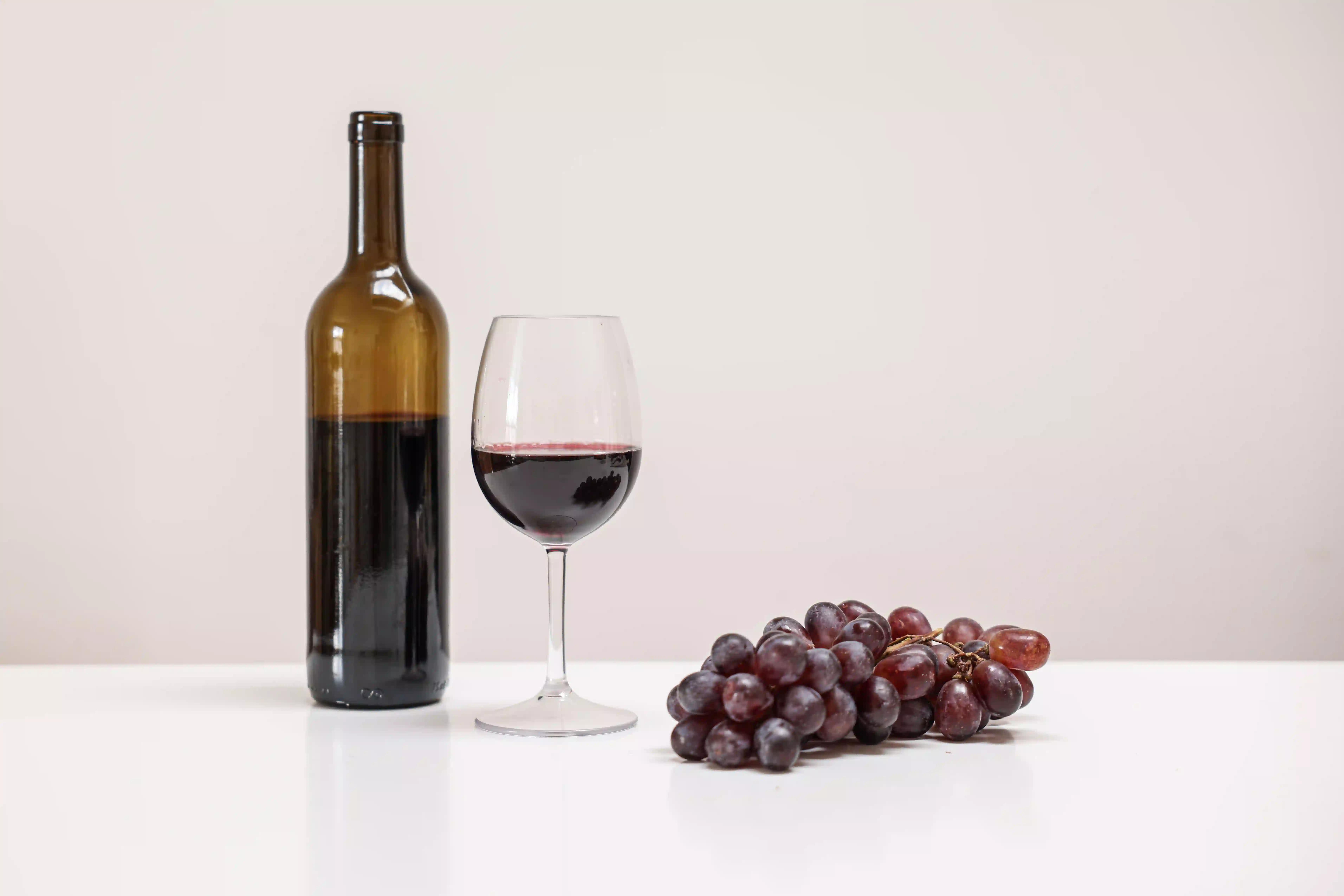
The Bordeaux glass is tall with a large bowl and a gently tapered rim. It gives full-bodied, tannic reds plenty of room to breathe. The height pushes aromas upward. The slight taper concentrates them as you smell.
High-alcohol wines also benefit from this shape. The extra headspace lets ethanol vapors disperse, so you notice fruit and structure rather than heat.
Best for: Cabernet Sauvignon, Merlot, Cabernet Franc, Carménère, Red Zinfandel.
Burgundy Glass
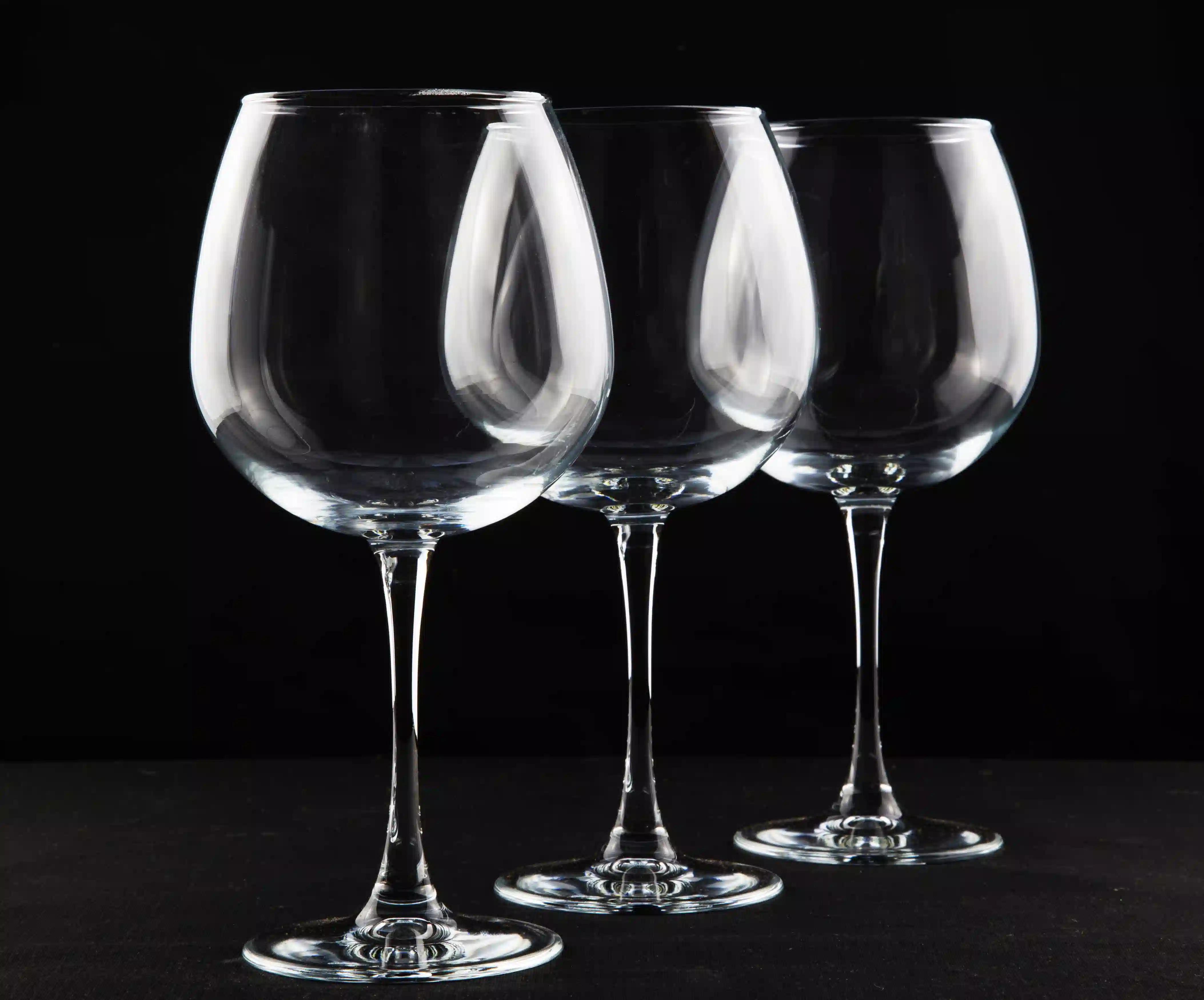
The Burgundy glass has a wide, balloon-shaped bowl with a noticeable taper toward a smaller opening. The wide bowl increases surface area to encourage aromatic release. The tapered rim gathers those delicate aromas into a focused bouquet.
Pinot Noir is famously aromatic. It shows red fruit, florals, earthy notes, and subtle spice that can disappear in a narrow glass. This shape also highlights silky texture, making Pinot feel more expressive and layered.
Best for: Pinot Noir, Burgundy red, Nebbiolo, lighter-bodied aromatic reds.
Syrah / Shiraz Glass
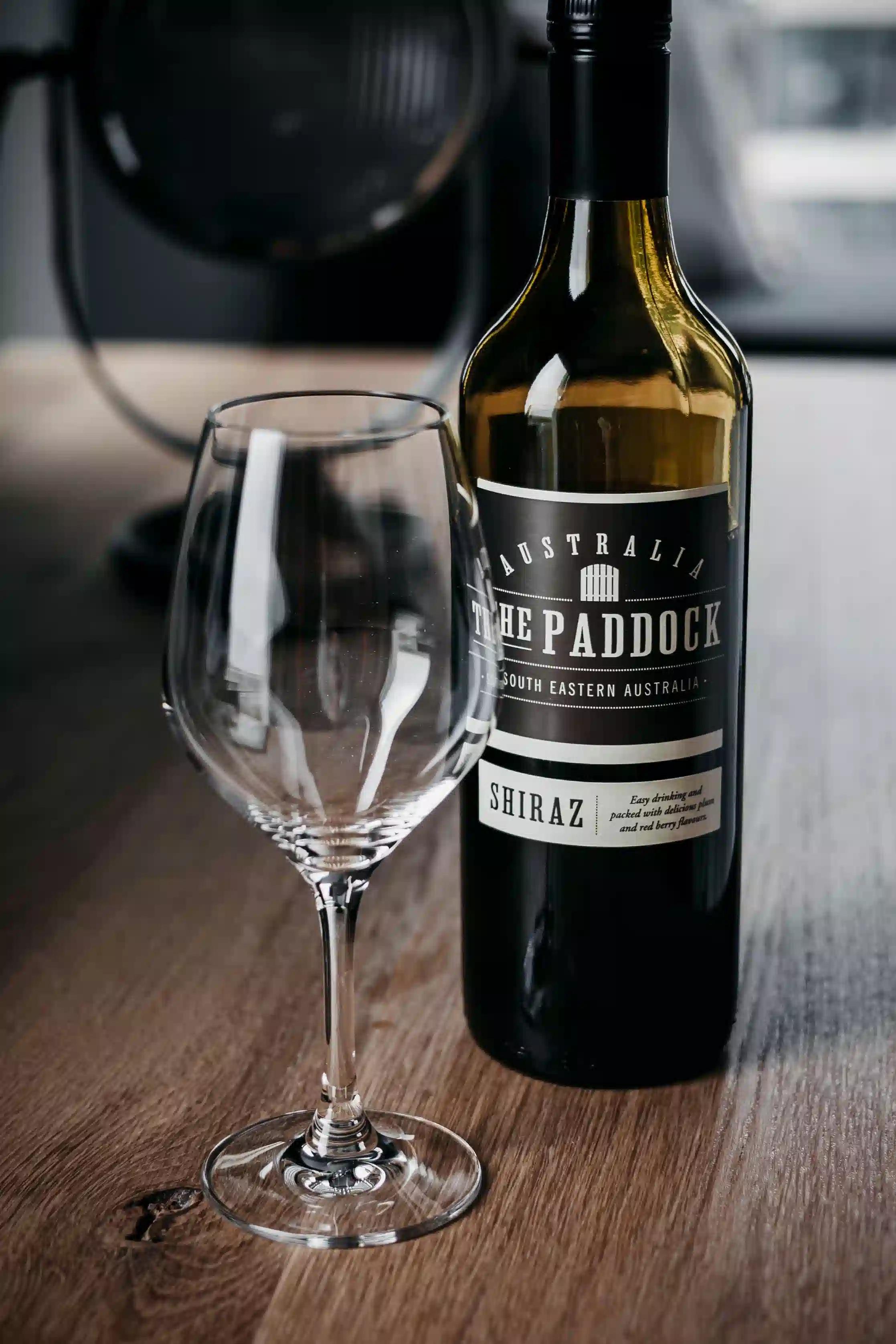
The Syrah glass has a medium-large bowl with a more pronounced taper and a slightly smaller opening than a Bordeaux glass. Syrah and Shiraz can be peppery and smoky. Malbec can be dark-fruited and plush. And Sangiovese can be bright with savory edges.
A slightly smaller opening focuses the aromatics, especially spice notes, while the taper moderates how quickly the wine hits your palate. This makes tannins feel more polished.
Best for: Syrah, Shiraz, Malbec, Sangiovese, Grenache, Tempranillo.
Universal Red Glass
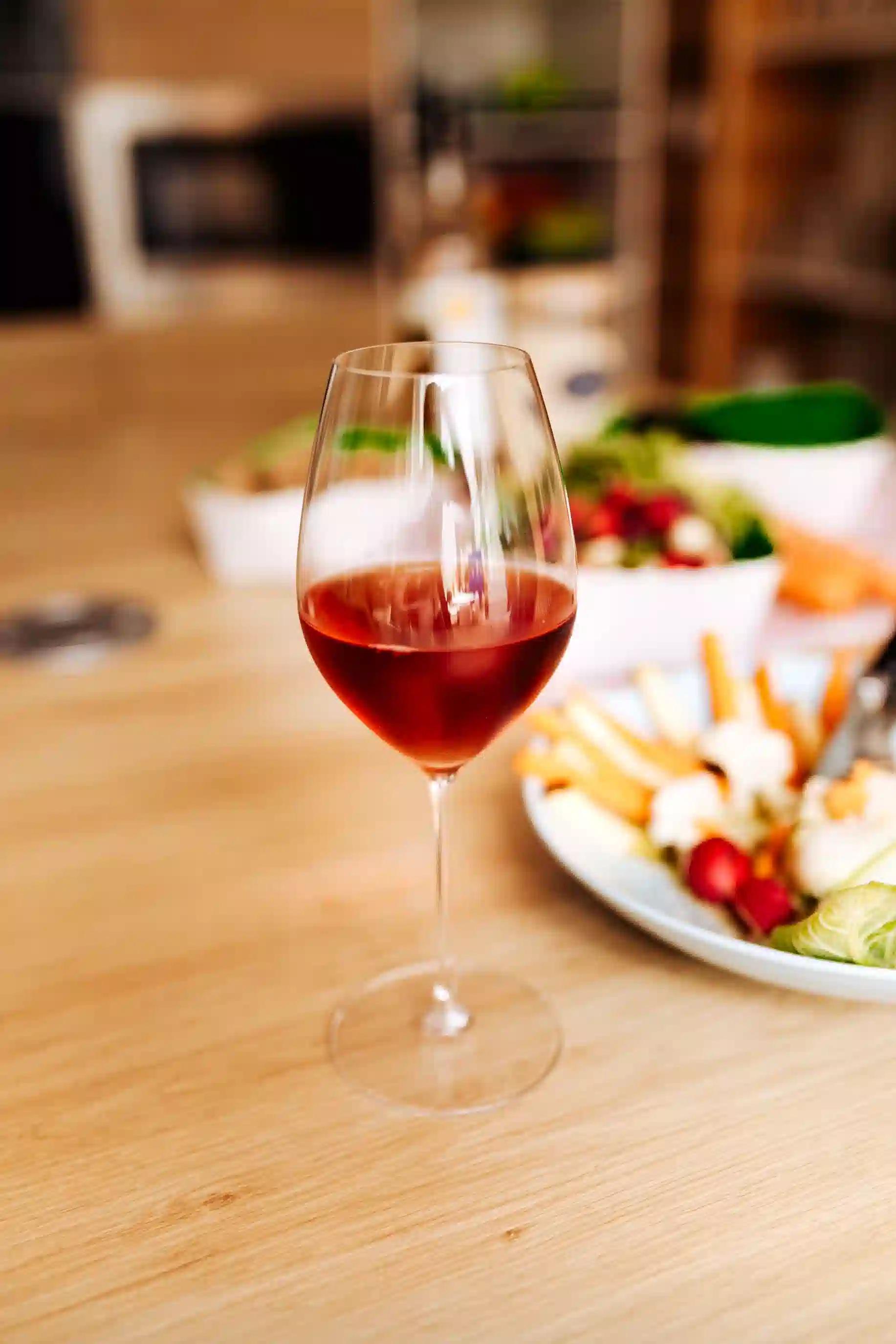
A universal red glass has a medium bowl with a fairly open rim and a gentle taper. It works well with fruit-driven, modern reds that sit between the extremes of Bordeaux and Burgundy styles.
This is the most forgiving shape at the dinner table. It handles a wide range of reds without over-concentrating or under-delivering on aroma.
Best for: Zinfandel, Grenache, Tempranillo, everyday red blends, and any red when you want one glass to do it all.
Also read: Best Red Wine Glasses, Tested and Reviewed
A Wine Glass Designed to Enhance Every Sip
The Aequilibrium Collection features hand-blown, lead-free crystal and a 360° pivot base that aerates wine as you drink.
Shop the Aequilibrium CollectionWhite Wine Glass Types
White wines generally suit smaller bowls. Their aromatics can be delicate, and they are usually served cooler. So the goal is to preserve freshness while still giving enough room for aroma to develop. Over-exposing white wines to oxygen can mute the vibrancy that makes them enjoyable.
Chardonnay Glass
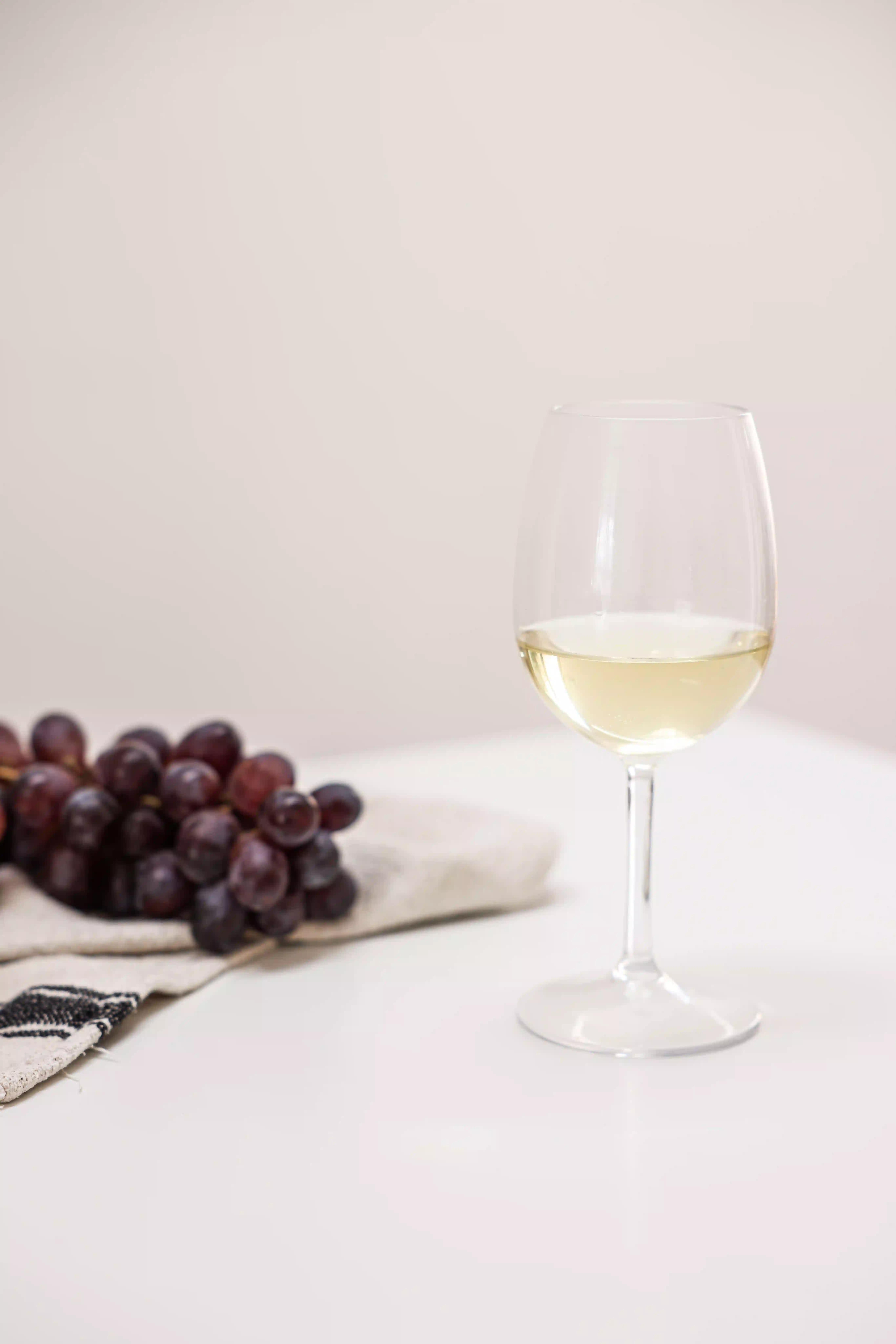
The Chardonnay glass has a medium bowl, slightly wider than a Sauvignon Blanc glass, with a gentle taper. Chardonnay's style varies widely, from lean and mineral to rich and creamy. This shape handles both ends of the spectrum.
The glass gives enough space for texture and aroma to develop without pushing the wine into overly warm or broad territory. For full-bodied, oaked Chardonnay, a larger bowl version helps complex aromas like ripe fruit, butter, and toast unfurl more completely.
Best for: Chardonnay (oaked and unoaked), Viognier, Pinot Gris.
Sauvignon Blanc Glass
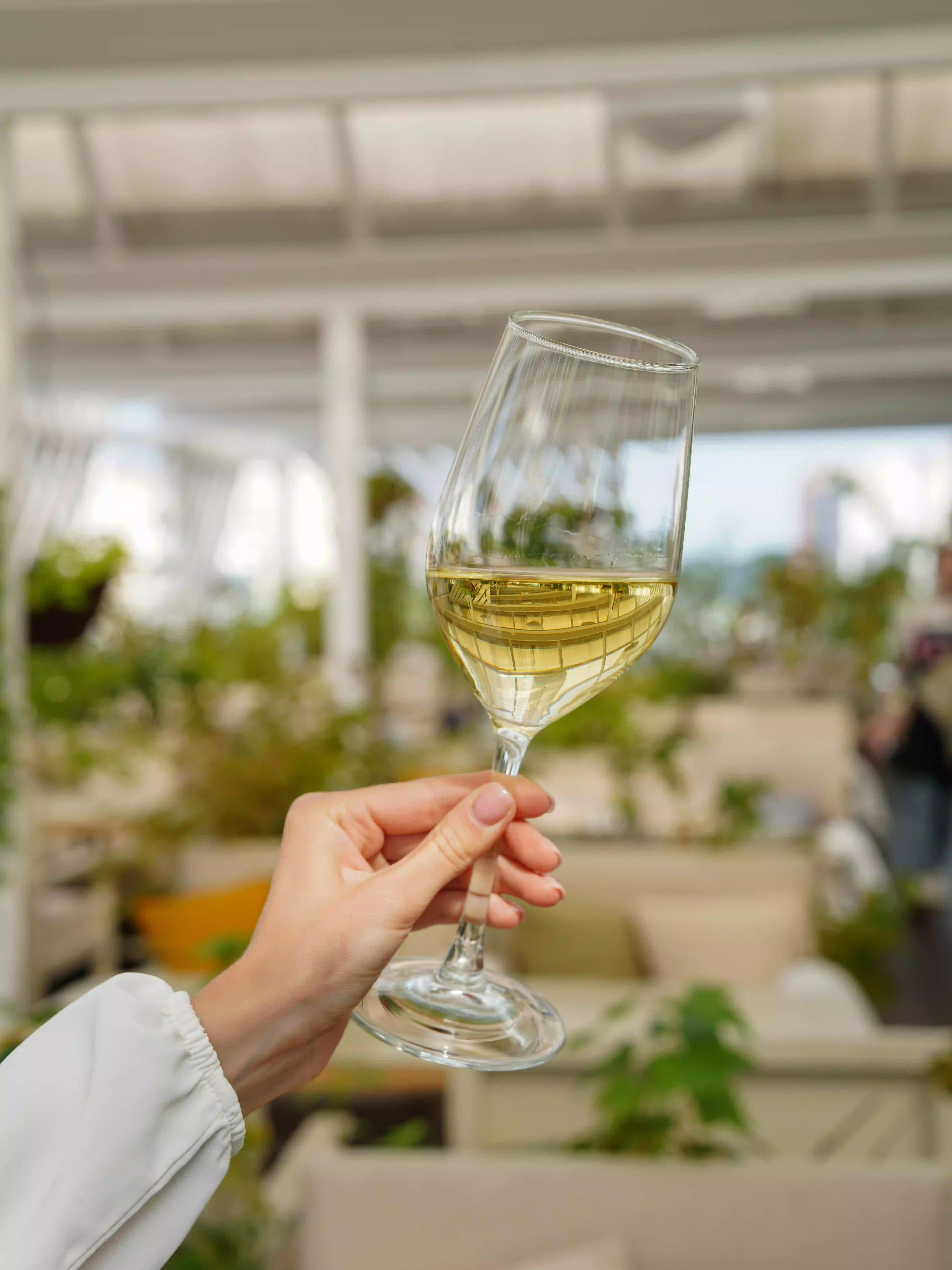
The Sauvignon Blanc glass has a smaller bowl with a narrower opening and a longer stem. Sauvignon Blanc leans on high-aroma compounds and fresh acidity.
A narrower bowl concentrates those lifted aromatics while limiting oxygen contact that could soften the wine's crispness too quickly. The longer stem helps keep the wine cool in the glass.
Best for: Sauvignon Blanc, Pinot Grigio, Chenin Blanc, Gewürztraminer.
Riesling Glass
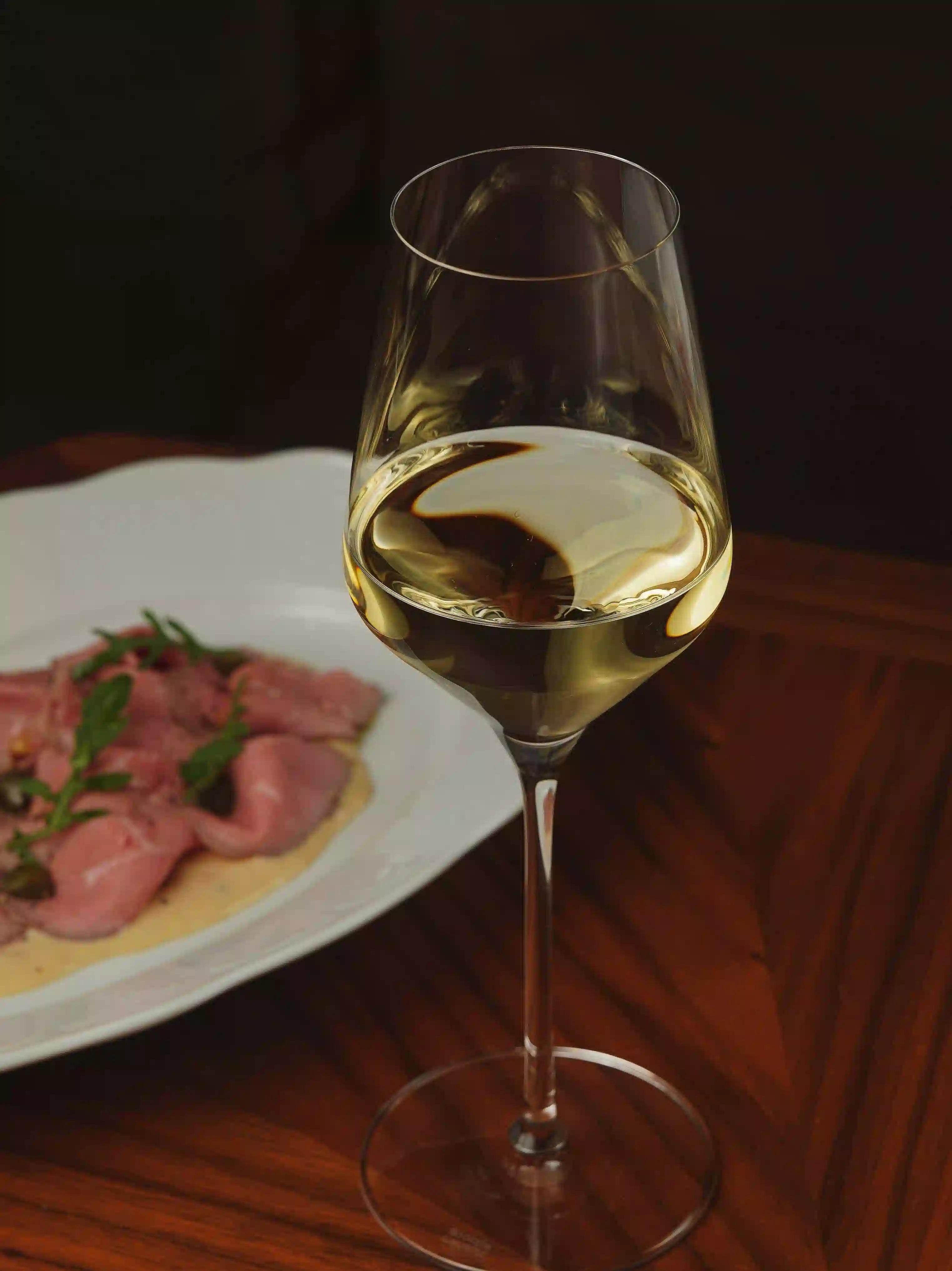
The Riesling glass has a smaller-to-medium bowl with a narrow rim and a noticeable taper. Riesling can be floral and citrus-driven, with high acidity and sometimes residual sugar.
The tapered rim concentrates aromatics and keeps the palate feeling focused and energetic. The enclosed design prevents sweetness from dominating each sip, balancing it with the wine's fresh, mineral character.
Best for: Riesling, Grüner Veltliner, Albariño, White Zinfandel.
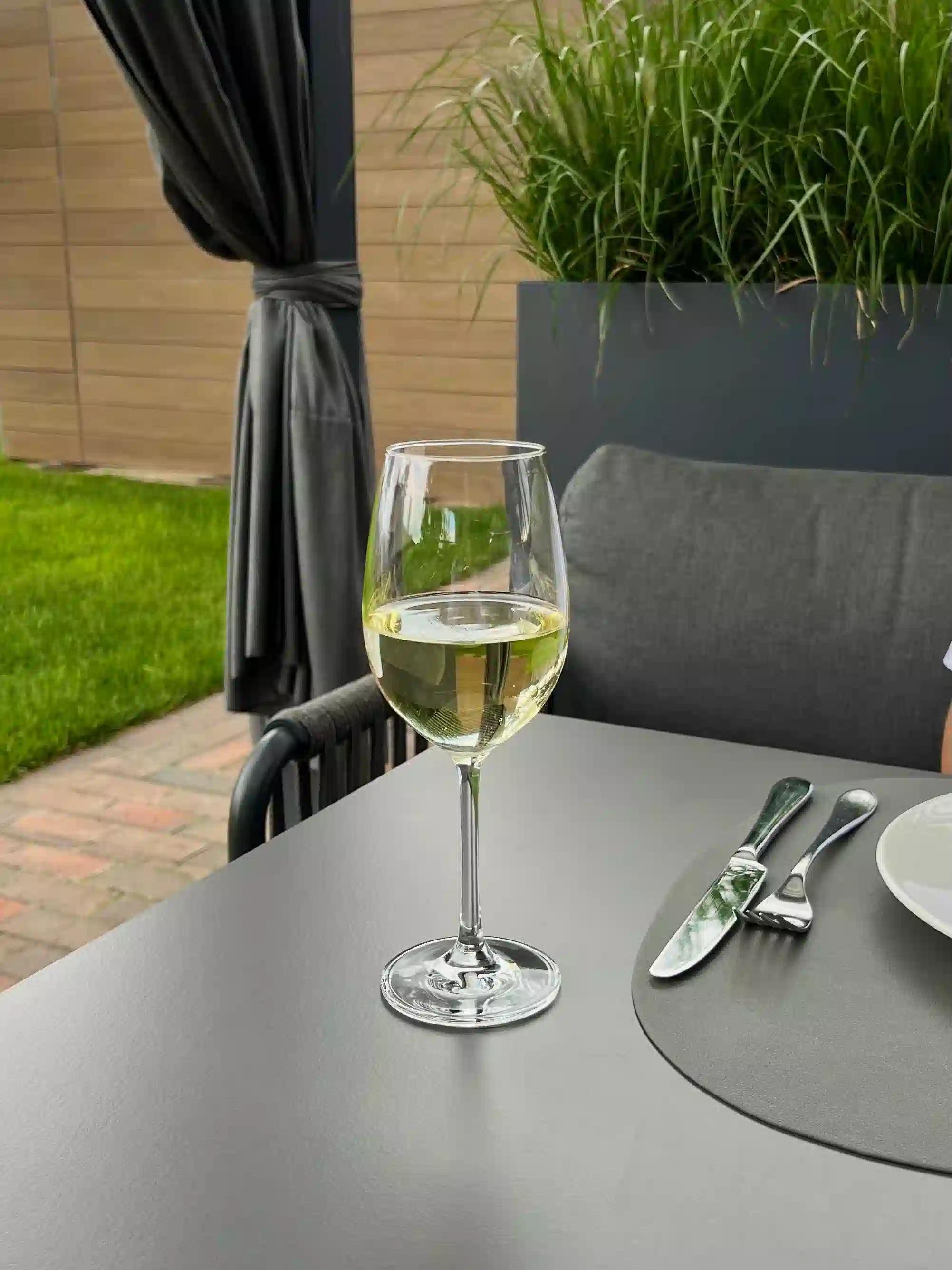
Universal White Glass
If you want a single white wine glass that covers most bases, a universal white with a medium bowl and a slightly narrower rim is the practical choice.
This glass works well with most white varietals and is the shape most commonly found in restaurant settings. It splits the difference between the aromatic focus of a Riesling glass and the textural space of a Chardonnay glass.
Best for: Everyday white wines, mixed white wine service, and anyone who wants one glass for all whites.
Sparkling Wine Glass Types
Sparkling wine glasses have one priority that sets them apart from still wine glasses: bubble retention. The shape needs to preserve effervescence while still allowing enough aroma to develop. The debate between flutes, tulips, and coupes comes down to how much you value bubbles versus aroma.
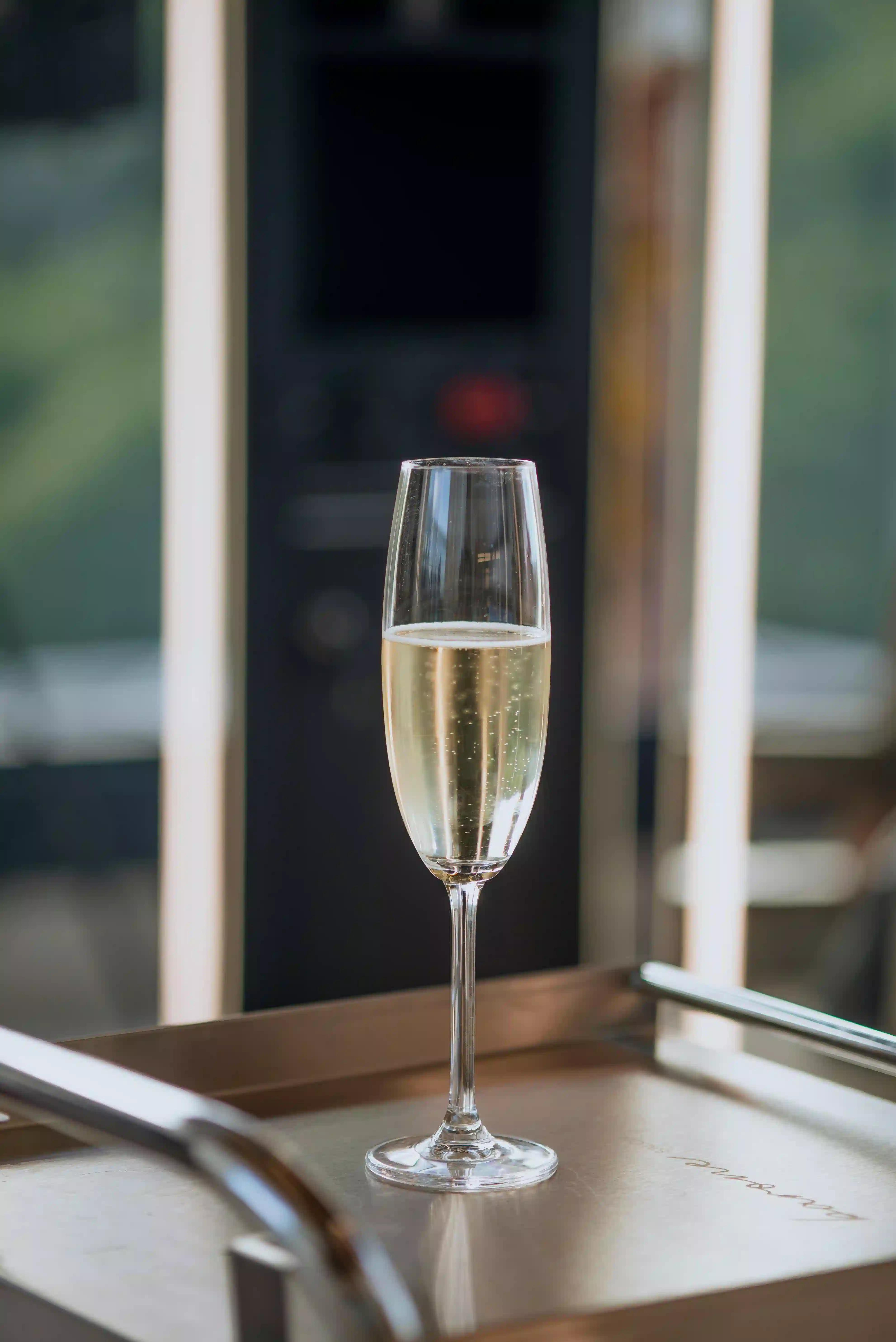
Champagne Flute
The classic Champagne flute is tall and narrow, with a slender bowl that encourages a steady stream of fine bubbles. Its slim shape is ideal for preserving effervescence and showing off the bead in sparkling wine.
The trade-off: limited aroma development. The narrow opening restricts how much of the wine's bouquet reaches your nose. For lighter, fruitier sparkling wines, a flute still does a fine job.
Best for: Prosecco, Cava, lighter sparkling wines, and celebrations where the visual of rising bubbles matters.
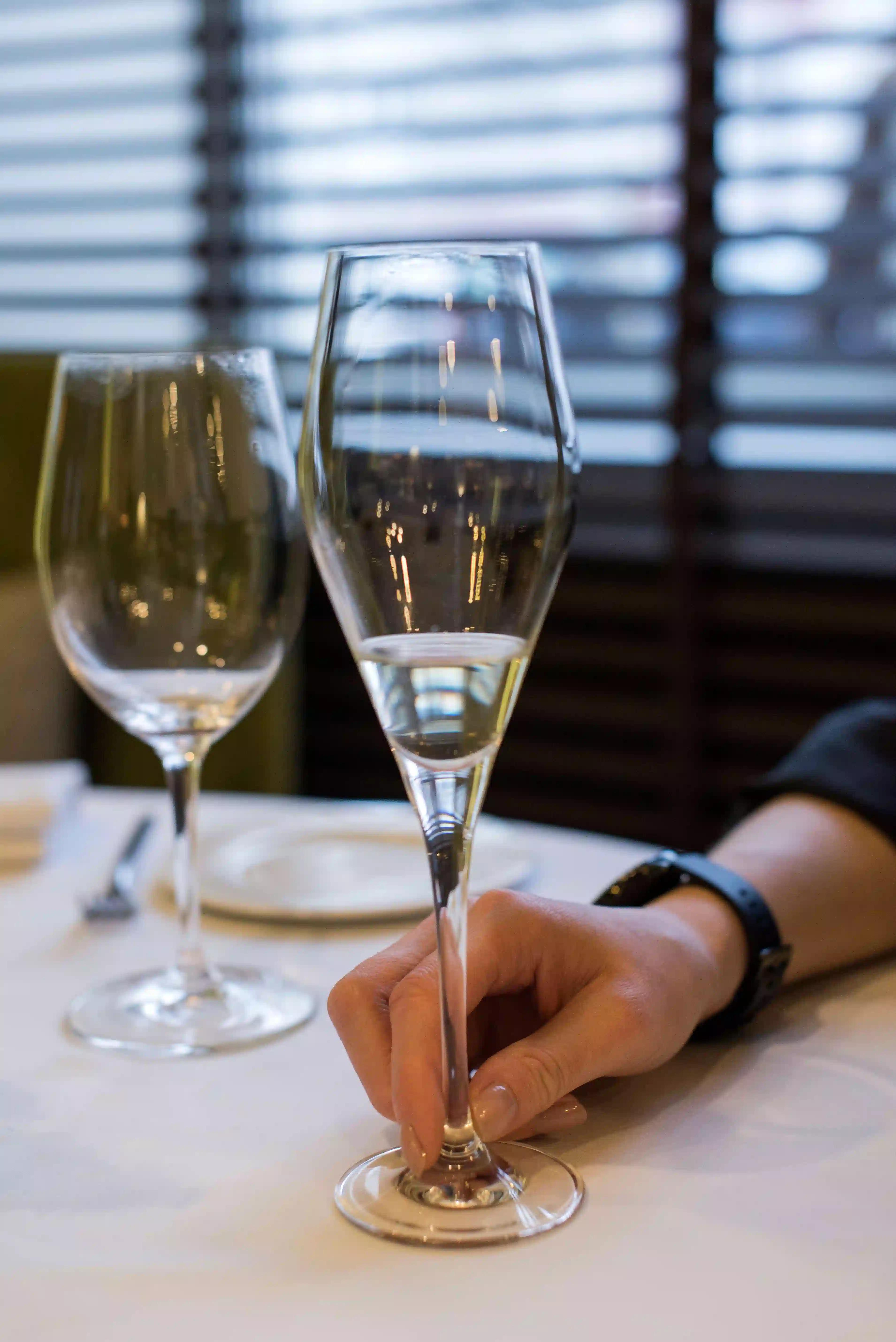
Champagne Tulip Glass
The tulip glass is the modern preferred choice for serious sparkling wine drinkers. It has a slightly wider bowl than a flute, with a gentle inward taper at the rim. This shape keeps a focused stream of bubbles while allowing enough surface area for aroma to develop.
For complex Champagne and traditional-method sparkling wines, where aroma and texture are a big part of the experience, the tulip delivers a noticeably better result than a straight flute.
Best for: Champagne, vintage sparkling wines, Crémant, and any sparkling wine where aroma matters as much as bubbles.
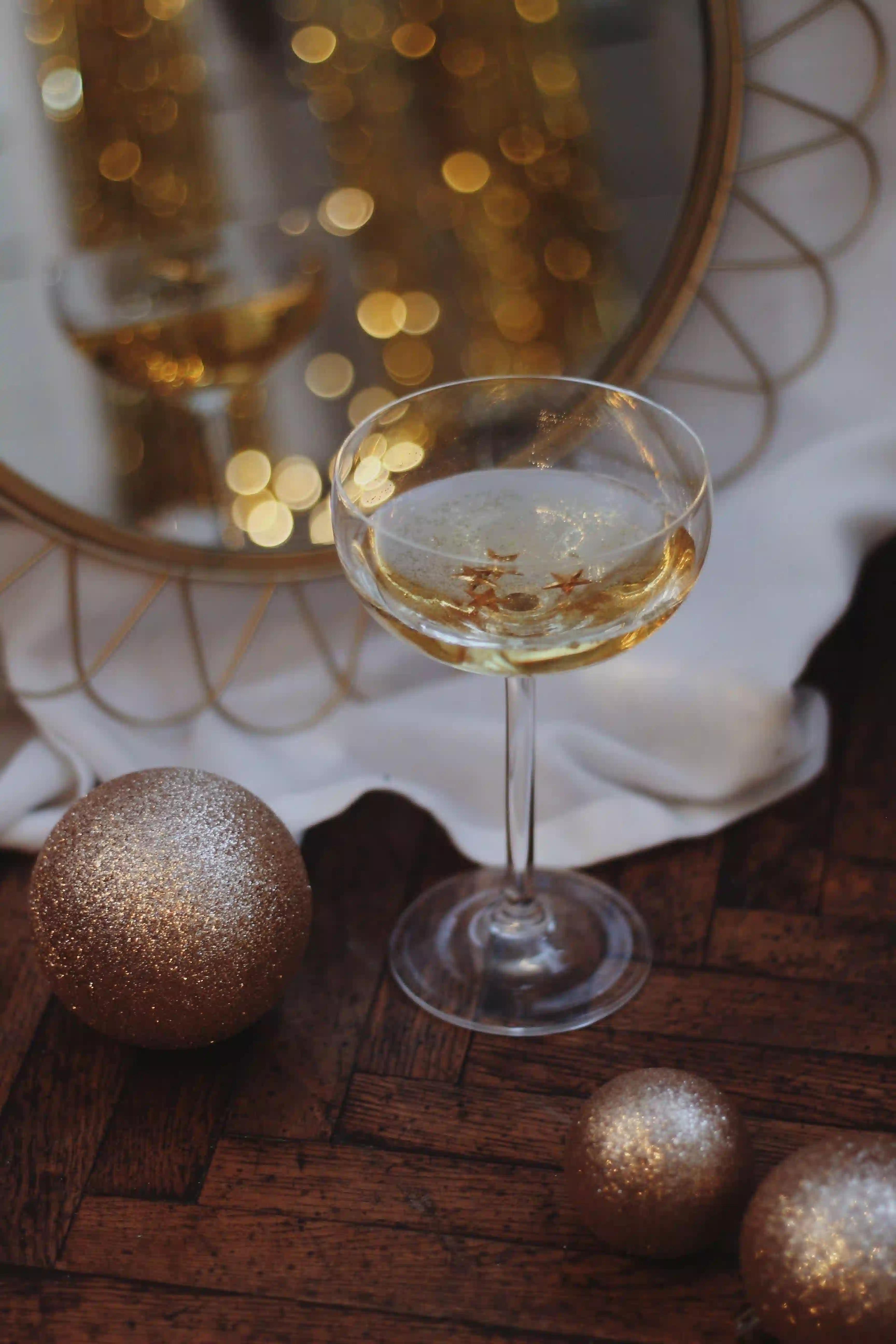
Coupe Glass
The coupe is the wide, shallow, saucer-shaped glass associated with vintage glamour. Its wide opening causes bubbles to dissipate quickly and allows aromas to escape before they reach your nose. If your priority is the drinking experience, a flute or tulip will serve you better. If your priority is aesthetics and atmosphere, the coupe has its place.
Best for: Champagne towers, cocktails, and occasions where presentation takes priority over performance.
Rosé, Dessert, and Fortified Wine Glass Types
Rosé, dessert, and fortified wines each present a different challenge. Their wine glass shapes reflect that, from managing delicate fruit aromas in rosé to keeping sweetness and alcohol in balance for richer pours.
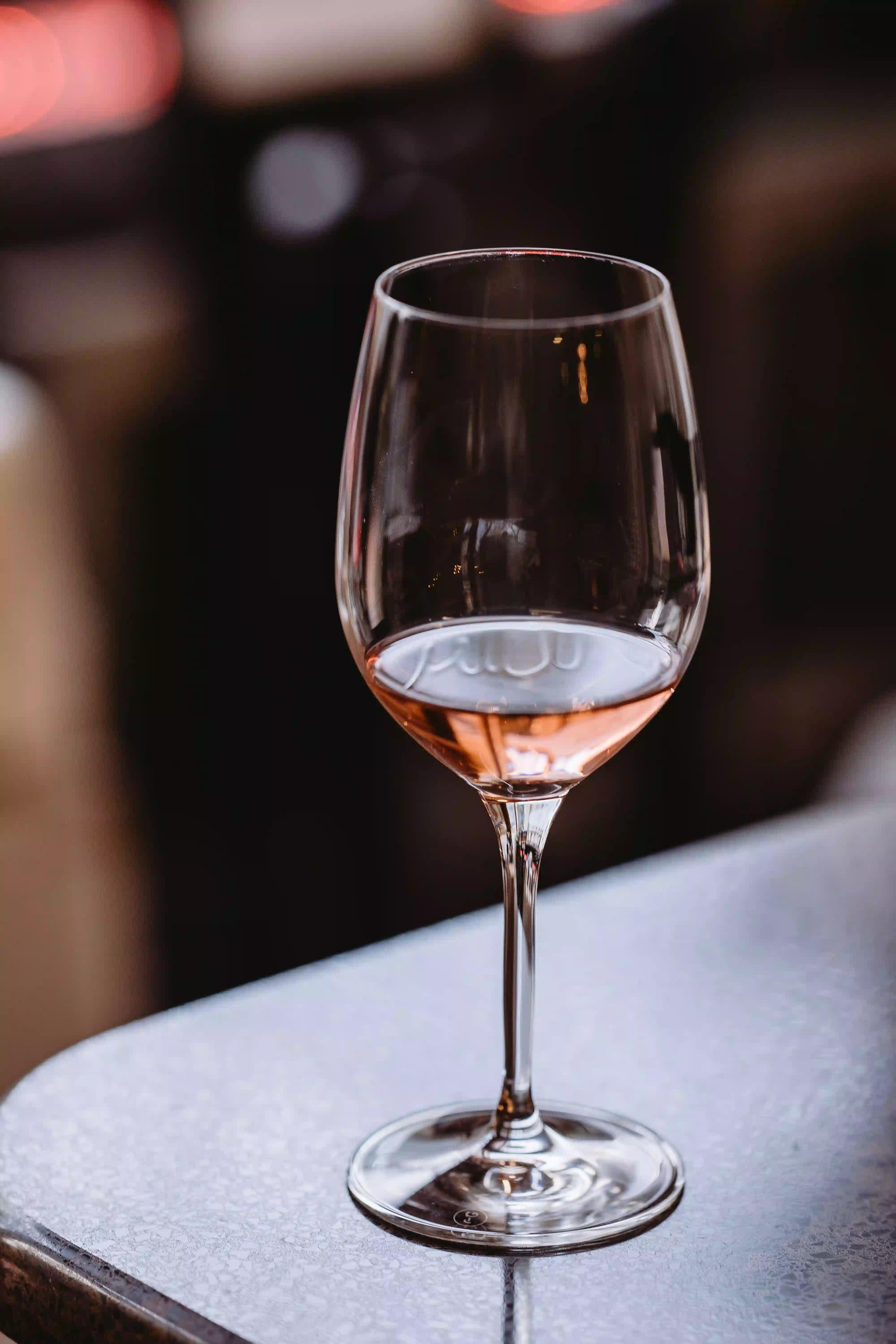
Rosé Glass
Rosé glasses are typically slender and slightly tapered, with a smaller bowl than a red wine glass. The design contains and emphasizes the fresh fruitiness of rosé wine.
The glass brings out rosé's characteristic red berry and floral aromas while tempering high acidity. Some rosé glasses have a slight flare at the rim to deliver the wine smoothly onto the palate.
Best for: Dry Provençal rosé, sparkling rosé, and light, fruit-forward rosé styles.
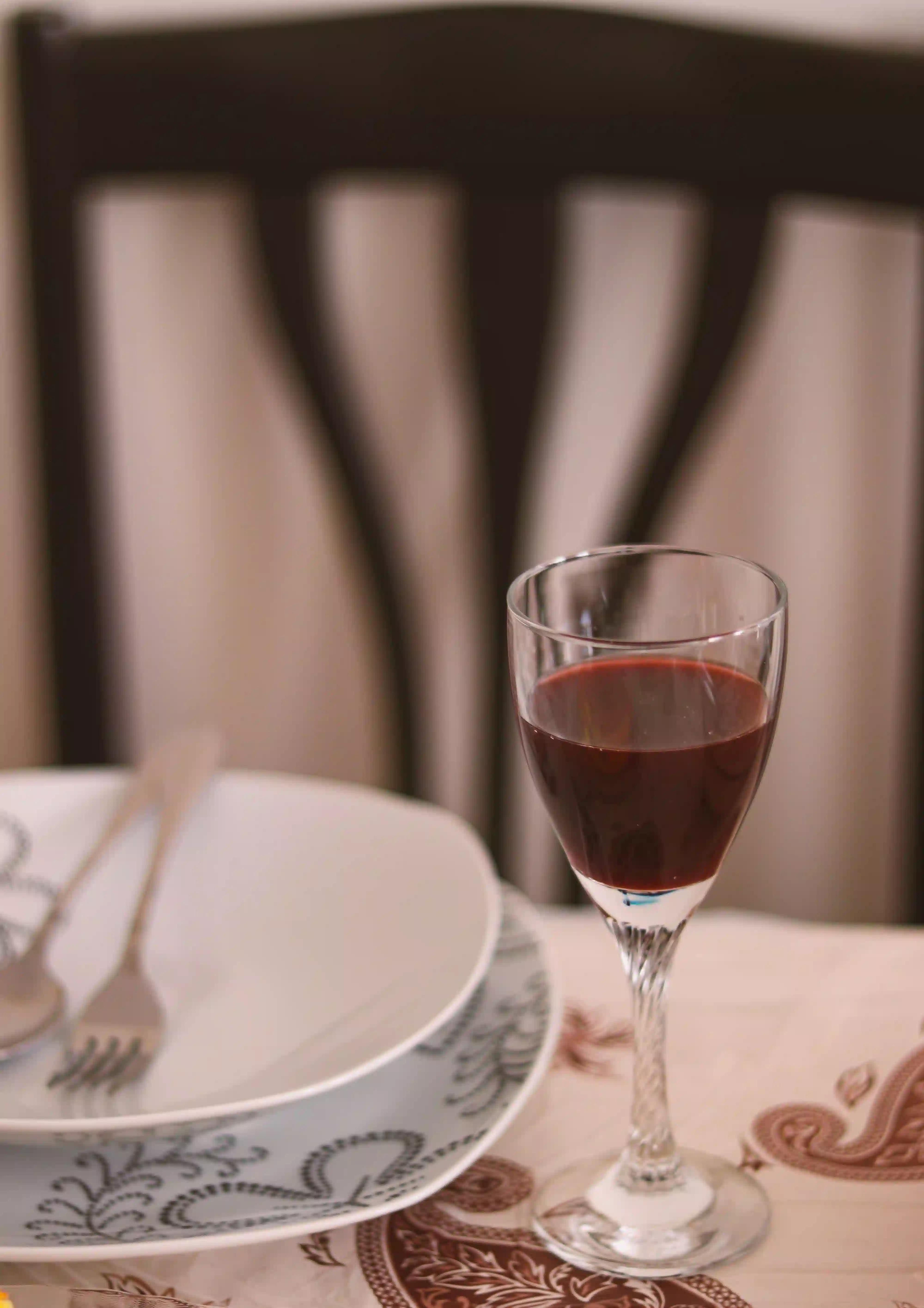
Port and Sherry Glass
Fortified wine glasses are smaller than standard wine glasses, with a pronounced taper and a smaller opening. Fortified wines carry more alcohol and intense flavor, and they are usually served in smaller pours.
A smaller glass helps keep the experience balanced, and the tapered rim focuses aromas and moderates the flow onto the palate. For Port, this manages sweetness and richness. For Sherry, it helps you appreciate nutty, saline, and savory notes without the alcohol taking center stage.
Best for: Port, Sherry, Madeira, and other fortified wines.
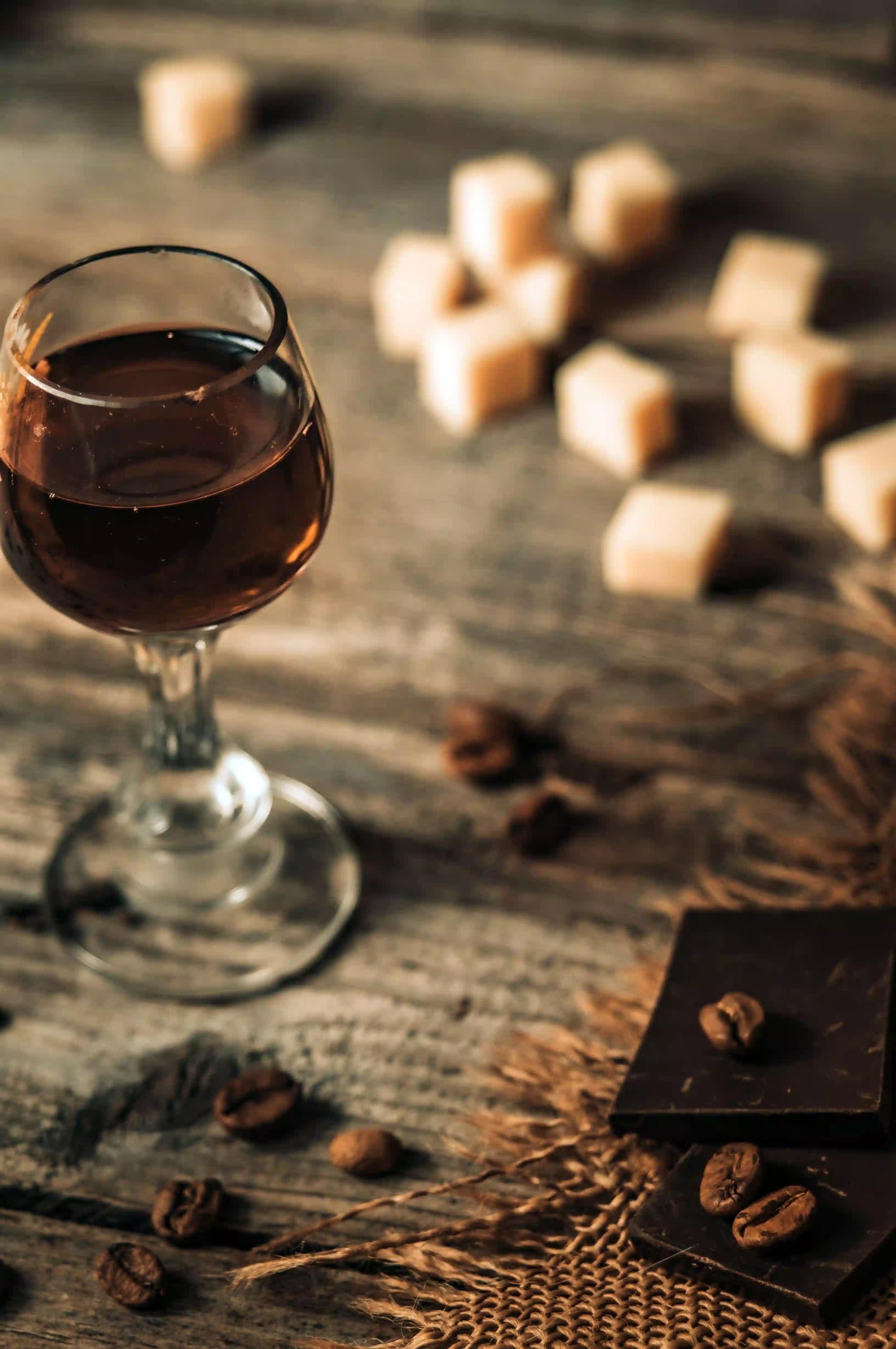
Dessert Wine Glass
Dessert wine glasses are small-to-medium with a tapered rim. Sweet wines are all about balance. You want the honeyed, apricot, and spice notes, but you also want freshness and acidity to keep the wine lively.
A smaller bowl concentrates aroma. The tapered rim helps prevent sweetness from feeling cloying by delivering the wine in a more controlled sip.
Best for: Sauternes, Tokaji, ice wine, late-harvest Riesling, and other sweet wines.
Stemless Wine Glasses: Practical or a Compromise?
Stemless wine glasses look modern and are easier to store. They are also less prone to tipping. This makes them a practical choice for casual settings, outdoor entertaining, or households with children.
The trade-off is temperature control. Holding the bowl warms the wine more quickly, which matters most for whites and sparkling wines served cold. If you enjoy stemless glasses, pour smaller amounts more often, or keep the bottle cooler than you normally would.
For everyday house wines and casual drinking, stemless glasses are a perfectly reasonable choice. For a special bottle you want to experience at its best, a stemmed glass gives you more control.
Also read: Best Stemless Wine Glasses: A Complete Buyer's Guide
Glass vs. Crystal: Does It Matter?
Standard glass is heavier and less transparent than crystal. Crystal wine glasses, whether lead-based or lead-free, are thinner, lighter, and clearer. These characteristics make them more pleasant to drink from and easier to see the wine's color and legs.
Many premium wine glasses today use lead-free crystal. They deliver the same clarity and thinness as traditional crystal without the health concerns associated with lead. For drinkers who want the vessel itself to be part of the ritual, hand-blown lead-free crystal is worth the step up.
The Audacem Aequilibrium Collection, for example, features 100% lead-free hand-blown crystal with a 360° pivot base. It keeps wine in continuous gentle motion, passively aerating the liquid between sips. It enhances aromatic expression without a separate decanting step.
Also read: Crystal vs Glass: What's the Difference?

Aequilibrium Wine Glass
• Transform your special occasions with Aequilibrium Glassware for a unique tasting experience.
• One-of-a-kind Italian design that allows the full aromas of your favourite wine to unfold perfectly.
• Receive a true masterpiece, hand-blown by master artisans.
• Impress your guests on any occasion and rediscover the joy of sharing fine wine.
• Offer the perfect gift with our reinvented set, designed for an unforgettable presentation.
How To Choose the Right Wine Glass Type for You
You do not need a different glass for every grape variety. A small, sensible set covers almost everything. Here is how to think about building yours.
1. Start With Two Types of Wine Glasses
If you only own two styles, choose a universal red (medium-large bowl with a gentle taper) and a universal white (smaller bowl, slightly narrower rim). This pairing works well with most wines and covers the majority of everyday drinking occasions.
2. Add Varietal-Specific Glasses for Wines You Drink Often
If you drink Pinot Noir regularly, a Burgundy glass is worth adding. If Champagne is a staple, a tulip glass makes a real difference. Varietal-specific glasses are best thought of as fine-tuning. They reward wines you already love and drink often.
3. Consider Storage and Durability
Large Burgundy glasses and tall Bordeaux glasses take up significant cabinet space. In cases of limited storage, a universal glass that handles both reds and whites is the more practical choice.
For durability, thicker glass or machine-made crystal holds up better to everyday use and dishwasher cycles. Hand-blown crystal is thinner and more delicate. It needs careful handling but delivers a noticeably better drinking experience.
4. Match the Glass to the Occasion
For large gatherings, a sturdy, dishwasher-safe universal glass makes sense. For a special bottle or an intimate dinner, a hand-blown crystal glass elevates the experience. Having both types in your collection gives you the flexibility to match the glass to the moment.
How To Care for Wine Glasses
How you clean and store wine glasses determines how long they perform well. The main considerations are washing method, drying technique, and storage position. The right approach depends mostly on whether your glasses are machine-made or hand-blown.
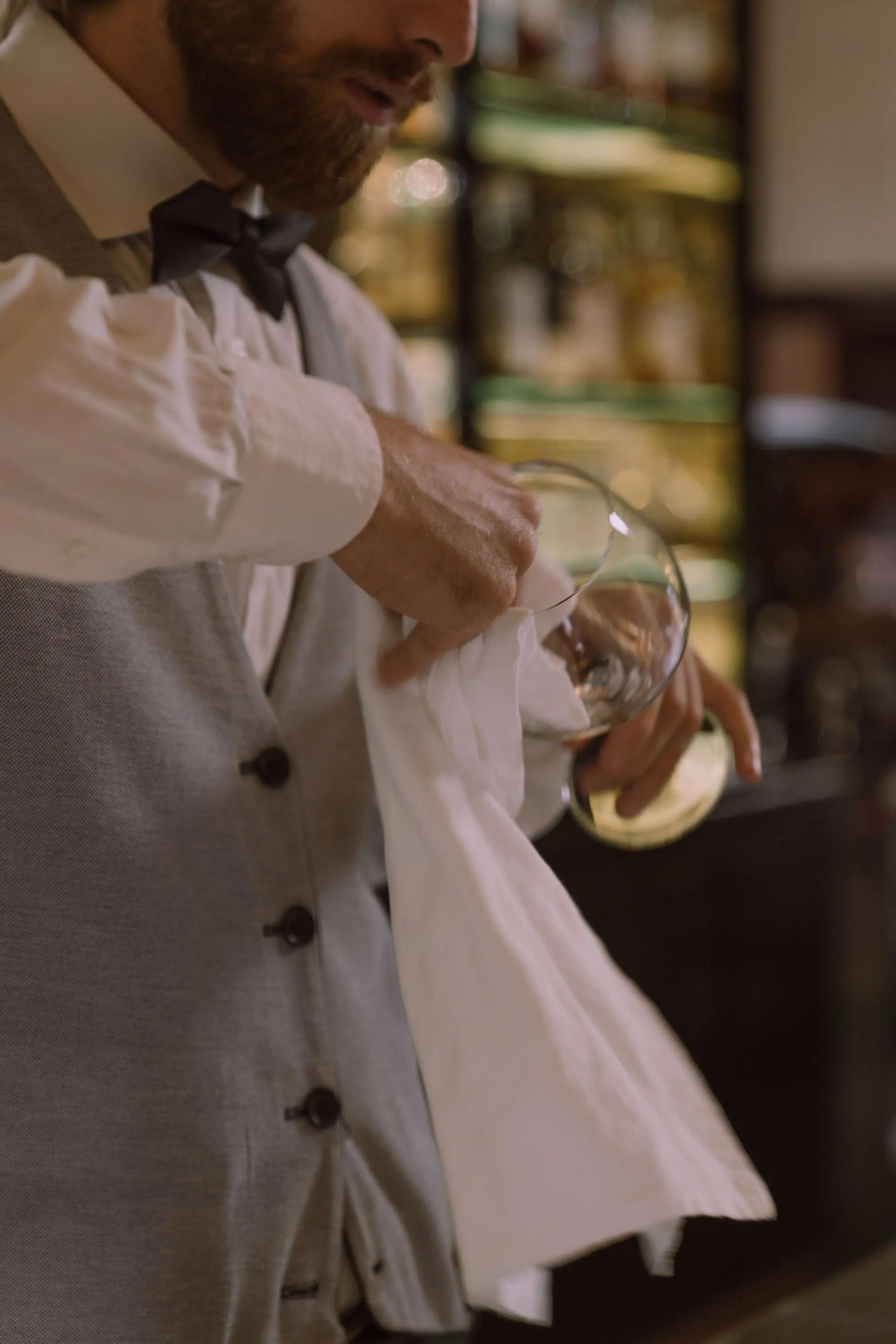
Hand Washing vs. Dishwasher
Machine-made crystal and standard glass can usually handle the dishwasher. Still, high heat and harsh detergents can cause cloudiness over time.
Hand-blown crystal should always be hand-washed with warm water and a small amount of unscented dish soap. Rinse thoroughly to avoid soap residue, which can affect the taste of the wine.
Polishing and Drying
Dry wine glasses with a lint-free microfiber cloth or a dedicated glass polishing cloth. Hold the glass by the bowl when polishing to avoid torquing the stem. Polish in a gentle circular motion and hold the glass up to the light to check for streaks or water spots before storing.
Storage
Store wine glasses upright rather than upside down. Storing them rim-down can cause chipping at the most delicate part of the glass.
If you have very fine crystal, keep it in the original box or a padded storage case between uses. Avoid stacking glasses inside each other. The pressure can cause cracking, especially with thin-walled crystal.
Frequently Asked Questions
Do I really need different wine glasses for different wines?
No, but the right glass does make a difference. A universal red and a universal white will cover most occasions. Varietal-specific glasses, like a Burgundy glass for Pinot Noir or a tulip for Champagne, are worth adding if you drink those wines regularly and want to get the most out of them.
What is the difference between a Bordeaux and a Burgundy glass?
A Bordeaux glass is tall with a large, moderately wide bowl and a gently tapered rim. It suits full-bodied, tannic reds like Cabernet Sauvignon. A Burgundy glass has a wider, balloon-shaped bowl with a more pronounced taper. It suits aromatic, lighter-bodied reds like Pinot Noir, where the wide bowl encourages aromatic release.
Is a Champagne flute or a tulip glass better for sparkling wine?
A tulip glass is generally better for complex sparkling wines like Champagne. It preserves bubbles while allowing more aroma to develop than a straight flute. A flute is still a good choice for lighter, fruitier sparkling wines or when the visual of rising bubbles is part of the occasion.
What is a universal wine glass?
A universal wine glass has a medium bowl with a gentle taper that works reasonably well with both red and white wines. It splits the difference between the larger bowls suited to reds and the smaller, narrower bowls suited to whites. It is the most practical choice if you want one glass style for all wines.
Are stemless wine glasses as good as stemmed glasses?
Stemless glasses are practical and durable, but holding the bowl warms the wine more quickly. This matters most for white and sparkling wines served cold. For everyday drinking and casual settings, stemless glasses are a perfectly reasonable choice. For a special bottle you want to experience at its best, a stemmed glass gives you more control over temperature.
What is the difference between glass and crystal wine glasses?
Crystal wine glasses are thinner, lighter, and clearer than standard glass. They are more pleasant to drink from and allow you to see the wine's color and legs more clearly. Many premium wine glasses today use lead-free crystal. They offer the same clarity and thinness as traditional lead crystal without the associated health concerns.
How much wine should I pour into a wine glass?
Pour only up to the widest point of the bowl, typically about one-third to one-half full. This gives the wine enough surface area to breathe and enough headspace to swirl without spilling. A standard pour is around 5 ounces for most wine glasses.
What wine glass is best for someone who only wants one style?
A universal glass with a medium-large bowl and a gentle taper is the best single-glass choice. It handles most red and white wines without over-concentrating or under-delivering on aroma. If you drink sparkling wine regularly, add a tulip glass as your second style.
Shop the Aequilibrium Glass Collection
-
Red WineRegular price From $42.99 USDRegular priceUnit price per
$86.00 USDSale price From $42.99 USDSale -
Spirits & LiquorsRegular price From $39.99 USDRegular priceUnit price per
$80.00 USDSale price From $39.99 USDSale -
WoodRegular price From $38.99 USDRegular priceUnit price per
$78.00 USDSale price From $38.99 USDSale -
 Sold outCeramicRegular price From $33.99 USDRegular priceUnit price per
$68.00 USDSale price From $33.99 USDSold out