
Quick Answer: Crystal vs Glass, What's the Difference?
- Standard glass is thicker and more durable. It has no added minerals, which gives it a sturdier wall and a heavier base. Generally dishwasher-safe, it’s the practical choice for daily use and high-volume events.
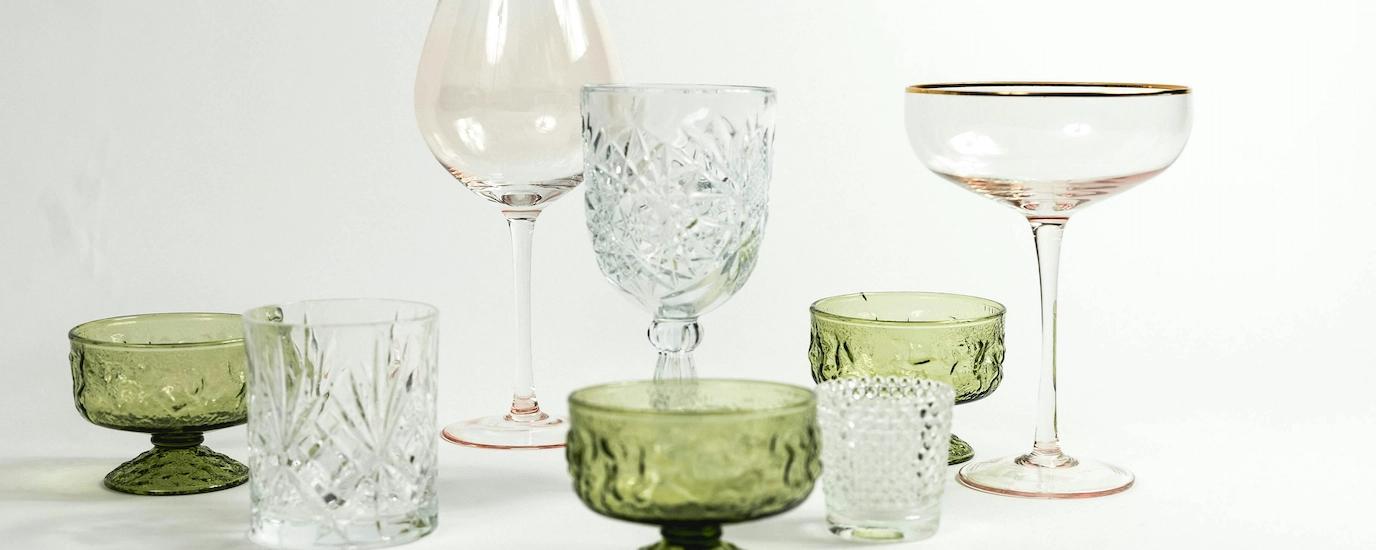
- Crystal is glass with minerals added, allowing glassmakers to blow it much thinner. The result is a lighter, clearer glass with a finer rim and a subtle texture that helps release aromas when you swirl. It's the better choice when the drinking experience matters.
- The short version: All crystal is glass, but not all glass is crystal.
- For hand-blown, lead-free crystal that takes this further with a built-in aerating design, the Aequilibrium Collection by Audacem (from $39.99) sits at the top of the category.
Meet the Aequilibrium, the glass that moves.
Lead-Free Crystal, Built to Aerate
Hand-blown crystal with a pivoting base that aerates your drink without any swirling.
Shop the Aequilibrium CollectionWhy the Difference Matters
The material of a glass affects how wine, whisky, or any drink actually tastes. A thinner rim changes how liquid flows onto your palate. A slightly textured surface releases aromas faster when you swirl. Research confirms that glass shape and form directly affect aroma perception.
Let's compare glass with crystal, so you can tell them apart at home and decide which one is worth buying.
Crystal Glass vs Standard Glass: Key Differences Side by Side
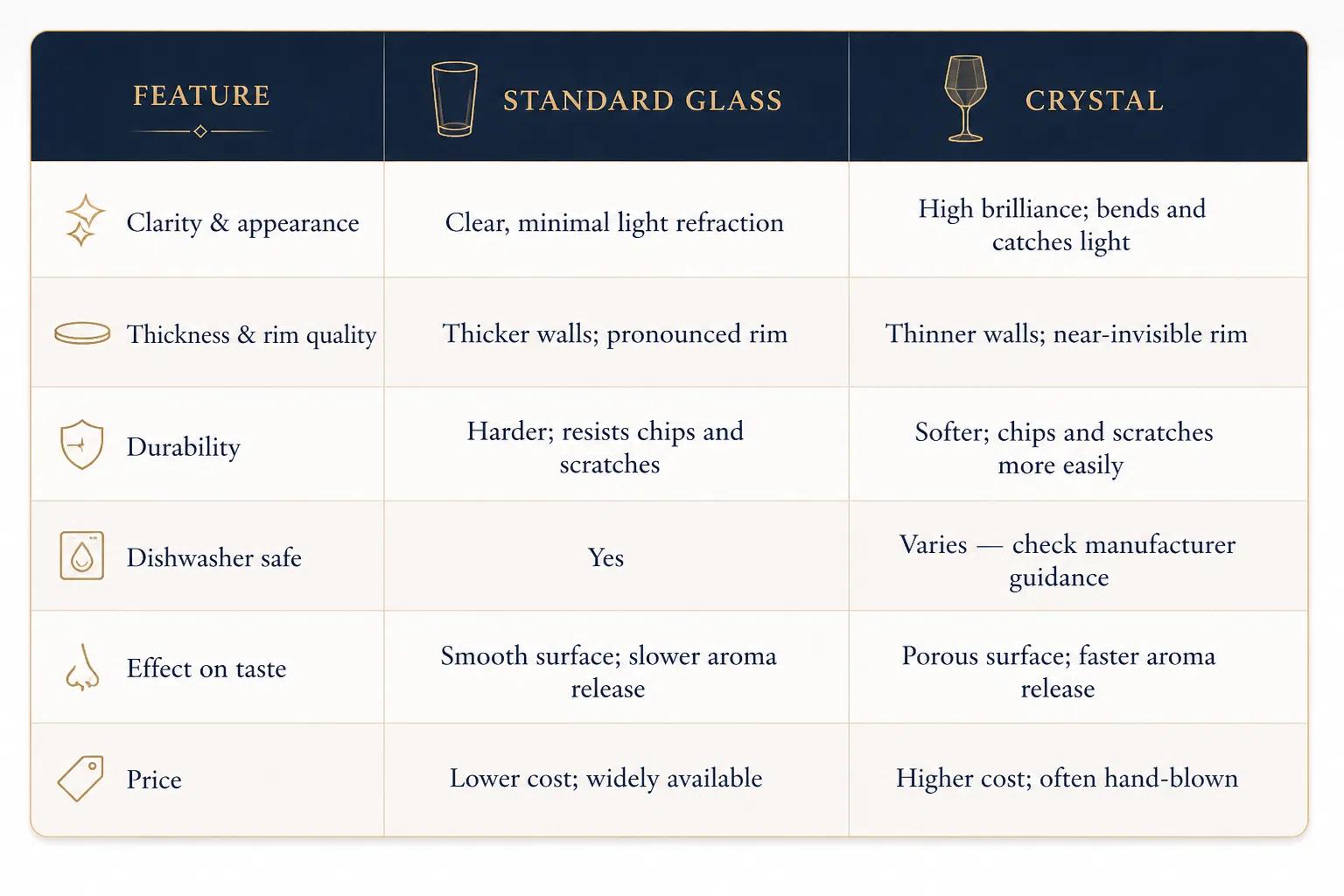
Here's how the two materials compare across the factors that matter most.
Clarity and Appearance
Crystal is clearer and more brilliant than standard glass. The added minerals increase the refractive index, causing crystal to catch and bend light in a way standard glass doesn't.
This is actually where the name “crystal” comes from. Early glassmakers sought to replicate the sparkle of natural quartz crystal.
Thickness and Rim Quality
The minerals in crystal strengthen the material, allowing artisans to blow it much thinner. This is most noticeable at the rim. A fine crystal rim almost disappears against your lip.
A standard glass rim is thicker and more pronounced, which subtly affects how liquid flows onto your palate.
Durability
Standard glass scores around 6.5 on the Mohs hardness scale.
Crystal, despite its refined look, is actually softer. The mineral additives reduce overall hardness. This means crystal chips and scratches more easily than standard glass.
Dishwasher Safety
Standard glass is non-porous and fully dishwasher-safe.
Traditional lead crystal is porous and should be hand-washed.
Modern lead-free crystal varies. Many are dishwasher-safe, but always check the brand’s guidance.
Effect on Taste
Crystal has a slightly porous, microscopically rough surface. When you swirl your drink in a crystal glass, this texture agitates the liquid and helps release aromas faster.
Standard glass has a smoother, non-porous surface that interacts less with the liquid. Aromas release more slowly, and the drinking experience tends to feel flatter.
Price
Standard glass is cheaper to produce and to buy.
Crystal costs more due to the materials and because fine crystal is often hand-blown. That said, lead-free crystal has become more accessible, with good options at a range of price points.
Our Audacem Aequilibrium Crystal Glasses sit at the premium end of lead-free crystal. They're hand-blown for a finer rim and exceptional clarity, yet priced to make that experience attainable without compromise.
- 30-day warranty
- 2,200+ verified reviews
- Free shipping over $65
See Crystal Done Differently
The Aequilibrium Collection is hand-blown, lead-free crystal — engineered to aerate your drink as you hold it.
Shop the Aequilibrium CollectionWhat Crystal and Glass Are Actually Made Of
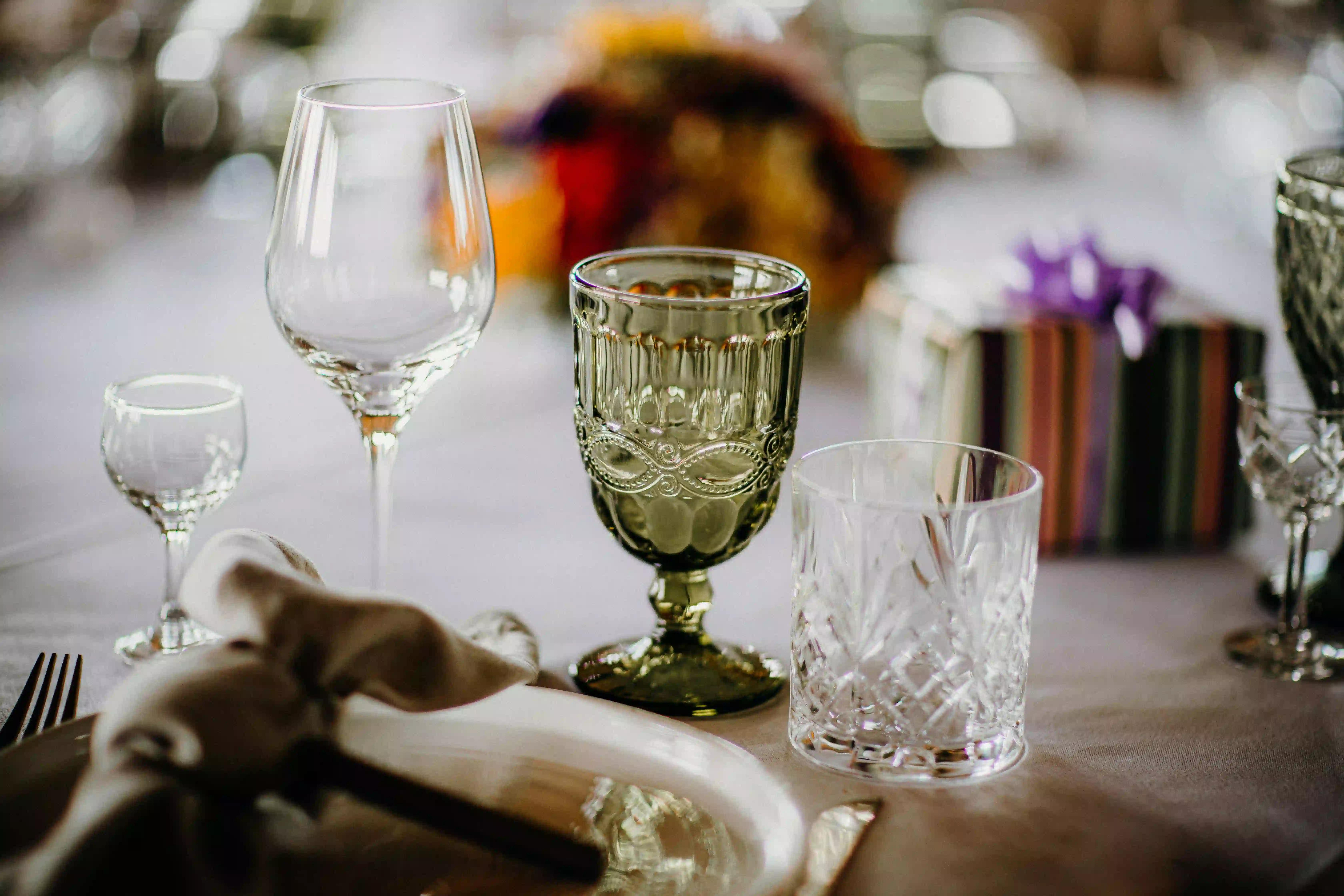
Both crystal and standard glass start with the same base: silica (sand). The difference lies in the additions.
Standard Glass
Silica, soda ash, and limestone make up standard glass. The atoms bond in a random, amorphous structure. This is why glass doesn't have a true crystalline form at the molecular level.
Standard glass is durable, non-porous, and easy to produce at scale. But it needs thicker walls to hold its shape. This means a heavier glass with a rolled rim.
Crystal Glass
Crystal glass adds minerals to the silica base. Traditionally, that mineral was lead oxide, which gave glass its signature weight, clarity, and ring. Lead crystal must contain at least 24% lead oxide to meet EU standards. In the US, the term is less regulated, so always check the label.
Today, most premium crystal is lead-free. Manufacturers use titanium oxide, zirconium oxide, barium, or magnesium instead. These alternatives achieve the same thinness and clarity without potential health concerns. Look for terms like "Tritan crystal," "titanium crystal," or simply "lead-free crystal" on the packaging.
Crystal or Glass: Which Should You Buy?
The right choice depends on how you use your glassware.
- Choose standard glass if: you want something durable, dishwasher-safe, and affordable for everyday use. If you have kids, pets, or a habit of breaking things, glass is the best choice.
- Choose crystal if: you care about the drinking experience (clarity, feel, aroma). Crystal is the better choice for wine, whisky, or any drink where nuance matters.
- Choose lead-free crystal if: you want the best of both worlds. Modern lead-free crystal is thin, clear, and often dishwasher-safe. It's the benchmark for premium glassware today. And to help you choose, we have just the collection for you.
Beyond Standard Crystal: The Audacem Aequilibrium Collection
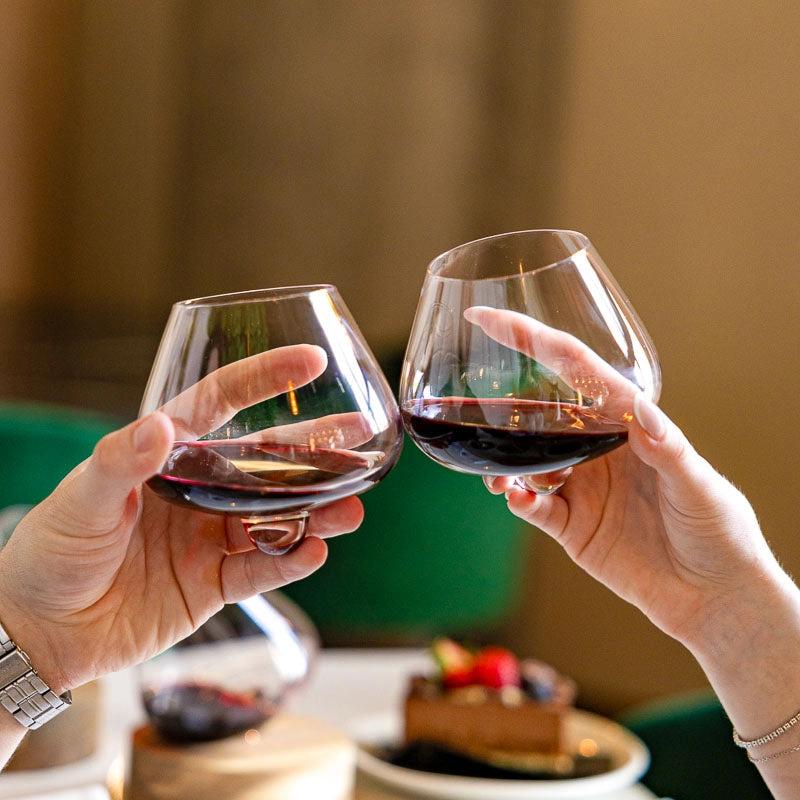
The Audacem Aequilibrium Collection features glasses hand-blown by master artisans from lead-free crystal. Each glass boasts a 360° pivot base that keeps your drink in gentle motion, aerating it beautifully on the table.
Choose from:
- Wine Glass — Ideal for Pinot, Bordeaux, Barolo, Syrah, Amarone
- Spirit Glass — Suits Whiskey, Rum, Cognac, Brandy, Liquors
- Universal Glass —Great for Pinot Blanc, Sauvignon, Pinot Noir, Chardonnay, Whiskey, Rum
Audacem has a "Buy 1 Glass, Get 1 Glass Free" promo. When you buy one glass, you receive a second glass of equal value for free. Each set comes packed in an exclusive gift box and includes a personal card and sliding envelope.
Also read: Audacem Aequilibrium Wine Glass: A Spinning Wine Glass Experience
Thoughtful Glassware for Every Pour
-
Red WineRegular price From $42.99 USDRegular priceUnit price per
$86.00 USDSale price From $42.99 USDSale -
Spirits & LiquorsRegular price From $39.99 USDRegular priceUnit price per
$80.00 USDSale price From $39.99 USDSale -
UniversalRegular price From $42.99 USDRegular priceUnit price per
$86.00 USDSale price From $42.99 USDSale -
Spirits & Red WineRegular price From $110.00 USDRegular priceUnit price per


I love this glass. I can put it down wherever on the counter and it would just move in a confined circle. Then I ordered the wonderful base! Love it. Got a few sets for gifts.
How to Tell Crystal from Glass at Home
You don't need a lab to tell the difference. These four tests work on any piece of glassware.
The Sound Test
Tap the rim gently with your fingernail. Standard glass produces a short, dull thud. Crystal rings with a clear, bell-like tone that sustains for a moment. This is the easiest and most reliable test.
The Light Test
Hold the piece up to a light source. Standard glass lets light pass through without splitting it. Crystal refracts light and casts small rainbow spectrums. If you see a prism effect, it's crystal.
The Rim Test
Run your finger along the rim. Standard glass typically has a slightly rolled edge. Crystal rims get cut and polished to a fine, almost seamless edge. The thinner the rim, the more likely it's crystal.
The Weight Test
Lead crystal is noticeably heavier than standard glass of the same size, due to the density of lead oxide. Lead-free crystal, however, can be lighter than standard glass because the minerals allow thinner walls. If the glass feels unusually light and thin, it's likely lead-free crystal.
How to Care for Crystal Glassware
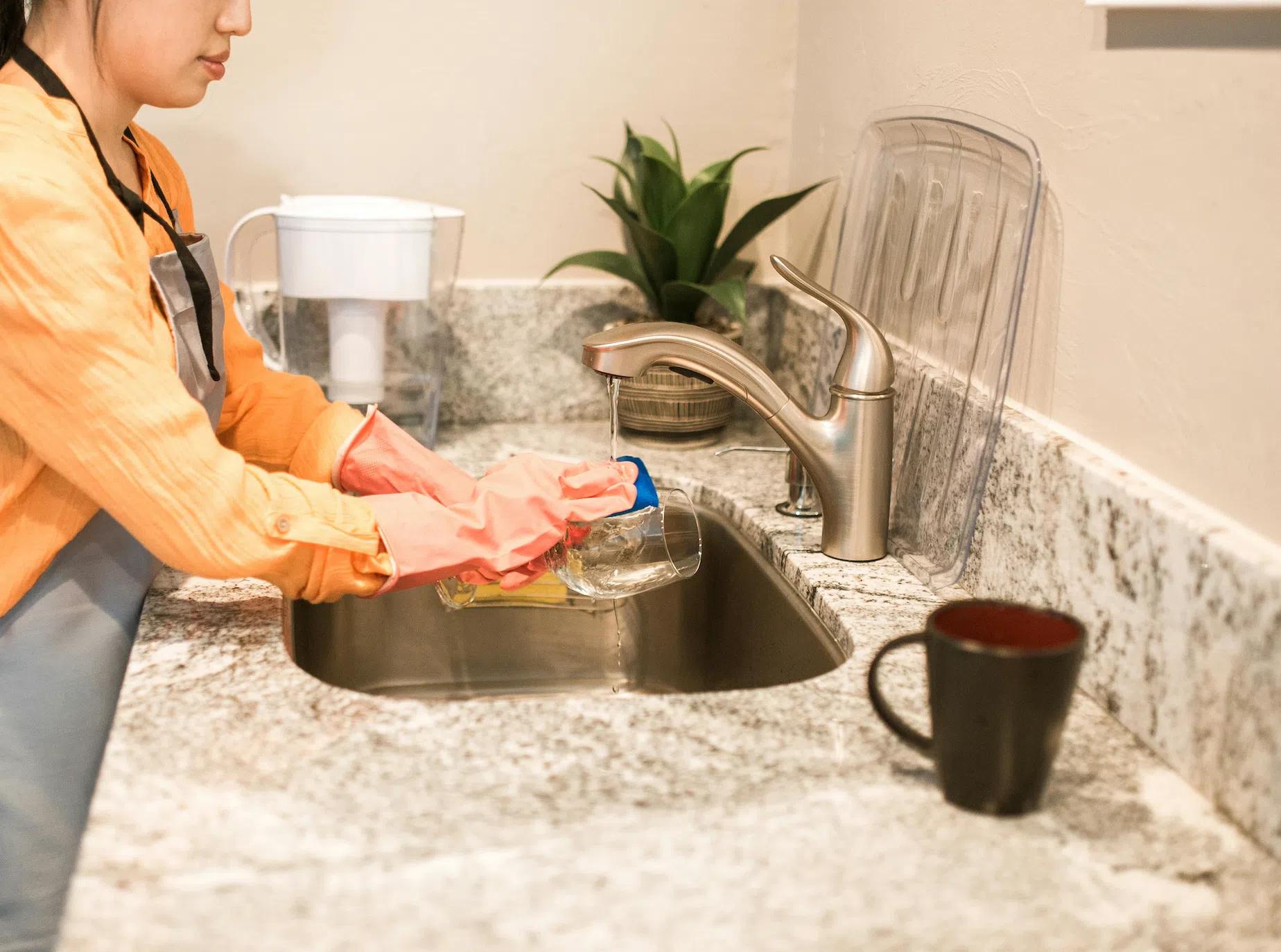
Crystal is softer than standard glass, so it needs a little more attention. These habits will keep it in good shape for years.
Hand-Washing
- Wash in warm water with a small amount of unscented dish soap.
- Rinse thoroughly, as any soap residue will affect the aroma of your next pour.
- Dry immediately with a lint-free cloth to prevent water spots.
- Never twist the bowl and stem in opposite directions. That's the most common way stems break.
Dishwasher Use
- Always check the product’s care instructions first.
- If your crystal is dishwasher-safe, space the glasses so they don't knock against each other.
- Use a dedicated stemware rack, skip the heated dry cycle, and add a rinse aid to prevent water spots.
Storage
- Store crystal glasses upright, not rim-down. Storing them inverted can trap odours from the shelf inside the bowl.
- Keep the cabinet well-ventilated and away from anything strong-smelling.
- For very fine glasses, the original box is the safest place to keep them.
Also read: The Best Crystal Wine Glasses, Reviewed and Ranked
Frequently Asked Questions
What is the difference between crystal and glass?
Crystal is glass with added minerals (historically lead oxide, now more commonly titanium or zirconium oxide). These minerals allowed manufacturers to form the glass thinner. They were able to produce a finer rim, greater clarity, and a slightly textured surface that helps release aromas. Standard glass is thicker, more durable, and fully dishwasher-safe.
What is a glass with crystals called?
A glass made with mineral additives (like lead oxide, titanium, or zirconium oxide) is called crystal glass or simply crystal. The term refers to the material, not the shape. Despite the name, crystal glassware doesn't have a true crystalline molecular structure. The name stuck because early makers sought to replicate the sparkle of natural quartz crystal.
Is crystal glass safe to drink from?
Yes. For everyday drinking, both lead and lead-free crystal are safe. The concern with lead crystal is long-term storage. But for drinking, the exposure time is too short to be a concern. For a completely worry-free experience, lead-free crystal is the best choice.
How can I tell if a glass is crystal or regular glass?
The easiest test is sound. Tap the rim with your fingernail. Crystal rings with a clear, sustained bell tone. Standard glass gives a short, dull thud. You can also hold it up to light. Crystal refracts light and casts small rainbow spectrums. Crystal also tends to have a thinner, finer rim than standard glass.
Does crystal glass make wine taste better?
It can. Crystal's slightly porous surface agitates wine when you swirl, releasing aromas faster. A thinner rim also affects how liquid flows onto your palate.
Is lead-free crystal as good as lead crystal?
Yes, and in many ways better. Modern lead-free crystal achieves the same thinness, clarity, and ring as traditional lead crystal, without the health concerns. Many lead-free options are also dishwasher-safe, which traditional lead crystal is not.
Can crystal glasses go in the dishwasher?
It depends on the glass. Traditional lead crystal requires hand-washing. Many modern lead-free crystal glasses are dishwasher-safe, but always check the care instructions. If you do use a dishwasher, space the glasses well, skip the heated dry cycle, and use a rinse aid.
Why is crystal glass more expensive than regular glass?
Crystal costs more because of the materials involved and the manufacturing process. Fine crystal is often hand-blown, which requires skilled artisans and more time. The mineral additives also increase material costs. That said, lead-free crystal has become more accessible, and good options exist at a range of price points. Take our Aequilibrium Crystal Glasses, for example.
Shop the Aequilibrium Glass Collection
-
Red WineRegular price From $42.99 USDRegular priceUnit price per
$86.00 USDSale price From $42.99 USDSale -
Spirits & LiquorsRegular price From $39.99 USDRegular priceUnit price per
$80.00 USDSale price From $39.99 USDSale -
UniversalRegular price From $42.99 USDRegular priceUnit price per
$86.00 USDSale price From $42.99 USDSale -
Spirits & Red WineRegular price From $110.00 USDRegular priceUnit price per