
What Is a Glencairn Whiskey Glass?
- A Glencairn whiskey glass is a short, stemless glass with a wide bowl that tapers to a narrower mouth.
- It was designed in Scotland in 2001 specifically for tasting whiskey.
- The wide bowl lets you see the whiskey's color and swirl it easily.
- The tapered mouth concentrates the aromas, so you can nose the spirit before you sip.
- The solid base makes it comfortable to hold and sturdy enough for everyday use.
The History of the Glencairn Glass

Origins
The story of the Glencairn glass starts with Raymond Davidson, the founder of Glencairn Crystal in East Kilbride, Scotland. In the 1980s, Davidson noticed that whisky—unlike wine, brandy, or beer—had no glass of its own. He set out to fix that.
His inspiration was the traditional copita, a long-stemmed nosing glass used by distillers for centuries. Davidson wanted to keep the sensory benefits of the copita (the tapered mouth and the bowl shape) but make it more practical (no stem, a solid base, and thicker walls).
The Design Process
Davidson drafted a whisky nosing glass prototype. But for nearly two decades, the design sat in a drawer. It was Davidson's sons who rediscovered the sketches and decided to bring them to life.
Before the glass went to market, Glencairn Crystal brought in master blenders from five of Scotland's largest whisky distilleries. Their input shaped the final design.
Launch and Recognition
The Glencairn glass launched in 2001 at WhiskyFest in Chicago. It was an immediate hit. Within five years, it had won the Queen's Award for Innovation, one of the UK's most prestigious business honours.
It became the first whisky glass ever endorsed by the Scotch Whisky Association. Today, it’s regarded as one of the best whiskey glasses for tasting.
The Anatomy of a Glencairn Glass
Every part of the Glencairn has a purpose. This Glencairn glass review explains what each element does.
The Wide Bowl
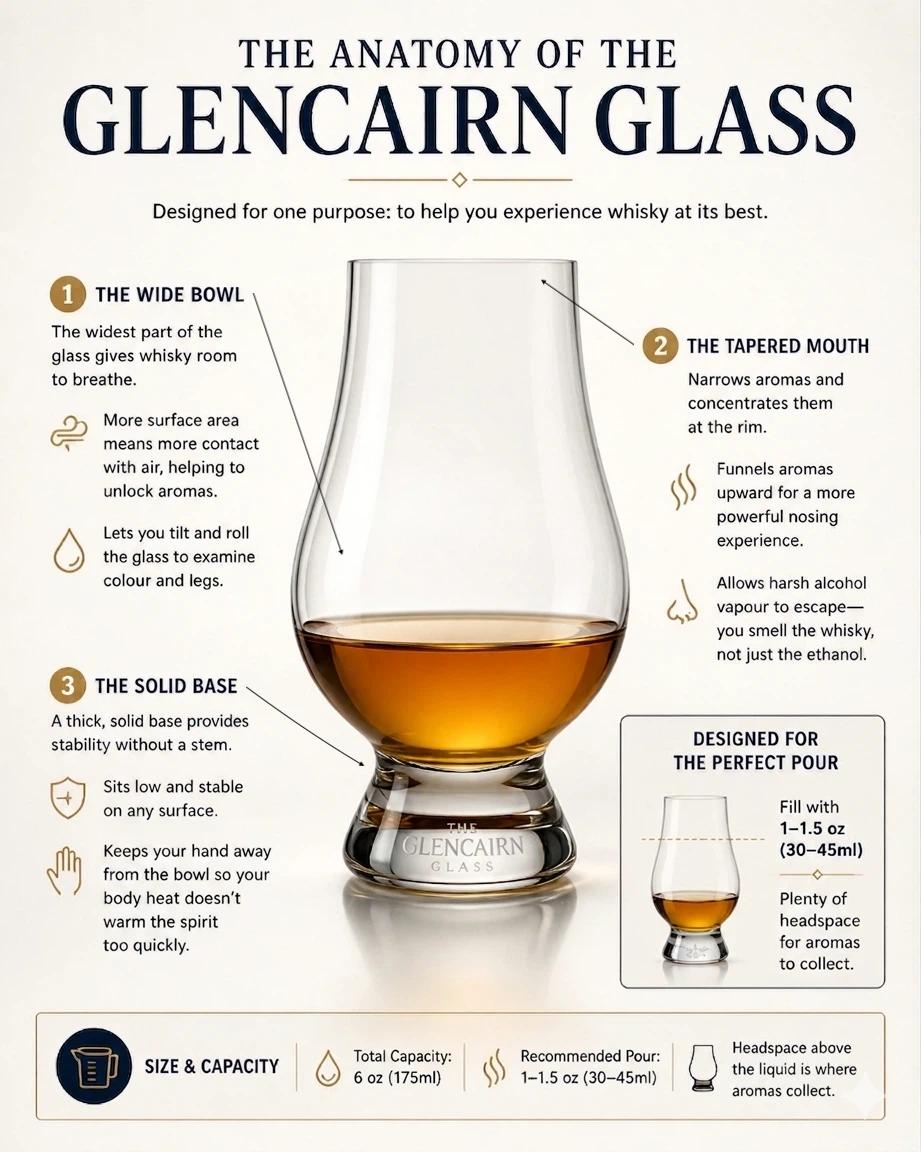
The bowl is the widest part of the glass. It gives the whiskey room to breathe. The larger surface area means more contact with air, which helps open up the aromas. It also lets you tilt and roll the glass to examine the spirit's color and legs (the streaks that run down the inside of the glass after swirling).
The Tapered Mouth
As the bowl narrows toward the top, it funnels the aromas upward and concentrates them at the rim. This is what makes nosing a Glencairn so effective. The taper also lets some of the harsh alcohol vapor escape before it reaches your nose.
The Solid Base
Unlike a wine glass, the Glencairn has no stem. Instead, it has a thick, solid base that sits low and stable on a table. The base also keeps your hand away from the bowl, so your body heat doesn't warm the spirit too quickly.
Size and Capacity
The standard Glencairn holds about 6 ounces (175ml) in total, but it's best filled with a 1–1.5 oz (30–45ml) pour. That leaves plenty of headspace above the liquid, where the aromas collect before you nose the glass.
Want More From Every Pour?
The Aequilibrium Spirit Glass is hand-blown from lead-free crystal and engineered to aerate your whisky as you hold it.
Shop the Aequilibrium Spirit GlassHow to Use a Glencairn Glass
You don't need to be a professional taster to get the most out of a Glencairn. Follow these steps to experience a real difference in how your whiskey smells and tastes.
- Pour a small measure. Aim for about 1 oz (30ml). You want the bowl mostly empty, so the aromas have room to gather.
- Look at the color. Tilt the glass against a white background. The color tells you about the cask. Pale gold suggests ex-bourbon barrels; deep amber points to sherry casks.
- Swirl gently. A slow swirl coats the bowl and releases more aroma compounds into the headspace.
- Nose with your mouth slightly open. Hold the glass a few centimetres from your nose and breathe in slowly. Opening your mouth slightly reduces the impact of the alcohol and lets you pick up more nuance.
- Taste and let it sit. Take a small sip and let it coat your whole palate before swallowing. Notice what changes.
- Add a few drops of water (optional). A small splash of still water can open up the whisky further. This softens the alcohol and reveals flavours that were hidden. Try it before and after to see which you prefer.
What Whisky Is the Glencairn Glass Best For?
The Glencairn was originally designed for Scotch whisky, but it works well with almost any whisky or whiskey style.
Scotch Whisky
Single malts, blended malts, and blended Scotch all benefit from the Glencairn's tapered mouth. It concentrates the complex aromas that make Scotch so interesting to nose.
Bourbon and American Whiskey
Bourbon drinkers often prefer a slightly more open glass that lets the sweeter, vanilla-forward aromas breathe freely. The Glencairn works, but some bourbon enthusiasts find the taper a little too restrictive.
Irish Whiskey
Irish whiskey tends to be lighter and more floral than Scotch. The Glencairn's bowl captures those delicate notes well.
Japanese Whisky
Japanese whisky brings subtlety and balance. The Glencairn's ability to concentrate aromas makes it an excellent choice.
Glencairn vs. Other Whisky Glasses
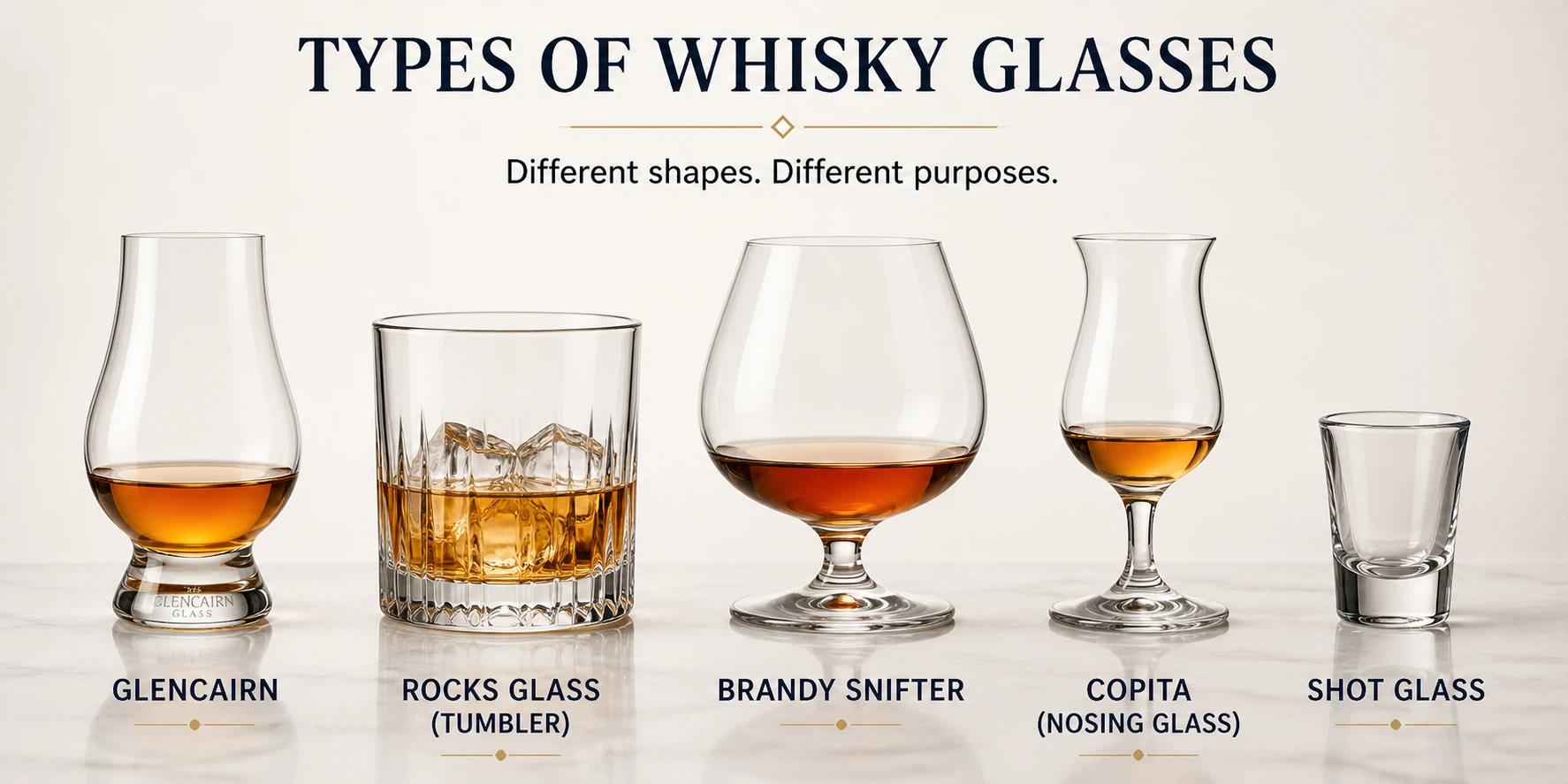
The Glencairn isn't your only option. Here's how it compares to the most common alternatives.
Glencairn vs. Rocks Glass (Tumbler)
The rocks glass (also called the Old Fashioned glass) is the most common whiskey glass in bars. It's wide, open, and great for whiskey on the rocks or in cocktails. But that wide opening lets aromas escape quickly. For neat tasting, the Glencairn wins easily.
Glencairn vs. Brandy Snifter
The snifter has a similar bowl shape but a much wider mouth. It concentrates aromas well, but the opening is too wide to direct them efficiently to your nose. The Glencairn's tighter taper does a better job of focusing the nose.
Glencairn vs. Copita (Nosing Glass)
The copita is the Glencairn's direct ancestor. It has a long stem and a tulip-shaped bowl that's excellent for nosing. Professional blenders still use it. But the stem makes it fragile and impractical for casual use. The Glencairn brings those same sensory benefits to a more everyday format.
Glencairn vs. Shot Glass
A shot glass caters to speed, not appreciation. There's no bowl, no taper, and no headspace. If you're drinking whisky to savor it, a shot glass is the wrong tool for the job.
If you’re shopping for a whiskey glass, we have full reviews of the best options. Read our blog: The 7 Best Whiskey Glasses for Better Taste.
Beyond the Glencairn: What Comes Next?
So, is the Glencairn glass worth it? Yes, it's a great starting point. But if you want to go further, there are glasses built on the same principles, and then some.

The Audacem Aequilibrium Spirit Glass is hand-blown from lead-free crystal with a 360° pivot base. It keeps your whisky (or other spirits) in gentle motion as it sits on the table, aerating it between sips. It's designed for the same purpose as the Glencairn, but takes the experience a step further.
Glencairn Glass Variations
The original Glencairn glass has spawned a range of variations over the years. Here are the most common ones you'll come across.
- The Original Glencairn. The standard version with a 6oz capacity, made from machine-blown glass by Stolzle in Germany.
- The Wee Glencairn. A smaller version used by distilleries for samples and tasting flights. Holds about 1.5 oz.
- The Canadian Glencairn. A larger version designed for Canadian whisky, which often comes with ice cubes.
- Cut Crystal Glencairn. A decorative version with cut crystal detailing on the bowl. More of a gift or display piece than a daily drinker.
- Coloured Blind Tasting Glasses. Opaque versions in black, blue, red, green, and gold. Used for blind tastings where you want to focus purely on aroma and flavour.
Note that "Glencairn" has become something of a generic term (like Kleenex for tissues). Many glasses sold as "Glencairn-style" are not made by Glencairn Crystal. If you want the original, look for the official Glencairn branding.
How to Clean and Care for a Glencairn Glass

The standard Glencairn features machine-blown glass, which makes it more durable than crystal. But it still benefits from a little care.
- Hand-washing is best. Use warm water and a small amount of unscented dish soap. Rinse thoroughly.
- Dry immediately. Use a lint-free cloth to prevent water spots. Air-drying can leave mineral deposits that dull the glass.
- Store upright. Don't store the glass rim-down. It can trap odors from the shelf inside the bowl.
- Dishwasher use. The standard Glencairn is generally dishwasher-safe, but hand-washing keeps it cleaner and extends its life. If you do use a dishwasher, skip the heated dry cycle.
Frequently Asked Questions
What is a Glencairn whiskey glass used for?
A Glencairn glass is best for tasting whiskey neat. It's the standard glass used in distilleries and whiskey bars worldwide. The wide bowl lets you see the color and swirl the spirit. The tapered mouth concentrates the aromas, so you can nose the drink properly before you sip.
Is the Glencairn glass only for Scotch whisky?
No. Though designed with Scotch in mind, the Glencairn works well with any whisky or whiskey style (bourbon, Irish, Japanese, rye, and more).
How much does a Glencairn glass hold?
The standard Glencairn has a total capacity of about 6 oz (175ml), but it's designed for a 1–1.5 oz (30–45ml) pour. The extra headspace is intentional, so the aromas collect before you nose the glass.
Can you drink bourbon from a Glencairn glass?
Yes. The Glencairn works well for bourbon, especially for neat pours. Some bourbon drinkers prefer a slightly wider glass that lets the sweeter aromas breathe more freely, but the Glencairn is still a solid choice.
Is the Glencairn glass made of crystal?
The standard Glencairn features machine-blown glass, not crystal. Glencairn Crystal does produce cut crystal versions, but the classic glass in distilleries and bars worldwide is regular glass.
What is the difference between a Glencairn glass and a rocks glass?
A rocks glass (or tumbler) has a wide, open top that lets aromas escape quickly. It's designed for whiskey on the rocks or in cocktails. A Glencairn has a tapered mouth that concentrates aromas and suits neat tasting. For appreciating whiskey, the Glencairn is the better tool.
How do you clean a Glencairn glass?
Hand-wash with warm water and a small amount of unscented dish soap. Rinse thoroughly and dry immediately with a lint-free cloth. Store upright to prevent odors from collecting inside the bowl. The standard Glencairn is dishwasher-safe, but hand-washing keeps it in better condition.
What is a good alternative to the Glencairn glass?
Look for a glass that keeps the same core design: a tapered mouth, a wide bowl, and enough headspace. The copita is the closest traditional alternative, but the stem makes it fragile and less practical for everyday use. Lead-free crystal glasses with the same tulip shape, like our Aequilibrium Spirit Glass, offer another option.
Upgrade Your Whisky Glass
-
Red WineRegular price From $42.99 USDRegular priceUnit price per
$86.00 USDSale price From $42.99 USDSale -
Spirits & LiquorsRegular price From $39.99 USDRegular priceUnit price per
$80.00 USDSale price From $39.99 USDSale -
UniversalRegular price From $42.99 USDRegular priceUnit price per
$86.00 USDSale price From $42.99 USDSale -
Spirits & Red WineRegular price From $110.00 USDRegular priceUnit price per