

Quick Answer: Universal Wine Glass vs White Wine Glass
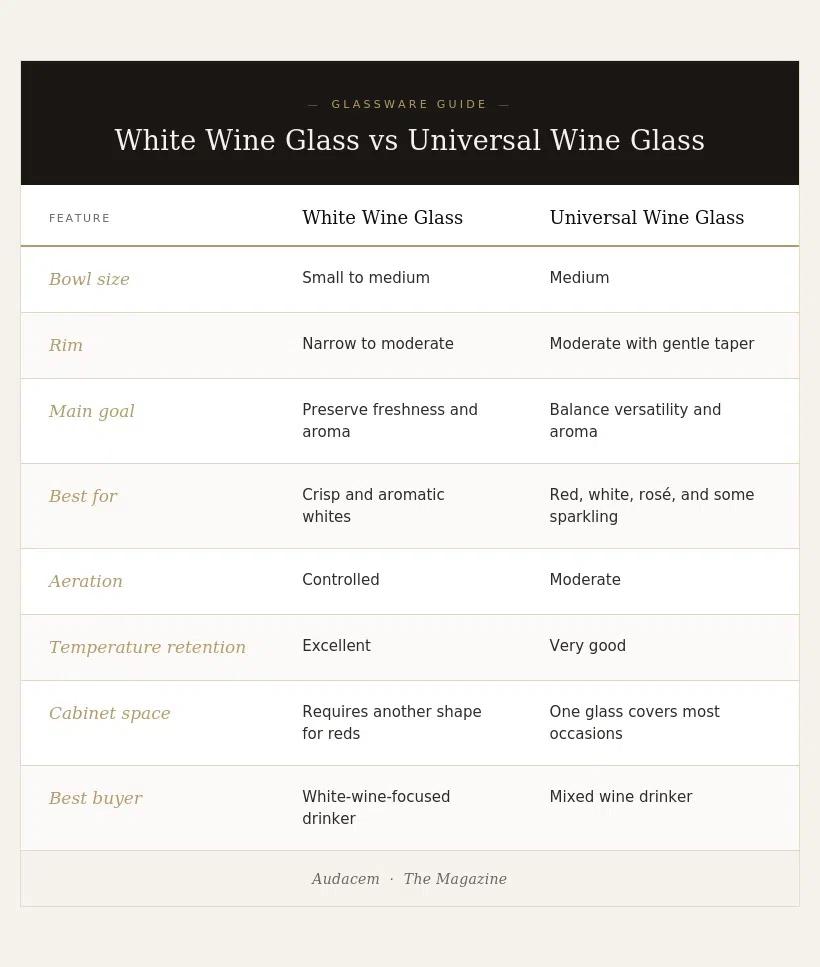
- A white wine glass typically has a smaller, narrower bowl. It's designed to preserve chilled temperatures and concentrate delicate aromas.
- A universal wine glass uses a medium-sized bowl that sits between traditional red and white wine shapes. It gives enough room to swirl reds while still working well with most whites.
- Choose a white wine glass if you mainly drink Sauvignon Blanc, Riesling, Pinot Grigio, or other light, aromatic whites.
- Choose a universal wine glass if you regularly switch between white, red, rosé, and sparkling wines.
If you want one glass that can move from Sauvignon Blanc to Chardonnay and then to a lighter red, the Aequilibrium Universal Glass by Audacem ($42.99) offers an especially distinctive approach. It combines hand-blown, lead-free crystal with a 360º pivoting base that keeps the wine in gentle motion, encouraging aeration.
Hand-blown crystal that aerates as the Aequilibrium spins.
Aequilibrium Universal: Your Everyday Wine Glass
A well-shaped universal glass with a pivoting base. Flexibility without sacrificing the ritual of a proper wine pour.
Get the Universal GlassWhat Is a White Wine Glass?
A white wine glass caters to the unique characteristics of white wine: freshness, acidity, floral aromas, citrus notes, and a cooler serving temperature.
Compared with a large red wine glass, the classic white wine glass usually features a smaller bowl and narrower opening. The design keeps the wine closer to the nose while limiting the amount of wine exposed to warm air.
Wine Folly notes that smaller-bowled white wine glasses can help preserve floral aromas and cooler temperatures while emphasizing acidity. It also points out that fuller-bodied whites such as oak-aged Chardonnay and Viognier can benefit from a larger bowl.
That distinction is important because white wine does not always mean one specific glass shape.
The Typical White Wine Glass Shape

- A small to medium bowl
- A relatively narrow opening
- A gently tapered rim
- Enough height to allow some swirling
- A stem that keeps your hand away from the bowl
The narrower profile helps maintain the wine's freshness while concentrating aromas toward the rim. For highly aromatic whites, that concentration is useful. Instead of spreading the wine across a very large bowl, the glass creates a more focused aromatic space above the liquid.
Also read: Best White Wine Glasses: Expert-Tested Picks
What Is a Universal Wine Glass?
A universal wine glass takes a middle-ground approach. Rather than optimizing the bowl for one category of wine, it aims to perform well across several styles. Its bowl generally sits between a classic white wine glass and a larger red wine glass.
The design needs enough volume for a moderate pour of red wine to swirl comfortably. But it cannot become so large that delicate whites lose their freshness.
That balance explains why universal glasses have become popular with home wine drinkers. You can serve different wines throughout one meal without changing the glassware after every bottle.
A universal glass also makes sense with limited cabinet space. Instead of maintaining separate sets for white, red, rosé, and other styles, you can invest in one well-made shape and use it for most occasions.
Also read: Best Universal Wine Glasses Worth Buying
A Hand-Blown Universal Glass With a Different Kind of Aeration

If you prefer the flexibility of a universal glass but want something more unique than conventional stemware, the Aequilibrium Universal Glass takes a different approach.
Audacem hand-blows each glass from 100% lead-free crystal. The 300 ml glass has a 360º pivoting base that allows it to rock and rotate rather than sitting still on the table. The movement keeps the wine gently exposed to air between sips.
The current discounted price is $42.99, reduced from $86, for a set of 2 glasses, delivered in sophisticated, gift-ready packaging.
Imagine opening a chilled bottle of Sauvignon Blanc with friends, pouring a moderate serving, and setting the glass down while dinner continues. Instead of the wine sitting still between conversations, the glass gently pivots on its base. It becomes part of the evening without demanding attention.
Also read: What Is a Spinning Universal Glass? The Aequilibrium Guide
- 2,200+ verified reviews
- 30-day warranty
- Free shipping over $65
Make Every White Wine Pour More Memorable
Bring craftsmanship and movement to your table with a versatile hand-blown crystal wine glass by Audacem.
Shop AequilibriumUniversal Wine Glass vs White Wine Glass: The Key Differences
Neither shape is automatically better. The right choice depends on what you drink most often and how much specialization you want from your glassware. The easiest way to understand the choice is to compare what each shape prioritizes.
How Bowl Shape Changes the Wine
The bowl controls the amount of surface area exposed to air, the distance between the wine and the nose, and the way aromas gather near the opening.
A very large bowl creates more room for swirling and oxygen exposure. That can benefit structured wines that need time to open.
A smaller bowl limits that exposure. For chilled white wines, that can help preserve freshness and keep delicate aromas focused.
A universal glass sits between those extremes. Its bowl should give enough room to swirl without making a light white feel lost inside the vessel. Wine Enthusiast recommends a universal bowl that can aerate red wine without over-aerating white or flattening sparkling wine.
How Rim Size Affects the Drinking Experience
The rim creates the final transition between the glass and your palate.
A thin, clean rim feels less intrusive when taking a sip. A narrow opening can also help concentrate aromas before the wine reaches the mouth. This becomes especially noticeable with white wine because much of its appeal comes from aromatic detail.
A Sauvignon Blanc, for example, may show citrus, herbs, flowers, and mineral notes. A focused bowl and rim can help direct those aromas toward the nose before the first sip.
A universal wine glass still needs this precision. Versatility does not mean the glass should have a thick or clumsy rim.
When shopping for either style, look for a rim that feels fine and even rather than simply choosing based on bowl size.
Which Glass Is Better for Different White Wines?

Sauvignon Blanc
A narrower white wine glass works well for crisp Sauvignon Blanc. Its shape helps emphasize acidity and fresh citrus or herbal aromas.
A universal glass can also perform very well, especially when its bowl remains moderately sized and gently tapered.
Riesling
Riesling benefits from aromatic focus, making a smaller white wine glass a natural choice. The narrower bowl helps keep the wine's floral and fruit-driven character concentrated near the rim.
Pinot Grigio
For light, refreshing Pinot Grigio, a traditional white wine glass offers the temperature and aroma control this style needs.
A universal glass is a practical alternative when you want to use the same glass for other wines during the meal.
Chardonnay
A lean, unoaked Chardonnay can work beautifully in a smaller bowl. A richer, oak-aged Chardonnay benefits from more room, allowing its broader texture and aromas to develop.
This is where a universal glass proves useful. Its medium bowl provides more breathing room than a narrow white wine glass without moving into the oversized territory associated with full-bodied reds.
Can You Use a Universal Wine Glass for White Wine?
Yes. For most white wines, a good universal glass works very well. The important qualification is "good."
A universal wine glass should not simply be a large glass marketed as all-purpose. It needs the right proportions. Look for a bowl that:
- Allows a moderate pour to reach the widest part
- Gives you room to swirl without spilling
- Narrows gently toward the rim
- Provides enough headspace for aromas
- Does not overwhelm chilled white wine
The best universal glass essentially gives you a controlled compromise. You may lose a small amount of specialization compared with a dedicated white wine glass, but you gain considerably more flexibility.
When a White Wine Glass Is the Better Choice

A dedicated white wine glass makes sense when white wine represents the majority of what you drink. It is particularly useful if you frequently open:
- Sauvignon Blanc
- Riesling
- Pinot Grigio
- Albariño
- Chenin Blanc
- Other light-bodied, aromatic whites
It also makes sense if you already own appropriate red wine glasses and want to complete a more specialized collection.
The advantage comes from precision. Instead of asking one glass to do several jobs, you choose a shape that focuses on freshness, temperature, and delicate aroma. For serious white wine enthusiasts, that specialization can be worthwhile.
When a Universal Wine Glass Is the Better Choice

A universal wine glass usually makes more sense for households that drink broadly. Choose one if you:
- Drink both red and white wine
- Host dinners where guests prefer different wines
- Have limited cabinet space
- Want fewer types of stemware
- Prefer a single everyday glass
- Want a versatile glass that can also handle rosé and some sparkling wines
The appeal is that a universal glass performs well across a wide range of wines without forcing you to maintain a large collection. That makes it especially practical for everyday drinking.
Discover Glassware Made for the Experience
-
Red WineRegular price From $42.99 USDRegular priceUnit price per
$86.00 USDSale price From $42.99 USDSale -
Spirits & LiquorsRegular price From $39.99 USDRegular priceUnit price per
$80.00 USDSale price From $39.99 USDSale -
UniversalRegular price From $42.99 USDRegular priceUnit price per
$86.00 USDSale price From $42.99 USDSale -
Spirits & Red WineRegular price From $110.00 USDRegular priceUnit price per


I love that I can use the same glass for a crisp white at dinner and a red afterward. It feels versatile without looking like an all-purpose glass.
How Much Should You Spend on a Wine Glass?
Price matters, but it should not be the first factor you consider. A well-designed inexpensive glass can outperform a poorly shaped expensive one.
Start with the fundamentals: bowl proportions, rim quality, balance, clarity, durability, and how the glass feels in your hand.
If you drink wine casually, a durable universal glass may provide all the performance you need. If you regularly buy premium bottles, investing in finer glassware becomes easier to justify.
Hand-blown crystal sits at the premium end because each piece requires more skilled labor and careful shaping. You also get the visual clarity, thinness, and tactile quality associated with artisan glassmaking. For a glass you use every week, or one you give as a meaningful gift, that can make the higher price feel more reasonable.
Also read: The Beauty of Handmade Glassware: Artisan Pieces Worth Owning
How to Choose Between the Two

If you're still deciding, use your drinking habits as the guide.
- Choose a white wine glass when: White wine makes up most of your drinking, you value chilled temperature and aromatic precision, and you already have suitable glassware for reds.
- Choose a universal wine glass when: You drink several wine styles, want to simplify your cabinet, or want one glass that can move from a crisp white to a lighter red.
- Choose a more specialized white wine shape when: You frequently explore aromatic whites and want to fine-tune the tasting experience.
- Choose a premium universal glass when: You want versatility but still care about craftsmanship, rim quality, balance, and the overall ritual of drinking wine.
Final Thoughts: Finding the Right White Wine Glass for You

The difference between a universal wine glass and a white wine glass comes down to specialization versus flexibility.
A dedicated white wine glass gives crisp and aromatic whites a shape designed around their strengths.
A universal glass makes a different promise: one carefully balanced shape that performs well across most of the wines you are likely to pour at home. For many wine drinkers, that versatility wins.
Look for thoughtful proportions, a fine rim, good balance, quality material, and a shape that matches the way you drink wine. And if you want that everyday versatility with a strong sense of craftsmanship, a hand-blown universal glass such as the Aequilibrium adds another dimension. Its pivoting base turns gentle movement into part of the whole experience.
- Hand-blown by master artisans
- Free shipping on orders over $65
- Try risk-free for 30 days
Discover Hand-Blown Glassware for Every Pour
Explore the Aequilibrium Glass Collection for handcrafted crystal designed around wine, spirits, and everyday enjoyment.
Shop the Aequilibrium Glass CollectionFrequently Asked Questions
Is a universal wine glass good for white wine?
Yes. A well-designed universal wine glass works very well for most white wines. Its medium bowl provides enough room for aroma development while its tapered shape keeps the wine focused.
What is the difference between a universal wine glass and a white wine glass?
A white wine glass generally has a smaller, narrower bowl designed to preserve freshness and concentrate delicate aromas. A universal glass has a medium-sized bowl designed to balance the needs of both red and white wine.
Can you drink white wine from a universal glass?
Yes. Universal glasses work well with Chardonnay, Sauvignon Blanc, Pinot Grigio, rosé, and many other wines. The main trade-off is that a dedicated white wine glass may provide slightly more temperature and aroma control for delicate whites.
Does a white wine glass keep wine colder?
Generally, yes. The smaller bowl of a traditional white wine glass exposes less wine to surrounding air and encourages smaller pours, which can help maintain serving temperature. Your pouring habits and room temperature also matter.
What shape should a white wine glass be?
A classic white wine glass has a small to medium bowl, relatively narrow opening, and gentle taper. The exact shape can vary depending on the wine. Crisp aromatic whites typically suit narrower bowls, while fuller-bodied whites can benefit from more space.
Can you use one wine glass for red and white wine?
Yes. That is the purpose of a universal wine glass. It provides enough bowl space for many reds while remaining controlled enough for most whites. You may give up some varietal-specific performance, but the convenience can be worth it.
Are expensive wine glasses worth it?
They can be, especially if you drink wine often. Premium glasses may offer thinner rims, better balance, finer crystal, and more refined construction. However, price alone does not guarantee better performance.
Is crystal better than regular glass for wine?
Quality crystal can provide greater clarity and allow manufacturers to create thinner, finer glassware. Lead-free crystal also offers a premium feel without relying on lead. The overall shape and construction still matter more than the material name alone.
Shop the Aequilibrium Glass Collection
-
Red WineRegular price From $42.99 USDRegular priceUnit price per
$86.00 USDSale price From $42.99 USDSale -
Spirits & LiquorsRegular price From $39.99 USDRegular priceUnit price per
$80.00 USDSale price From $39.99 USDSale -
UniversalRegular price From $42.99 USDRegular priceUnit price per
$86.00 USDSale price From $42.99 USDSale -
Spirits & Red WineRegular price From $110.00 USDRegular priceUnit price per