
Quick Answer: What Is a Whiskey Snifter Glass?
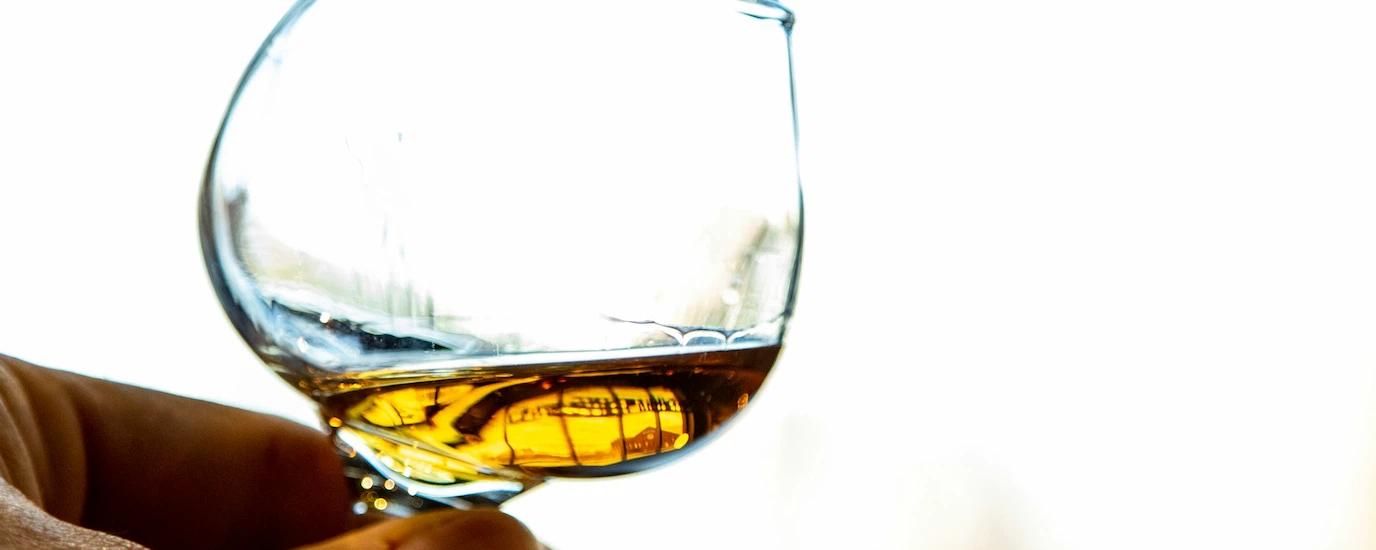
- A whiskey snifter is a short-stemmed glass with a wide, balloon-shaped bowl and a narrowed rim.
- The bowl's large surface area accelerates evaporation, releasing aromatic compounds from the spirit. The narrow opening captures those aromas and funnels them toward your nose.
- Most snifters hold 6 to 8 oz, though a proper pour fills only 1 to 1.5 oz of that.
- The snifter is best used for complex, aged whiskeys served neat, particularly straight bourbon, Scotch single malt, and Irish whiskey at a standard ABV of 40 to 46%.
The Anatomy of a Snifter Glass
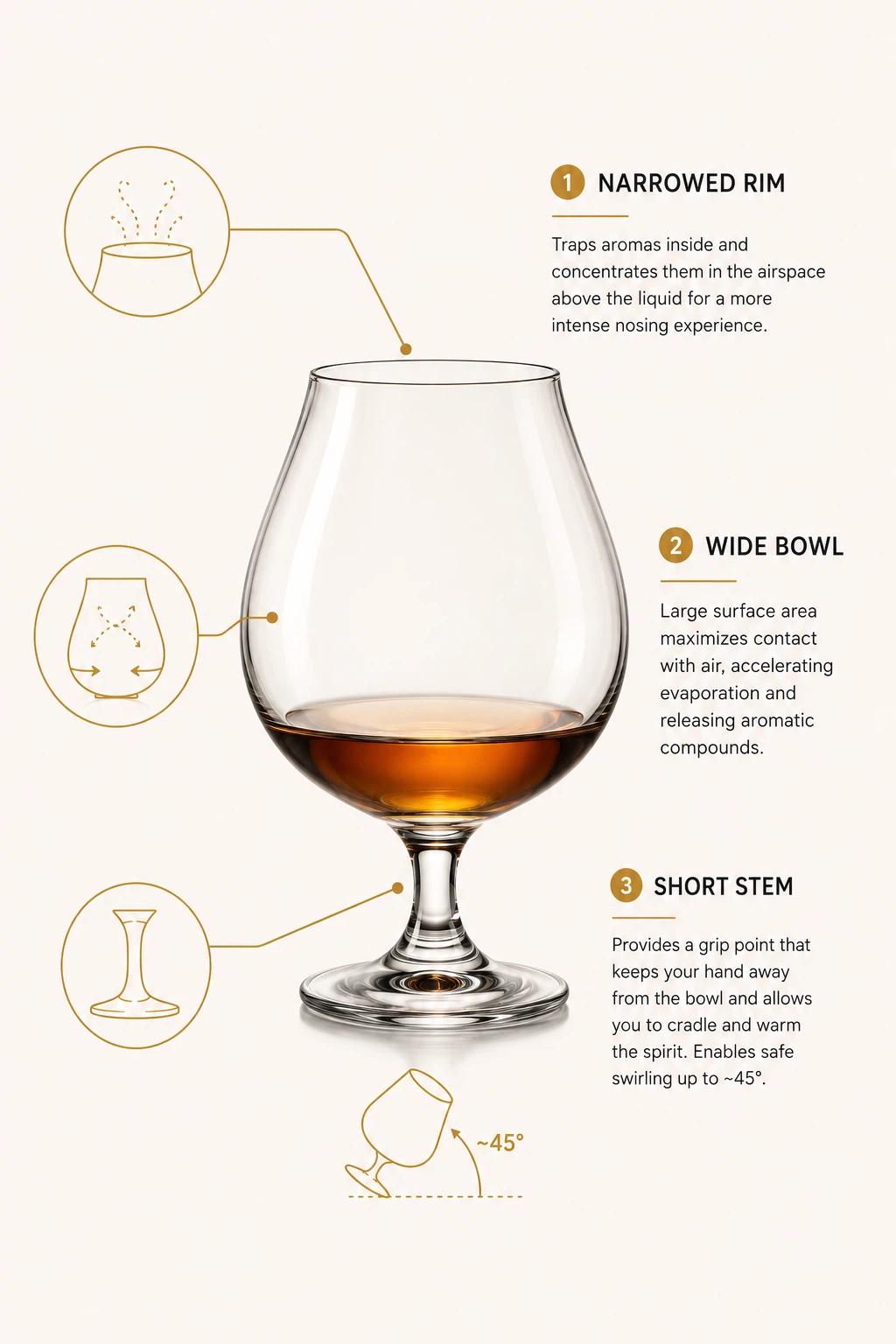
Three design elements work together in every snifter. Each one serves a distinct function.
The Wide Bowl
The bowl is the snifter's defining feature. Its large internal surface area maximizes contact between air and spirit, accelerating evaporation. That evaporation releases volatile aromatic compounds, the molecules responsible for the vanilla, oak, dried fruit, and spice notes you detect when you nose a whiskey.
The Narrowed Rim
Unlike a rocks glass or a highball, the snifter's opening is significantly narrower than its widest point. This shape traps aromas inside the glass and concentrates them in the airspace above the liquid. When you bring the glass to your nose, you catch the full aromatic picture before you take a sip.
The Short Stem
The stem gives you a clean grip point that keeps your hand away from the bowl. It also allows you to cradle the bowl in your palm when you want to warm the spirit gently, which opens up aromas in whiskeys that are cooler or more closed. Most snifters can tilt to roughly 45 degrees without spilling, making swirling risk-free.
How the Snifter Shapes Your Whiskey Experience
The relationship between glass shape and flavor perception comes down to aroma. Research in sensory science shows that aroma accounts for the vast majority of what we interpret as flavor. The bowl-and-rim design covered above exists specifically to maximize how much of it reaches you.
The payoff shows up every time you lift the whiskey glass. That aromatic cloud trapped above the liquid hits your nose before the whiskey touches your tongue. This explains why a snifter can make the same pour taste more complex than it would in a plain tumbler.
A Note on Cask-Strength Whiskeys
One honest caveat: the snifter's aroma concentration works against you with very high-ABV expressions.
Whiskeys above 55 to 60% ABV release ethanol vapor alongside their aromatic compounds. The snifter's narrow opening traps both. The result can be an alcohol burn that overpowers everything else.
For cask-strength bottlings, a wider-rimmed glass gives the ethanol somewhere to escape. At 40 to 50% ABV, which is the range of most commercial expressions, the snifter performs well.
Snifter vs. Glencairn vs. Rocks Glass
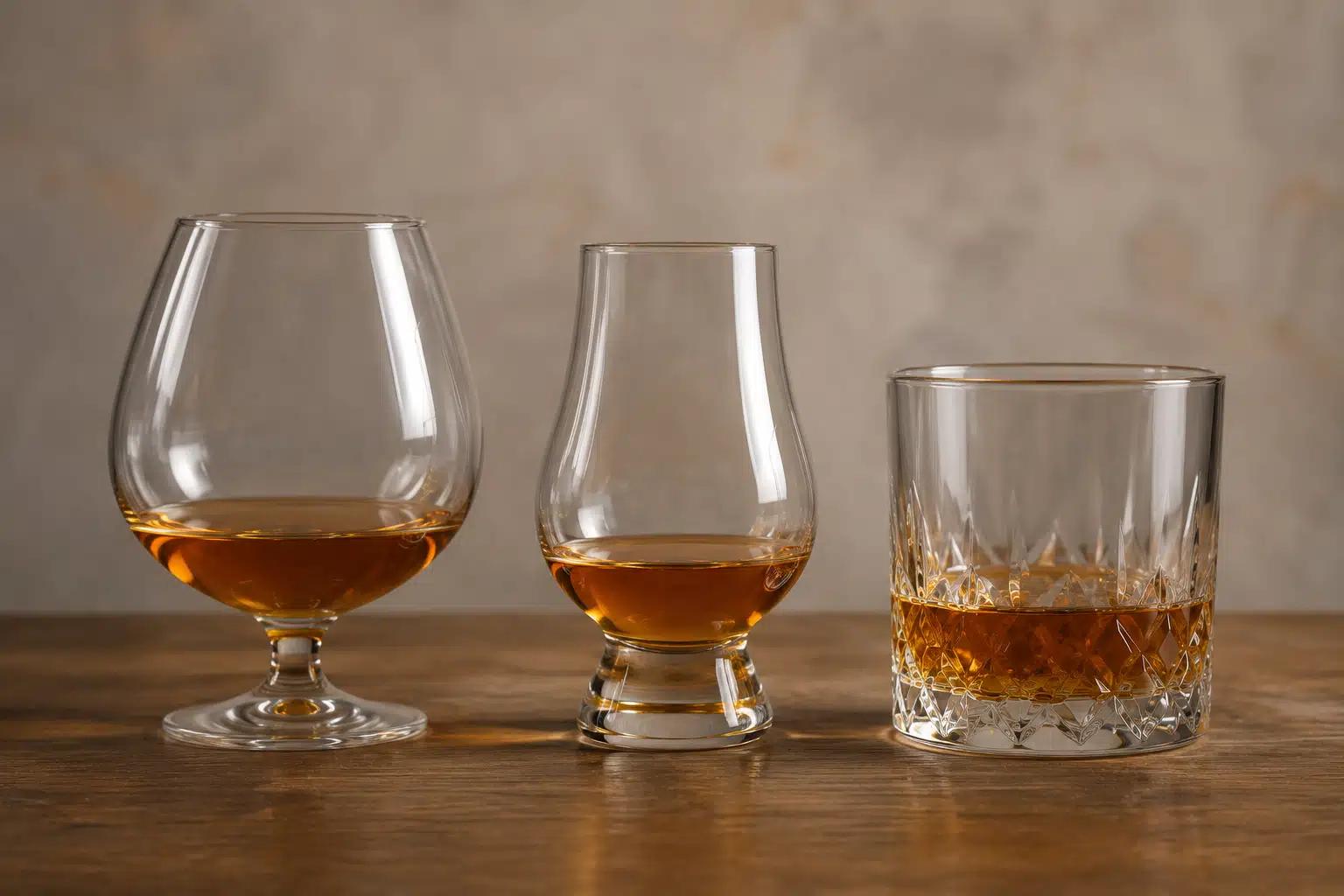
These three glasses dominate whiskey culture. Each one serves a different purpose. Knowing when to reach for each one makes a practical difference to how you experience your pour.
The Snifter
The snifter offers the largest bowl of the three, which suits aged expressions with many aromatic layers. Its short stem and cradleable bowl make it the most tactile option.
Choose it for a slow, contemplative pour of a well-aged bourbon or a complex single malt. Avoid it for cocktails, ice, or anything above 55% ABV.
The Glencairn Glass
The Glencairn is the industry standard for whiskey tasting and arguably the most purpose-built glass in this category. Its tapered tulip bowl concentrates aromas effectively, and its heavy base makes it stable and easy to swirl.
Compared to the snifter, the Glencairn is more controlled and focused. It is better suited to blind tastings and side-by-side comparisons.
Also read: What Is a Glencairn Whiskey Glass? A Complete Guide
The Rocks Glass
The rocks glass is not a whiskey tasting glass. Its wide, open rim lets aromas escape rather than concentrate them.
It is, however, the most versatile option. It is ideal for whiskey on the rocks, cocktails like the Old Fashioned, and any occasion where nosing is not the point. Rocks glasses are not in competition with the snifter, as they serve different moments.
[H4] Quick Reference:
- Neat, complex, aged whiskey → snifter or Glencairn
- Tasting events and side-by-side comparisons → Glencairn
- Whiskey on the rocks or cocktails → rocks glass
- Cask-strength expressions → rocks glass or wide-rimmed tumbler
Also read: Types of Whiskey Glasses for the Perfect Glass of Whiskey
Where the Aequilibrium Spirit Glass Fits In
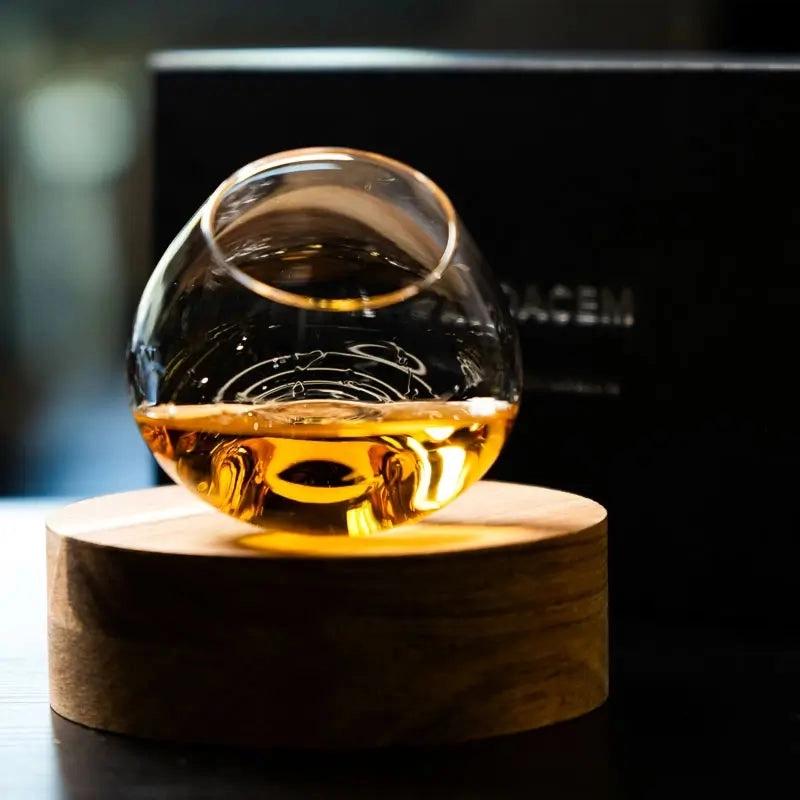
None of the three glasses above actively change your pour as you drink from it. They're built to hold and present whiskey, not to work on it.
The Aequilibrium Spirit Glass takes a different approach. It uses a pivoting base that gently aerates the whiskey with every sip. This movement opens up aromatics that would otherwise take several minutes of resting in a snifter or Glencairn to develop.
This crystal glass is less of a direct competitor to the glasses above and more of a fourth option for a specific moment. It works best when you want the nosing benefits of a Glencairn and the presence of a snifter, but without waiting for the pour to open up on its own.
Also read: Best Crystal Whiskey Glasses for Every Pour
Raise the Bar on Your Whiskey Experience
Audacem built the Aequilibrium Spirit Glass to aerate whiskey as you drink, not just while it rests.
Shop the Aequilibrium CollectionThe Best Whiskeys to Drink from a Snifter Glass
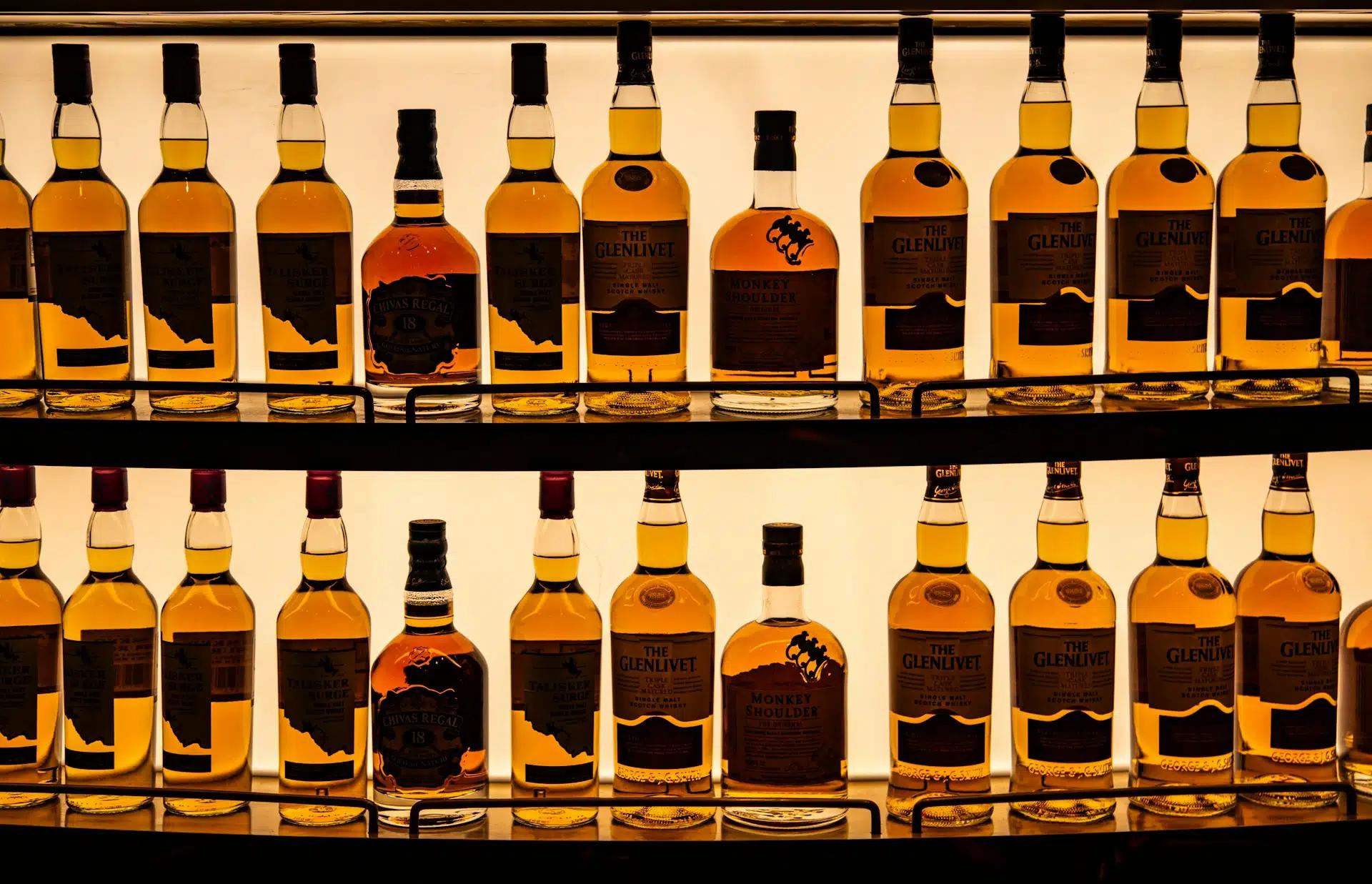
Not every whiskey suits a snifter. For the right expressions, however, the glass becomes part of the tasting experience.
Aged Bourbon
Bourbon aged six years or more carries complex layers of caramel, vanilla, toasted oak, and dried stone fruit. The snifter's aroma-trapping design brings those layers forward. Pour a well-aged single barrel into a snifter, and you'll immediately notice the difference from a standard tumbler.
Scotch Single Malt
Single malt Scotch rewards patience, and the snifter is a patient drinker's glass. Fruit-forward, floral, or sherried expressions (think Speyside or Highland) develop noticeably in a snifter as the spirit breathes.
For heavily peated Islay expressions, the snifter concentrates smoke so intensely that some drinkers prefer a wider-rimmed glass. Both approaches are valid. It all comes down to preference.
Irish Whiskey
Triple-distilled Irish whiskeys are famous for their lightness and smooth character. The snifter's aroma focus works well here because these softer expressions can get lost in a wide-mouthed glass.
Cognac and Brandy
The snifter was originally designed for brandy and remains one of the best vessels for cognac. If you enjoy both spirits, a quality set of snifters covers both occasions.
How To Hold a Snifter and How Much To Pour
Holding a snifter correctly is straightforward once you know what you are trying to achieve.
How To Hold It
Drinkers commonly use two grip techniques, each producing a different result. Neither one is wrong. Switch between them based on the whiskey and the moment.
- Stem Grip. Hold the stem between your thumb and two fingers, with your remaining fingers resting on the foot. This keeps the spirit at room temperature and suits whiskeys that are already open at ambient temperature.
- Bowl cradle. Cradle the bowl in your palm with the stem between your middle and ring fingers. Your body heat warms the spirit gently, opening up aromas in whiskeys that are a little closed. This is the classic technique originally developed for brandy.
How Much To Pour
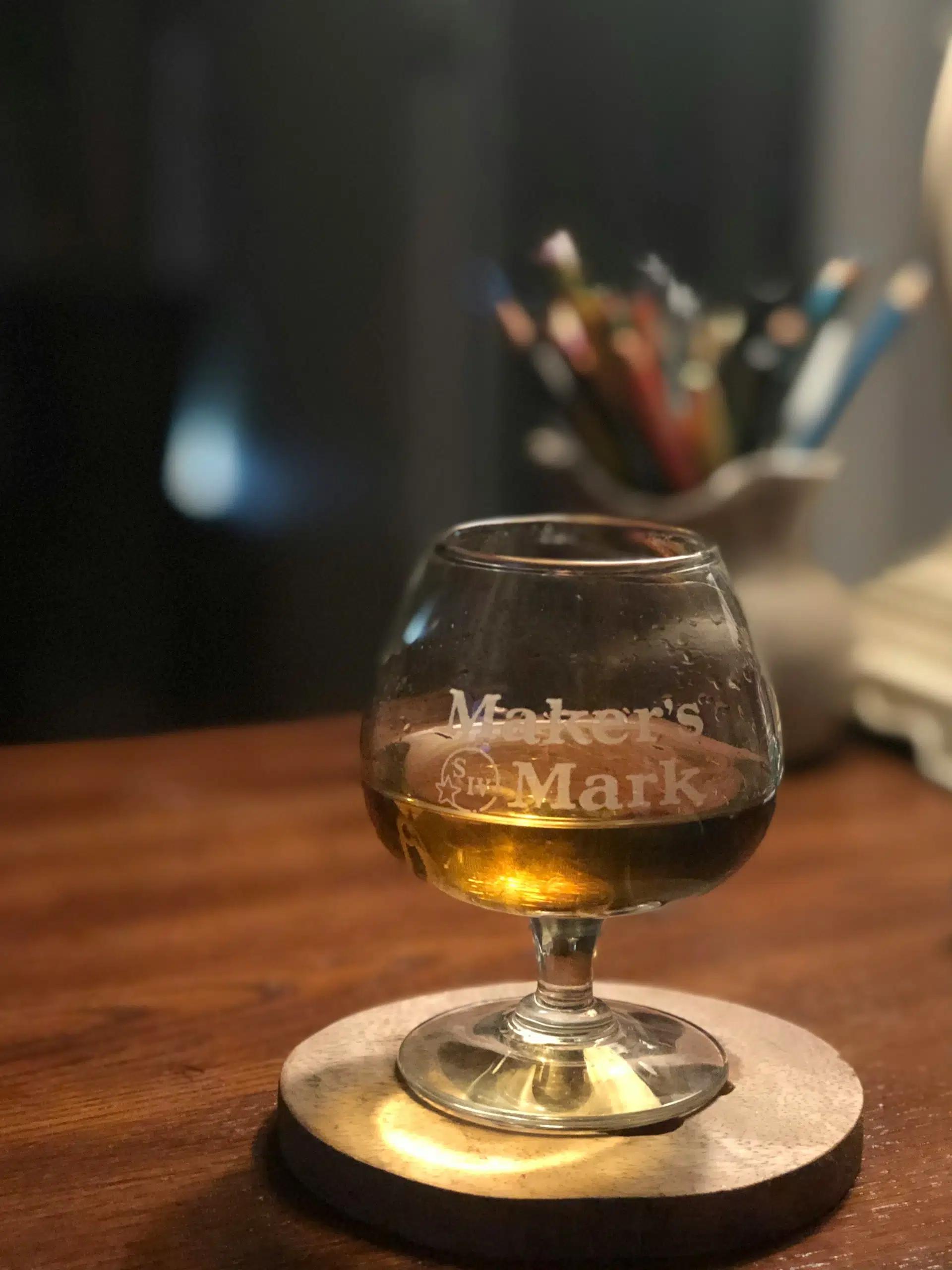
Pour no more than 1.5 oz (standard US shot) for a tasting pour. Treat that as your default and adjust from there.
For a longer leisure pour, 2 oz is a reasonable ceiling. Filling the glass beyond that defeats the purpose. You lose the aromatic headspace that makes the snifter useful.
When Not To Reach for a Snifter
The snifter is a specialized glass. Using it in the wrong context can produce a disappointing result.
- Avoid the snifter for cask-strength expressions above 55% ABV. The concentrated ethanol vapor in the narrow mouth overpowers the aromatic character before it can come through.
- Avoid it for cocktails. The snifter does not accommodate ice well. Its aroma-concentrating design is also irrelevant when you add bitters, citrus, or sugar. Use a rocks glass or a double old fashioned glass instead.
- Avoid it for highball-style serves. When you are mixing whiskey with soda, ginger ale, or tonic, volume and proportion matter more than aromatics. A highball glass is the right tool.
- Avoid it for any setting where breakage is a concern. Finally, the snifter is more fragile than a thick-walled tumbler. For parties with large crowds, leave it in the cabinet and reach for something more robust.
Frequently Asked Questions
Is a snifter the same as a brandy glass?
Yes. The snifter was originally designed for brandy and cognac. It is also called a brandy balloon, brandy glass, or cognac glass. Because the design concentrates aroma from any aged brown spirit, it works just as well for whiskey.
Can you drink bourbon from a snifter whiskey glass?
Yes, and it is one of the better choices for aged bourbon served neat. The bowl and narrow rim concentrate the vanilla, caramel, and oak notes that characterize well-aged bourbon. Avoid using a snifter for barrel-proof or cask-strength bourbon. The high ABV can produce an ethanol-heavy nosing experience.
Glencairn vs Snifter: Is a snifter better than a Glencairn for whiskey?
Neither is objectively better, as they serve different purposes. The Glencairn offers more controlled, focused aroma delivery and a stable base for swirling. The snifter suits slower, more contemplative drinking where you want to cradle the glass and let body heat work on the spirit. Many serious whiskey drinkers own both.
How much whiskey should you pour into a snifter?
Between 1 and 1.5 oz for a tasting pour. For casual drinking, 2 oz is a reasonable upper limit. Filling the glass beyond that reduces the aromatic headspace inside the bowl, which is the glass's primary advantage.
Why is a snifter whiskey glass called a snifter?
The name comes from the verb 'to sniff.' It references the glass's primary function: nosing the spirit before you drink it. The design exists to maximize aroma delivery. The name is basically a description of how the glass works.
Can you use a snifter for Scotch whisky?
Yes. The snifter whiskey glass works well for Scotch single malts with complex aromatic profiles (sherried, fruit-forward, or floral expressions). For heavily peated Islay Scotch, the concentration of smoke notes in a snifter can be very intense. Some drinkers prefer a wider-rimmed glass for those expressions.
Shop the Aequilibrium Glass Collection
-
Red WineRegular price From $42.99 USDRegular priceUnit price per
$86.00 USDSale price From $42.99 USDSale -
Spirits & LiquorsRegular price From $39.99 USDRegular priceUnit price per
$80.00 USDSale price From $39.99 USDSale -
WoodRegular price From $38.99 USDRegular priceUnit price per
$78.00 USDSale price From $38.99 USDSale -
 Sold outCeramicRegular price From $33.99 USDRegular priceUnit price per
$68.00 USDSale price From $33.99 USDSold out