
Quick Answer: What Are the Best Crystal Whiskey Glasses?
The best crystal whiskey glass depends on how you drink. Here is a quick breakdown by pour style:
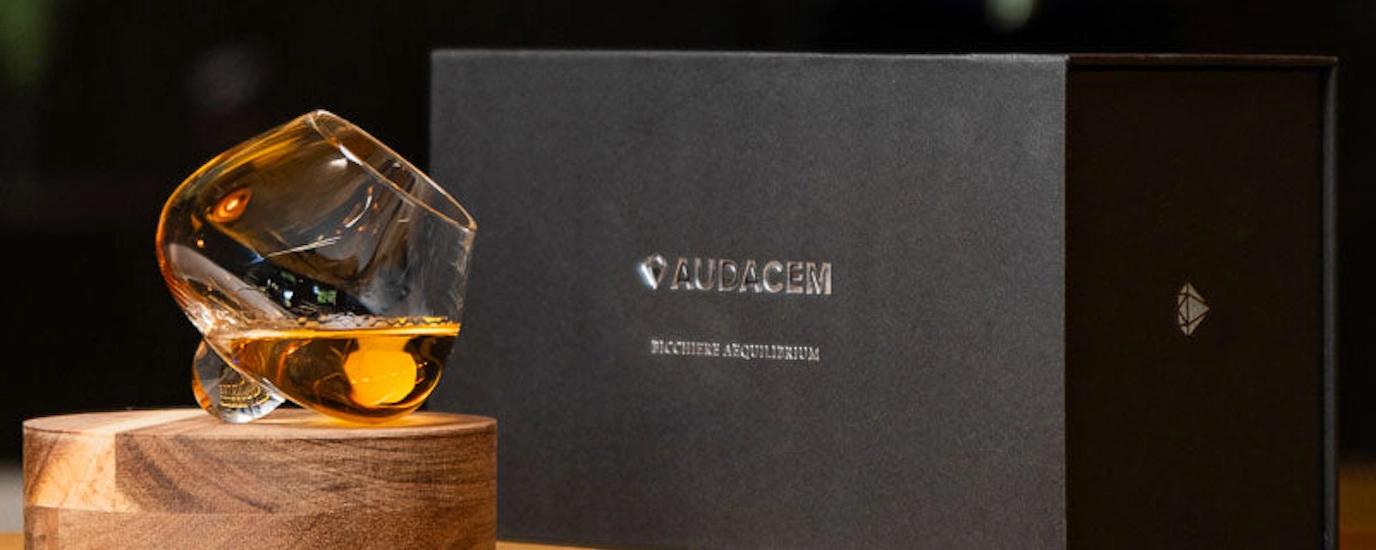
- Gifting and Premium Pours. The Aequilibrium Spirit Glass by Audacem (from $39.99) combines hand-blown lead-free crystal with a 360° pivot base that aerates every pour. It’s a distinctive gift that performs as well as it looks.
- Neat Pours. A tulip-shaped nosing glass, such as the Glencairn, concentrates aroma and delivers the cleanest tasting experience.
- Whiskey on the Rocks. A crystal rocks glass with straight walls and a weighted base handles large ice cubes best.
- Cocktails. A double old-fashioned glass with a 12–14 oz capacity gives room to build and stir an Old Fashioned or Negroni properly.
Aequilibrium: built to aerate, designed to impress.
Our Top Pick for Gifting a Whiskey Glass
Aerates the spirit with every swirl, unlocking aromatic complexity a standard tumbler misses.
Shop the Aequilibrium Spirit GlassWhy the Glass You Choose Matters
The shape of a glass affects what you smell, and what you smell affects what you taste. A wide-mouthed tumbler allows alcohol vapors to escape freely. It softens the nose but disperses the subtler grain and barrel notes in the process. A tulip-shaped glass traps those aromas and delivers them in a concentrated wave.
Crystal adds another dimension. Unlike standard soda-lime glass, crystal contains metal oxides. These components increase the refractive index, or the reason a crystal glass catches light differently. Lead-free crystal has replaced traditional lead crystal as the industry standard today.
Understanding what each glass does well makes it easier to choose one that suits the way you drink.
Types of Crystal Whiskey Glasses
Each glass style serves a different purpose. Understanding the differences makes it easier to choose the right one for how you drink or what you intend to give as a gift.
Nosing Glass (Tulip Glass)
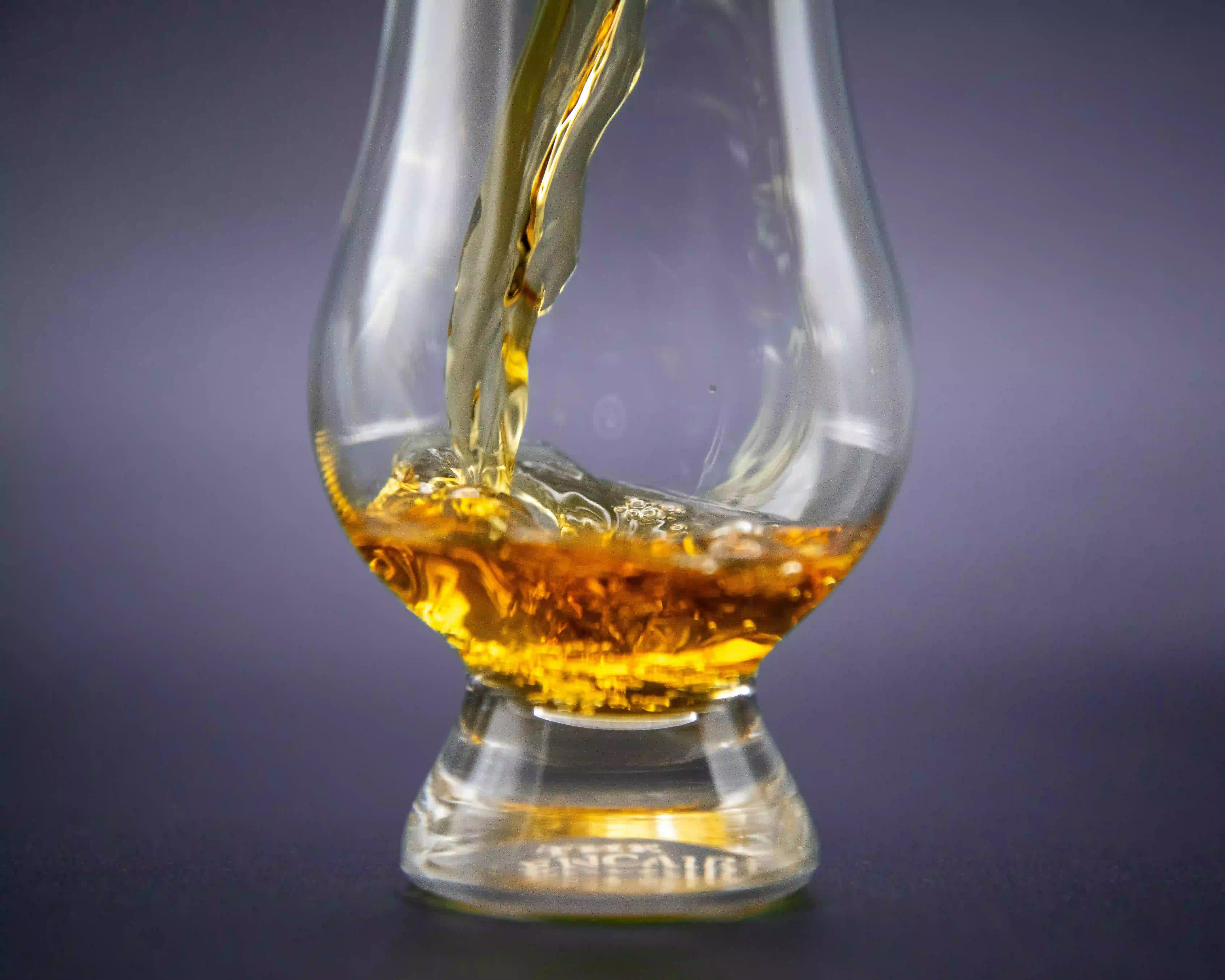
The Glencairn is the most recognized example. Its wide bowl narrows to a tapered opening that concentrates aromas at the nose. Distilleries and competition judges adopt it as the standard tasting vessel. It holds a standard 1.5–2 oz pour at the widest point and is not suited for ice or cocktails.
Best for: single malt Scotch, bourbon tasting, rye
Rocks Glass (Single Old-Fashioned)
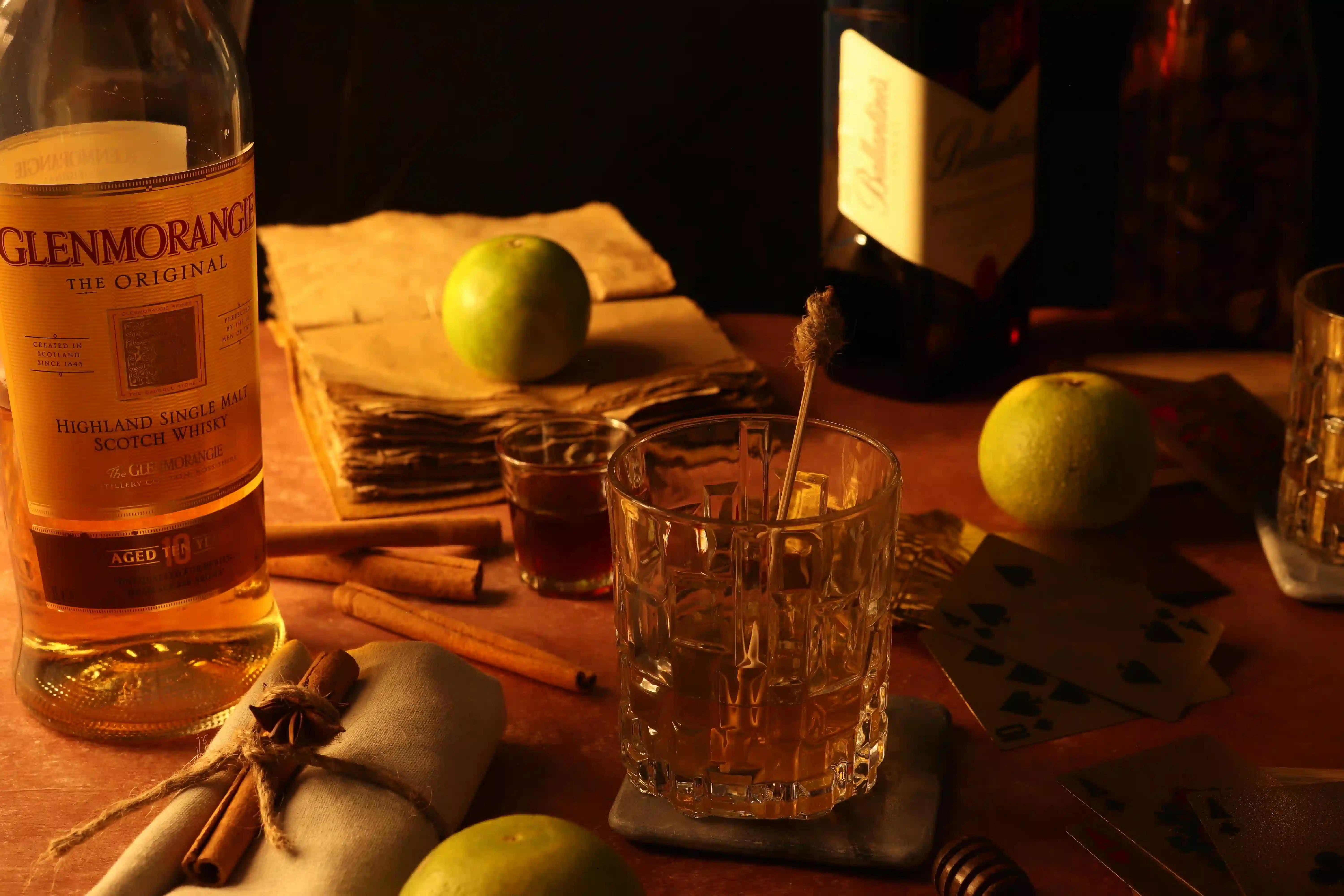
This glass is short, cylindrical, and wide-mouthed, with a 6–10 oz capacity. It accommodates a single large ice cube or sphere and functions as the classic bar glass for whiskey on the rocks or a relaxed neat pour.
Best for: whiskey on the rocks, neat pours, simple cocktails
Double Old-Fashioned Glass
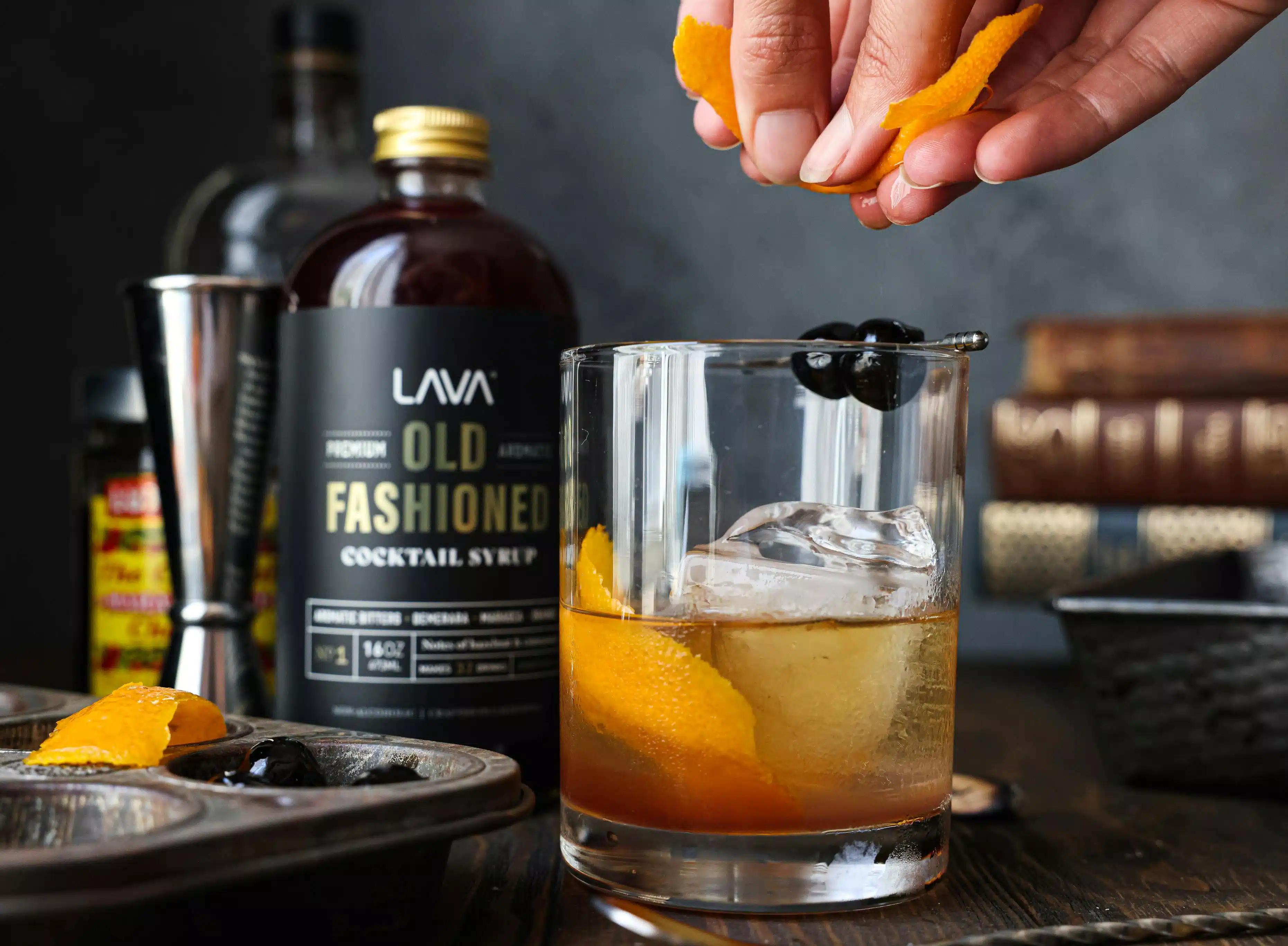
This is the same form as a rocks glass but taller, with a 10–14 oz capacity. Straight walls make it easy to stir cocktails built directly in the glass. The extra volume handles large-format ice and higher-volume drinks without appearing underfilled.
Best for: Old Fashioneds, Negronis, Boulevardiers, whiskey sours on the rocks
Highball Glass
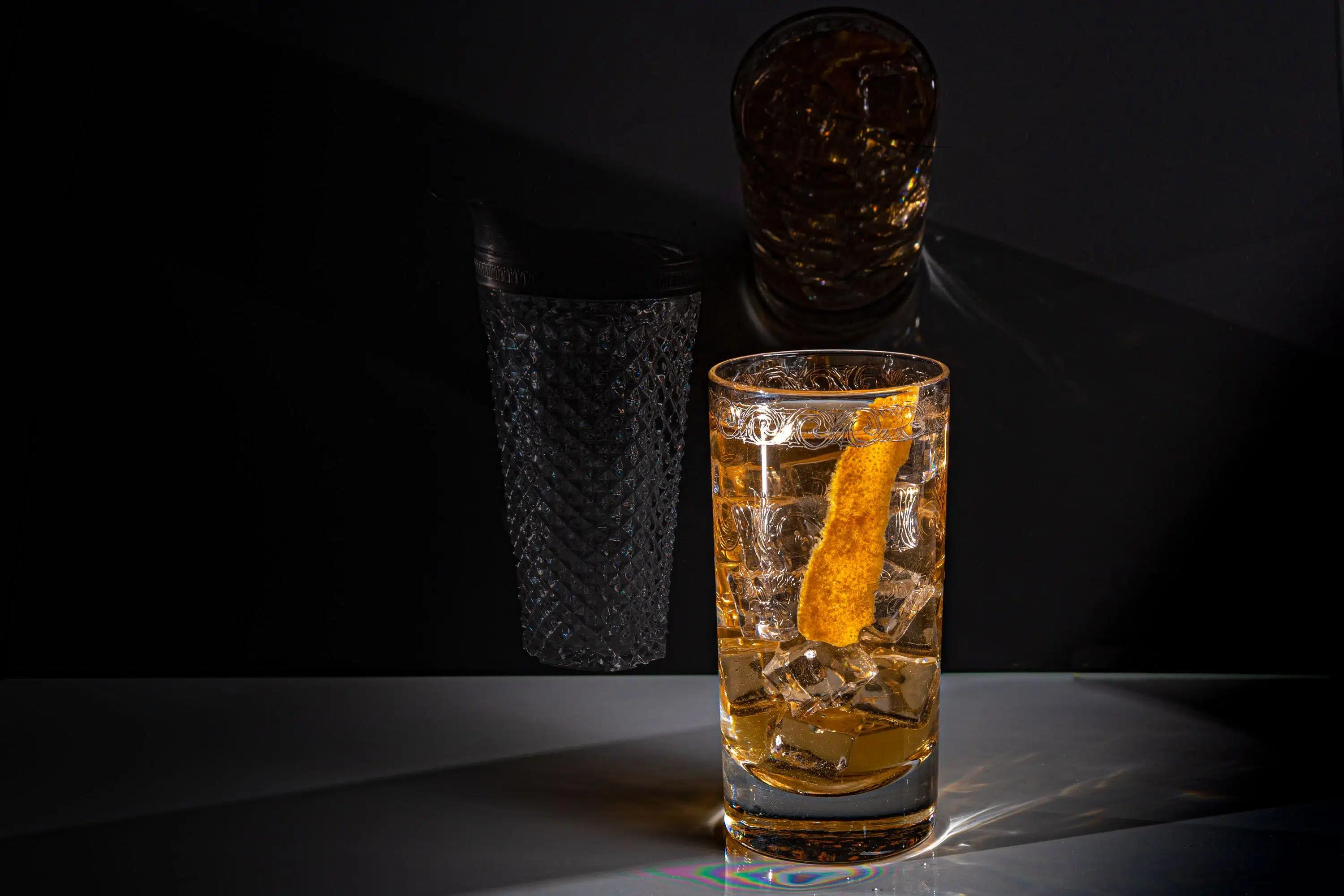
Tall and narrow, the highball glass suits drinks with a high ratio of mixer to spirit. A whiskey highball—bourbon or Scotch over ice with soda water—ranks among the most refreshing ways to drink whiskey in warm weather.
Best for: whiskey and soda, highball cocktails, Japanese-style whisky highballs
Stemmed Whiskey Glass
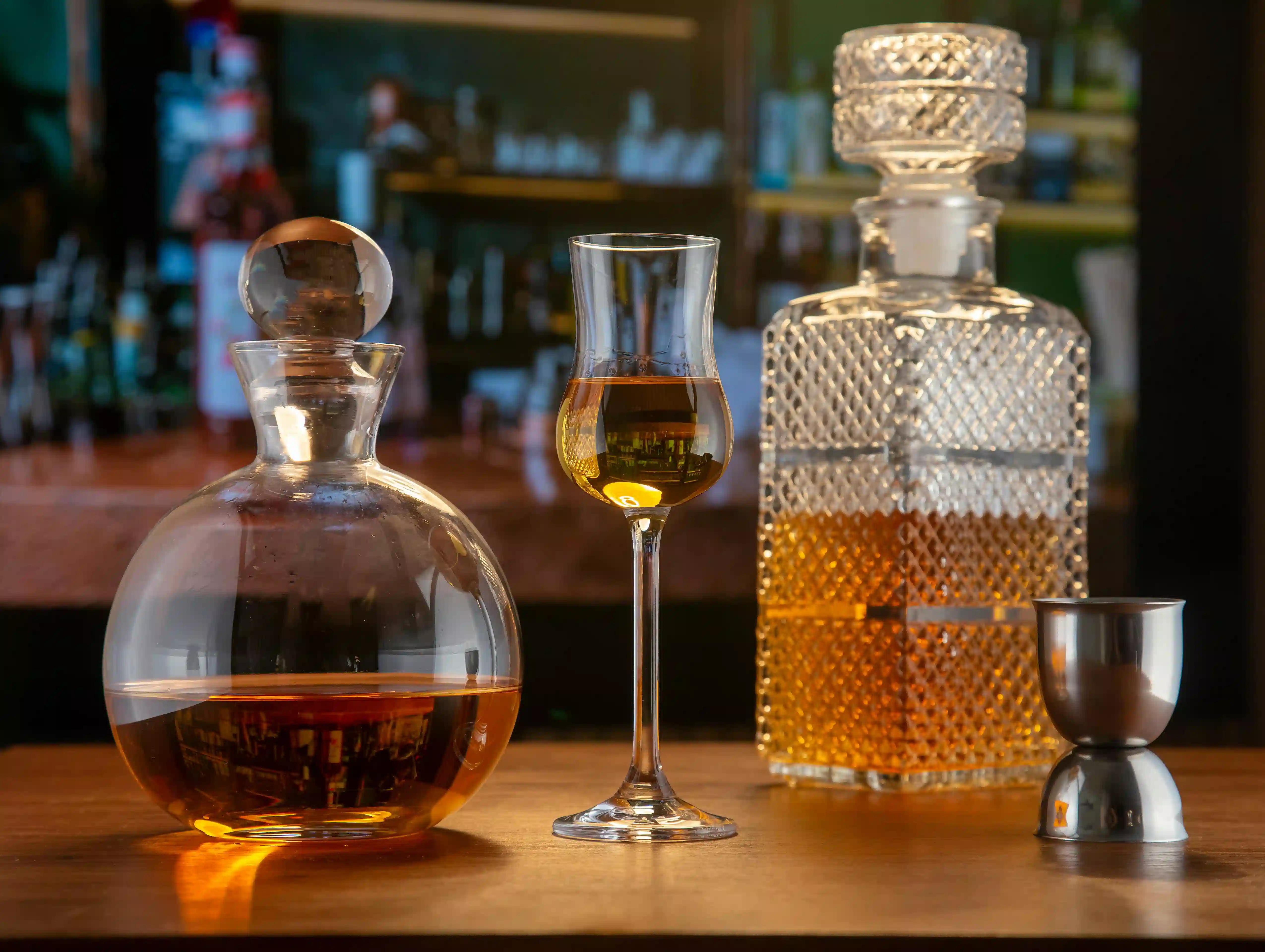
The stem keeps hand warmth from transferring to the spirit. This is a meaningful design feature for temperature-sensitive expressions. Glassmakers can engineer the bowl shape to aerate the liquid as it moves.
Best for: premium single malts, aged bourbons, whiskey gifting
Also read: Types of Whiskey Glasses for the Perfect Glass of Whiskey
Best Crystal Whiskey Glasses by Pour Style
The more useful question is not which crystal whiskey glass ranks highest, but which one suits the way you drink. The selections below draw on testing and review data, so you can make an informed choice.
Best for Gifting and Premium Pours: Aequilibrium Lead-Free Crystal Whiskey Glasses
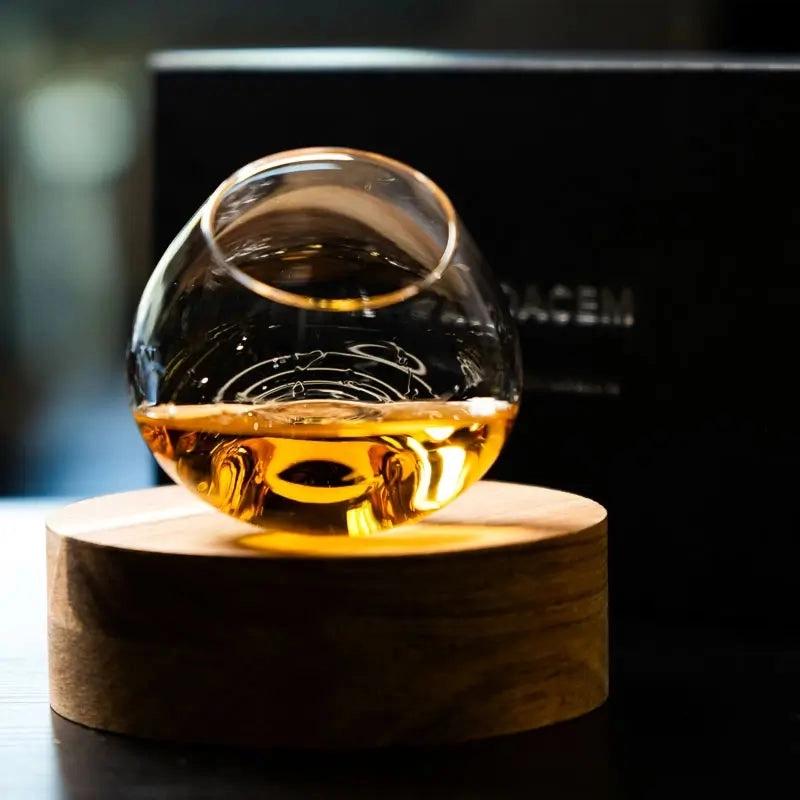
The Aequilibrium Spirit Glass by Audacem goes beyond pure function.
Hand-blown from 100% lead-free crystal and five years in development, it features a 360° pivot base that aerates every pour. The design releases the full aromatic profile of the spirit in a way a standard tumbler cannot achieve.
The gift-ready packaging makes an impression from the moment you open the box. The Aequilibrium Spirit Glass is the strongest choice when the glass itself is the centerpiece of the gift.
Price: $39.99 for a set of 2 glasses
Also read: Spinning Whiskey Glass Guide: The Aequilibrium Spirit Glass
- Hand-blown by master artisans
- 4.8/5 excellent rating
- Free shipping over $65
The Pour Every Other Glass Wishes It Made
Hand-blown crystal, 360° pivot base, five years in development. Built to aerate every single sip.
Shop the Spirit GlassBest for Neat Pours and Tasting: Glencairn Crystal Whiskey Glass
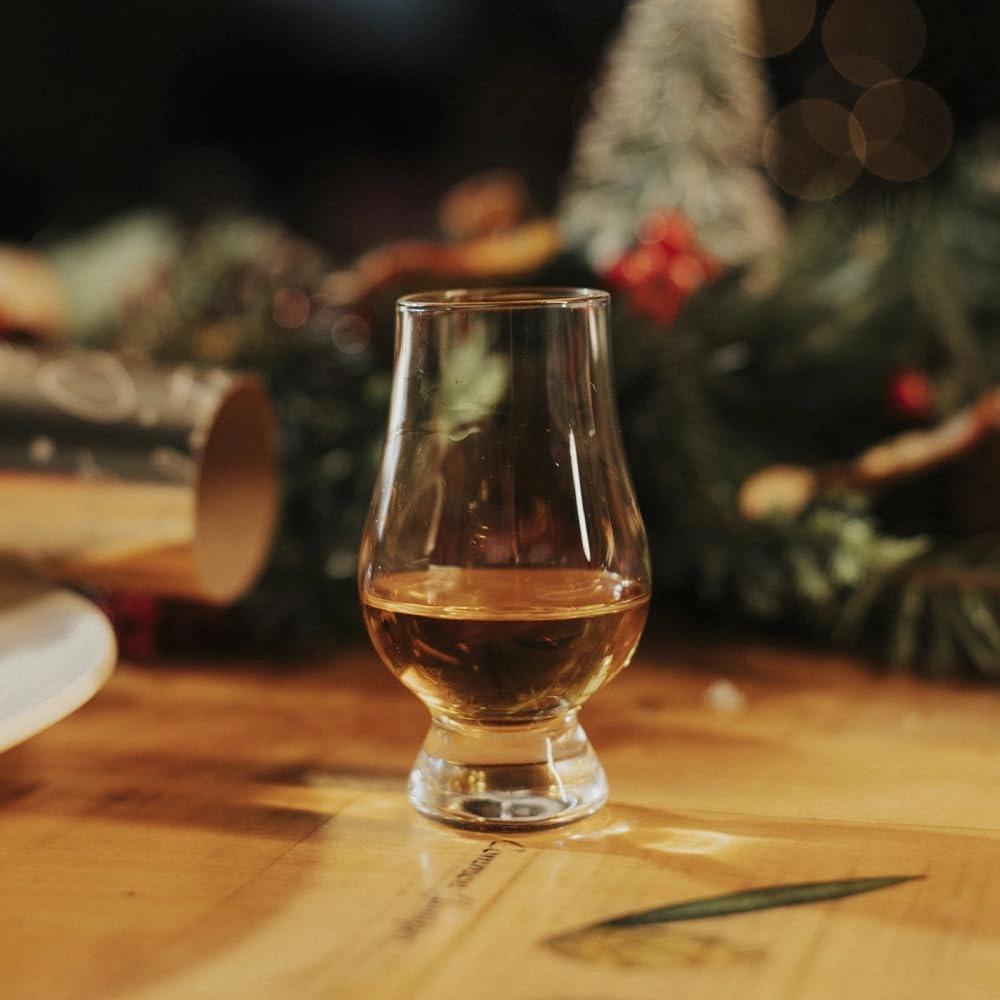
The Glencairn holds its position as the industry standard. Developed in Scotland and adopted by distilleries worldwide, its tulip shape holds a 2-oz pour at the widest point. It tapers to a small opening that directs every aromatic compound to the nose. Serious tasters reach for it first.
The trade-off is that it does not accommodate ice or cocktails, and its small base can tip if nudged. At approximately $7–8 per glass in a set of four, it also represents one of the most accessible premium crystal options available.
Price: $28–$35 for a set of four
Also read: What Is a Glencairn Whiskey Glass? A Complete Guide
Best for Whiskey on the Rocks: Riedel Drink Specific Glassware Rocks Glass
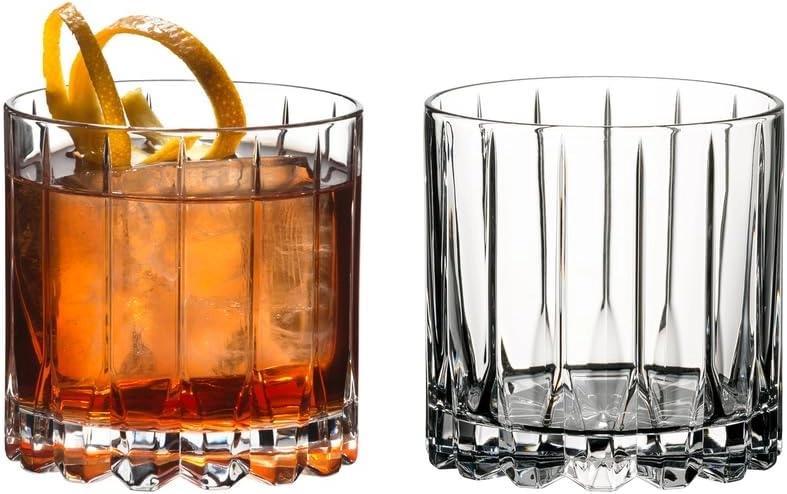
Riedel has produced glassware since 1756. The Drink Specific Rocks Glass reflects that accumulated expertise. At 10 oz with a low, wide profile (nearly as wide as it is tall), it accommodates a single large ice cube or sphere with ease.
Minimal vertical etchings add visual interest without making the glass feel overly formal for everyday use. It is dishwasher-safe, an advantage for a glass that sees regular use.
Price: $20–$30 per glass
Best for Cocktails: Spiegelau Perfect Serve Double Old Fashioned
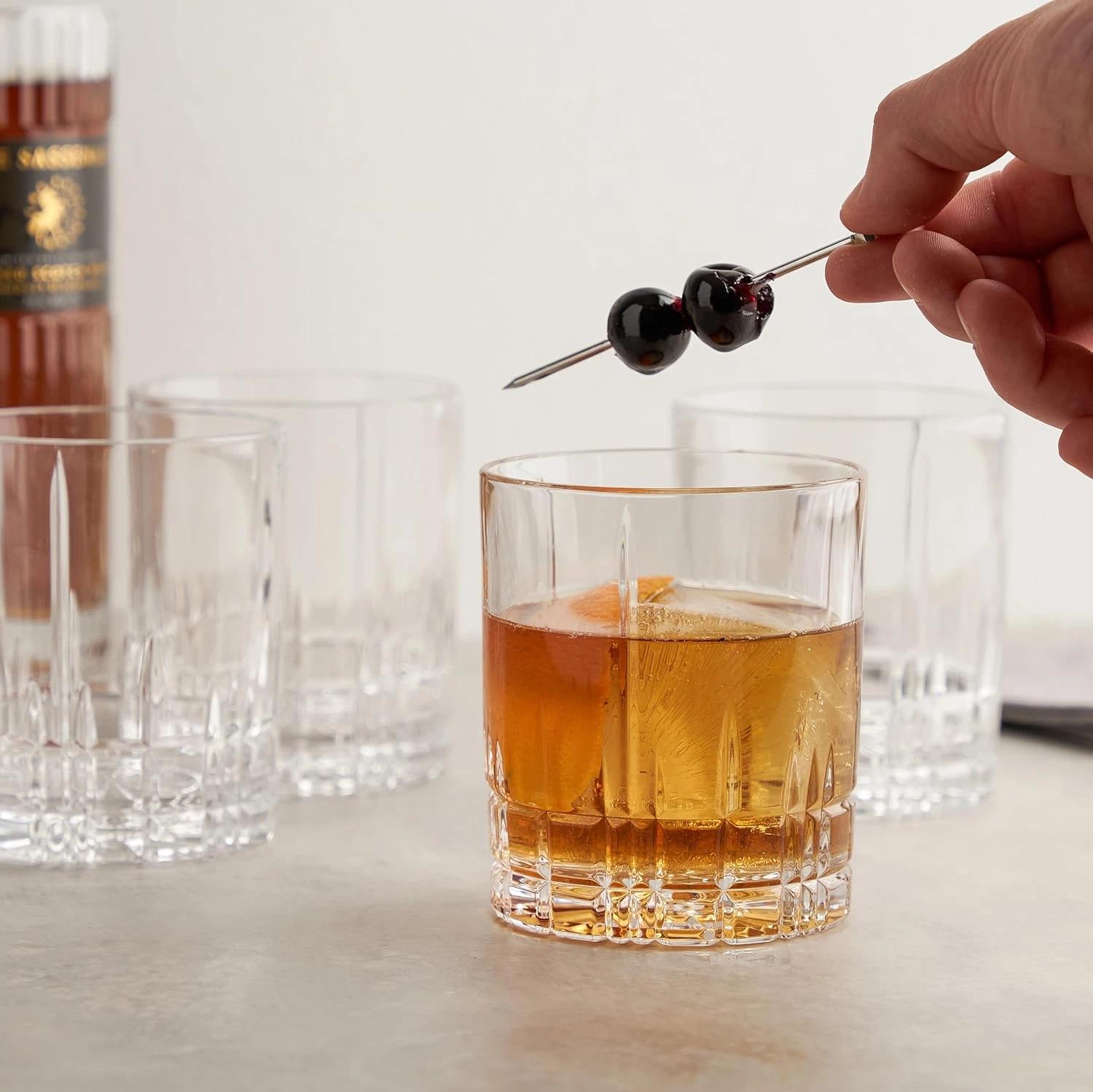
Spiegelau's double old-fashioned glass earns consistent top marks for cocktail use. The 13 oz capacity, straight walls, and sturdy base make it the right tool for building an Old Fashioned or Negroni directly in the glass.
Minimal etchings keep it versatile across spirits. It is dishwasher-safe and priced at approximately $10 per glass in a set of four.
Price: $35–$45 for a set of four
Crystal Glass vs. Standard Glass: What Is the Difference?
The terms "crystal" and "glass" appear interchangeably in many product listings. However, they describe different materials with different properties.
- Standard Glass. Soda-lime glass is the most common type. Durable, dishwasher-safe, and inexpensive, it forms the basis of most bar glassware. The trade-off is a lack of the optical clarity and weight that crystal provides. Manufacturers cannot shape it thinly without becoming fragile.
- Lead Crystal Glass. Traditional crystal contains lead oxide. It produces exceptional brilliance and allows glassmakers to cut intricate patterns into the surface. The FDA has noted that spirits can leach trace amounts of lead from crystal over time. This is why most premium glassmakers have moved away from it.
- Lead-Free Crystal Glass. Lead-free crystal substitutes barium oxide, zinc oxide, or titanium for lead oxide. This produces glass with the same clarity, weight, and ring as traditional crystal, but without any health concerns. It is the current standard for the best whiskey glasses on the market. Most lead-free crystal carries a hand-wash recommendation, though some formulations are dishwasher-safe.
For everyday use, a quality lead-free crystal glass is the right choice. It performs better than standard glass, lasts longer with proper care, and presents better on a bar cart.
Also read: Crystal vs Glass: What’s the Difference?
What to Look for in a Crystal Whiskey Glass
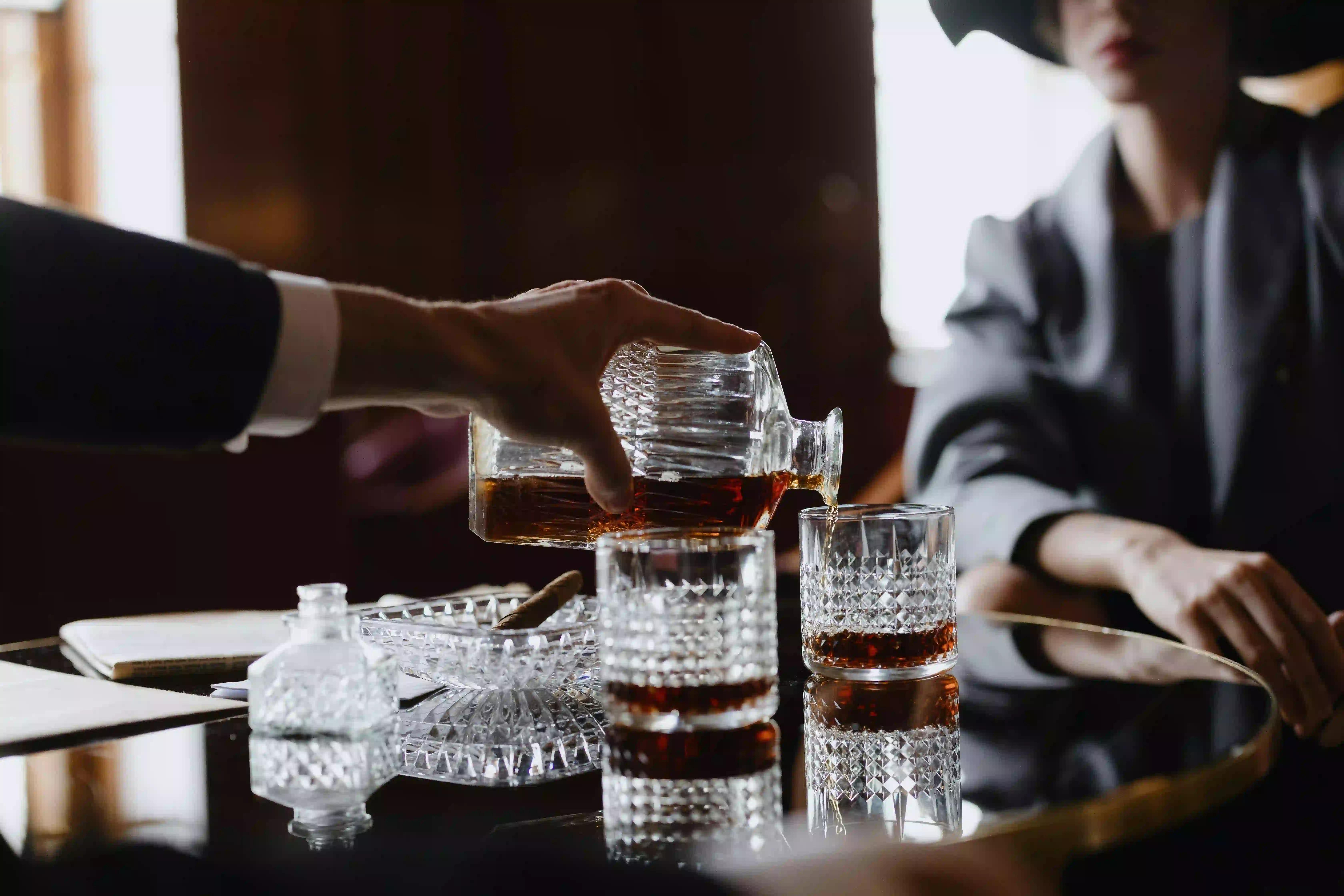
The market for whiskey glasses is wide. These are the factors that separate a glass worth owning from one that disappoints in hand.
Material
Lead-free crystal whiskey glasses are the standard. They deliver clarity and weight without the health concerns. Avoid glasses that do not specify their material. "Crystalline" sometimes describes standard glass with a crystal-like appearance, but it is not real crystal.
Wall Thickness and Weight Distribution
A glass that is too thin feels fragile and chips easily. One that is too thick feels clunky. The right balance is a weighted base that keeps the glass stable and walls thin enough to feel refined during use. For rocks glasses, a heavier base also slows ice melt by reducing contact between the ice and the glass walls.
Capacity
A 6–7 oz glass suits neat pours well. A 9–11 oz rocks glass handles a single large ice cube and a standard pour without appearing empty. A 12–14 oz double old-fashioned gives the room needed for cocktails. A glass that is too large for your typical pour makes every drink look underwhelming.
Shape and Rim Design
Straight walls suit building and stirring cocktails. Tapered or tulip shapes concentrate aroma for neat pours. A thin, polished rim makes sipping more comfortable than a thick rolled edge. For rocks glasses, a wide mouth accommodates large-format ice without requiring an awkward tilt.
Care and Maintenance
Most manufacturers recommend hand-washing lead-free crystal. Dishwasher heat and detergent can dull the surface over time and raise the risk of chipping at the rim. A soft sponge, mild soap, and a lint-free drying cloth preserve clarity best. Store glasses upright rather than inverted to protect the rim.
Crystal Whiskey Glass Trends
The Shift to Lead-Free Crystal Whiskey Glasses
Traditional lead crystal dominated premium glassware for centuries. Over the past decade, the industry has moved decisively toward lead-free formulations. Every major glassmaker now produces lead-free lines as their primary offering. The optical quality is equivalent, and the safety profile is meaningfully better.
Large-Format Ice and Glass Design
The rise of craft cocktail culture has pushed glass design toward wider openings and lower profiles. A 2-inch ice sphere or a large square cube requires a glass that is nearly as wide as it is tall. Rocks glasses designed before this shift often have openings too narrow to accept large-format ice.
Functional Design Over Ornamentation
Heavy ornamental etchings once defined traditional crystal whiskey glasses. Current design preferences favor minimal or no surface decoration. This makes glasses more versatile across different spirits and cocktail styles. A clean, minimal design works across the board.
Aeration and Engineered Glass Shapes
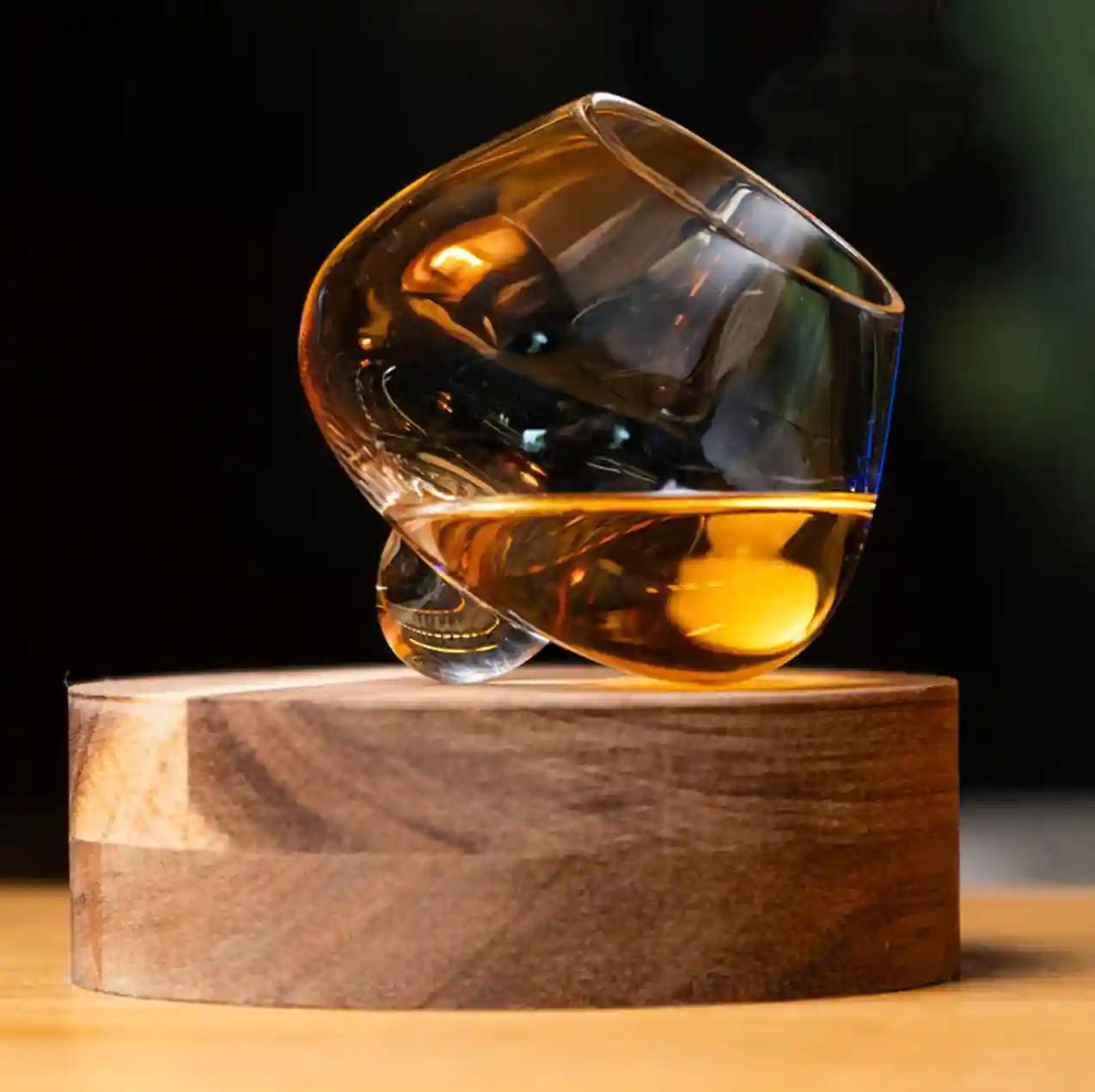
The most significant shift in whiskey glassware is the move toward shapes that aerate the spirit as you drink. Wine has had aerating decanters and purpose-built glasses for decades; whiskey is catching up. Designs like the Aequilibrium Spirit Glass, with a pivoting base that keeps the spirit in motion, represent a new category of glassware.
For Memorable Wine and Whiskey Moments
-
Red WineRegular price From $42.99 USDRegular priceUnit price per
$86.00 USDSale price From $42.99 USDSale -
Spirits & LiquorsRegular price From $39.99 USDRegular priceUnit price per
$80.00 USDSale price From $39.99 USDSale -
UniversalRegular price From $42.99 USDRegular priceUnit price per
$86.00 USDSale price From $42.99 USDSale -
Spirits & Red WineRegular price From $110.00 USDRegular priceUnit price per


Delightful glasses that allow a good single malt to breathe. And great fun.
How to Choose the Best Whiskey Glasses

The right glass depends on three things: how you drink, what you drink, and whether you are buying for yourself or as a gift. Here's how you can find the best whiskey glasses for your needs.
If You Drink Whiskey Neat
Start with a nosing glass. The Glencairn is the most accessible entry point. For something more unique that also aerates the spirit, the Aequilibrium Spirit Glass is a strong investment. It works particularly well for aged single malts and premium bourbons, where aromatic complexity is part of what you are paying for.
If You Drink Whiskey On the Rocks
Choose a rocks glass with a wide opening and a weighted base. The Riedel Drink Specific Rocks Glass draws the most consistent recommendations. Look for a glass that is nearly as wide as it is tall. This shape accepts large-format ice without looking awkward.
If You Make Whiskey Cocktails
A double old-fashioned glass with straight walls and 12–14 oz capacity is the right tool. Straight walls make stirring easier and produce a clean wash line for cocktails built over ice. The Spiegelau Perfect Serve Double Old Fashioned is the top-tested option in this category.
If You Are Buying a Whiskey Glass as a Gift
Prioritize design and presentation alongside function. A glass that looks distinctive and arrives in gift-ready packaging makes a strong impression. The Aequilibrium Spirit Glass is the strongest option here. The hand-blown lead-free crystal and pivot base invite conversation every time it comes out.
Final Thoughts: Choosing the Right Crystal Whiskey Glass
The best crystal whiskey glass is the one that matches how you drink. A Glencairn earns its place for serious neat tasting. A weighted rocks glass handles ice and easy sipping. A double old-fashioned takes on cocktails without complaint.
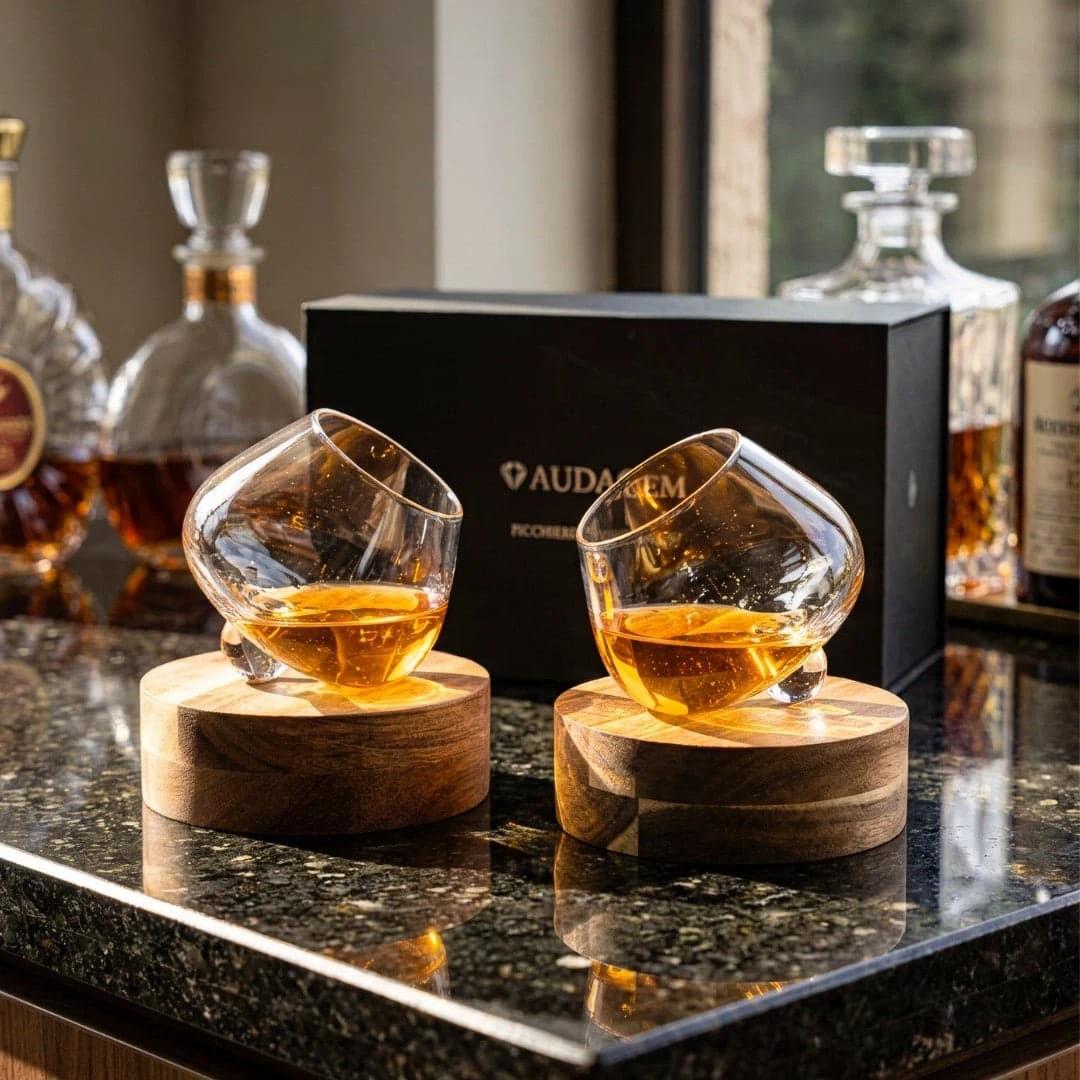
But if there's one glass built to do more than sit on a shelf between pours, it's the Aequilibrium Spirit Glass. Its 360° pivot base keeps the spirit gently aerating with every swirl, drawing out aromatic complexity, all while looking every bit the part in hand-blown, lead-free crystal.
The right glass changes more than the presentation; it changes the drink itself. Five years in the making, the Aequilibrium is proof of that.
Frequently Asked Questions
What is the difference between crystal and glass whiskey glasses?
Crystal is a type of glass made with metal oxides. It was traditionally lead, and now more commonly barium or zinc, to increase refractive index and density. The result is a glass with greater clarity, more weight, and a thinner profile. Standard soda-lime glass is more durable and dishwasher-safe, but it lacks the optical quality and weight of crystal. For whiskey, lead-free crystal is the preferred material, as it eliminates the risk of lead leaching into spirits.
Are lead-free crystal whiskey glasses safe?
Yes. Lead-free crystal whiskey glasses use barium oxide, zinc oxide, or titanium in place of lead oxide. These materials produce the same clarity and weight as traditional lead crystal without the risk of lead migration. All major premium glassware brands, including Glencairn, Spiegelau, and Audacem, now produce lead-free crystal as their standard.
What is the best whiskey glass for neat pours?
A tulip-shaped nosing glass is the best choice for neat pours. The Glencairn is the most widely used and recommended option. Its wide bowl and tapered opening concentrate aromas at the nose, where most of the flavor experience originates. For a more distinctive option that also aerates the spirit, the Aequilibrium is a strong choice, particularly for aged single malts and premium bourbons with more aromatic complexity.
What size whiskey glass should I buy?
It depends on how you drink. A 6–7 oz nosing glass suits neat pours. A 9–11 oz rocks glass handles a standard pour over a single large ice cube without appearing empty. A 12–14 oz double old-fashioned gives you room for cocktails built over ice. A glass that is too large for your typical pour makes every drink look underwhelming.
Can you put crystal glasses in the dishwasher?
It is generally recommended to hand-wash lead-free crystal. Dishwasher heat and detergent can dull the surface over time and raise the risk of chipping. Some formulations, including certain Riedel and Spiegelau lines, carry a dishwasher-safe rating. However, hand-washing with mild soap and a soft sponge is the safest approach for preserving clarity and longevity.
Does the glass shape affect how whiskey tastes?
Yes, primarily through its effect on aroma. Since most of what we perceive as flavor derives from smell, a glass that concentrates aromas at the nose affects the tasting experience. A tulip-shaped glass with a tapered opening delivers a more intense aromatic experience than a wide-mouthed tumbler. The strength of the whiskey also matters. For high-proof expressions, a slightly wider opening reduces the alcohol burn that can overwhelm the nose in a tightly tapered glass.
Are whiskey glasses and Scotch glasses the same thing?
Yes. There is no significant difference between a whiskey glass and a Scotch glass. The same styles—Glencairn, rocks glass, double old-fashioned—suit bourbon, Scotch, rye, Irish whiskey, and Japanese whisky equally well. The choice of style depends on how you drink, not what you drink.
What is the best crystal whiskey glass for gifting?
The best whiskey glass gift combines a unique design, premium materials, and elegant presentation. The Aequilibrium Spirit Crystal Glass is a particularly strong option. Its 360° pivot base aerates every pour. It also arrives in gift-ready packaging and quickly becomes a bar cart highlight.
How many whiskey glasses do I need?
For personal use, two to four glasses of the same style is a practical starting point. Those who host regularly benefit from six to eight rocks or double old-fashioned glasses. For tasting, a set of four Glencairn glasses is the standard. Most dedicated whiskey drinkers end up with at least two styles: a nosing glass for tasting and a rocks glass or double old-fashioned for daily use.
What cocktails can a whiskey rocks glass serve?
A rocks glass or double old-fashioned glass ranks among the most versatile pieces of glassware behind the bar. Beyond whiskey neat and on the rocks, it suits Old Fashioneds, Negronis, Boulevardiers, Whiskey Sours on the rocks, and most stirred or shaken cocktails served over ice. The straight-walled double old-fashioned is particularly well-suited to cocktails. The shape makes stirring easy and produces a clean wash line for drinks built in the glass.
Shop the Aequilibrium Glass Collection
-
Red WineRegular price From $42.99 USDRegular priceUnit price per
$86.00 USDSale price From $42.99 USDSale -
Spirits & LiquorsRegular price From $39.99 USDRegular priceUnit price per
$80.00 USDSale price From $39.99 USDSale -
UniversalRegular price From $42.99 USDRegular priceUnit price per
$86.00 USDSale price From $42.99 USDSale -
Spirits & Red WineRegular price From $110.00 USDRegular priceUnit price per