
Quick Answer: How Many Calories Are in a Glass of Whiskey?
A typical glass of whiskey runs anywhere from 1 to 3 oz, depending on the pour, so the calorie count varies with it.
At 40% ABV, a standard 2 oz neat pour (the amount most people actually mean by "a glass") contains about 130 calories. All those calories come from alcohol. Straight whiskey has zero carbs, zero fat, and zero sugar.
Here is a quick reference for 40% ABV whiskey:
- 1 oz (single pour): about 65 calories
- 1.5 oz (standard US shot): about 97 calories
- 2 oz (common neat pour): about 130 calories
- 3 oz (generous or double pour): about 195 calories
Adding mixers increases these totals. Neat, on the rocks, or with still water keeps the count as low as possible.
Where Do Whiskey Calories Come From?
Whiskey is essentially two things: water and ethanol. Water contributes zero calories. Ethanol, however, is calorie-dense, delivering approximately 7 calories per gram.
That places alcohol above both carbohydrates and protein, each of which provides 4 calories per gram. Only dietary fat, at 9 calories per gram, ranks higher. So, even a modest pour of whiskey carries a meaningful caloric load.
Distillation removes everything else. A standard 1.5 oz serving or shot of straight whiskey contains 0 grams of fat, carbohydrates, and sugar, according to the USDA. That means the calories in a whiskey shot come entirely from alcohol, with no hidden sugars or fats contributing to the count.
ABV, or alcohol by volume, is the primary driver of calorie count. A cask-strength whiskey bottled at 60% ABV carries roughly 50% more calories per ounce than a standard 40% expression. The proof printed on the label, therefore, is important.
Calories by Pour Size: The Full Breakdown
A glass of whiskey is not a fixed quantity. Pour size varies widely depending on the setting, the whiskey glasses, and the person doing the pouring.
Standard 40% ABV Whiskey
- 1 oz: about 65 calories
- 1.5 oz (standard US shot): about 97 calories
- 2 oz (common home pour): about 130 calories
- 2.5 oz: about 162 calories
- 3 oz (double pour): about 195 calories
Adding ice does not add calories. The water dilution from melting ice slightly reduces ABV, but the effect on total calorie count is negligible. Neat and on the rocks are equal in calories.
For higher-proof expressions above 50% ABV, add roughly 25% to those estimates. For cask-strength expressions at 60% ABV or above, add 50% or more.
Does the Whiskey Glass You Use Affect Your Calorie Count?
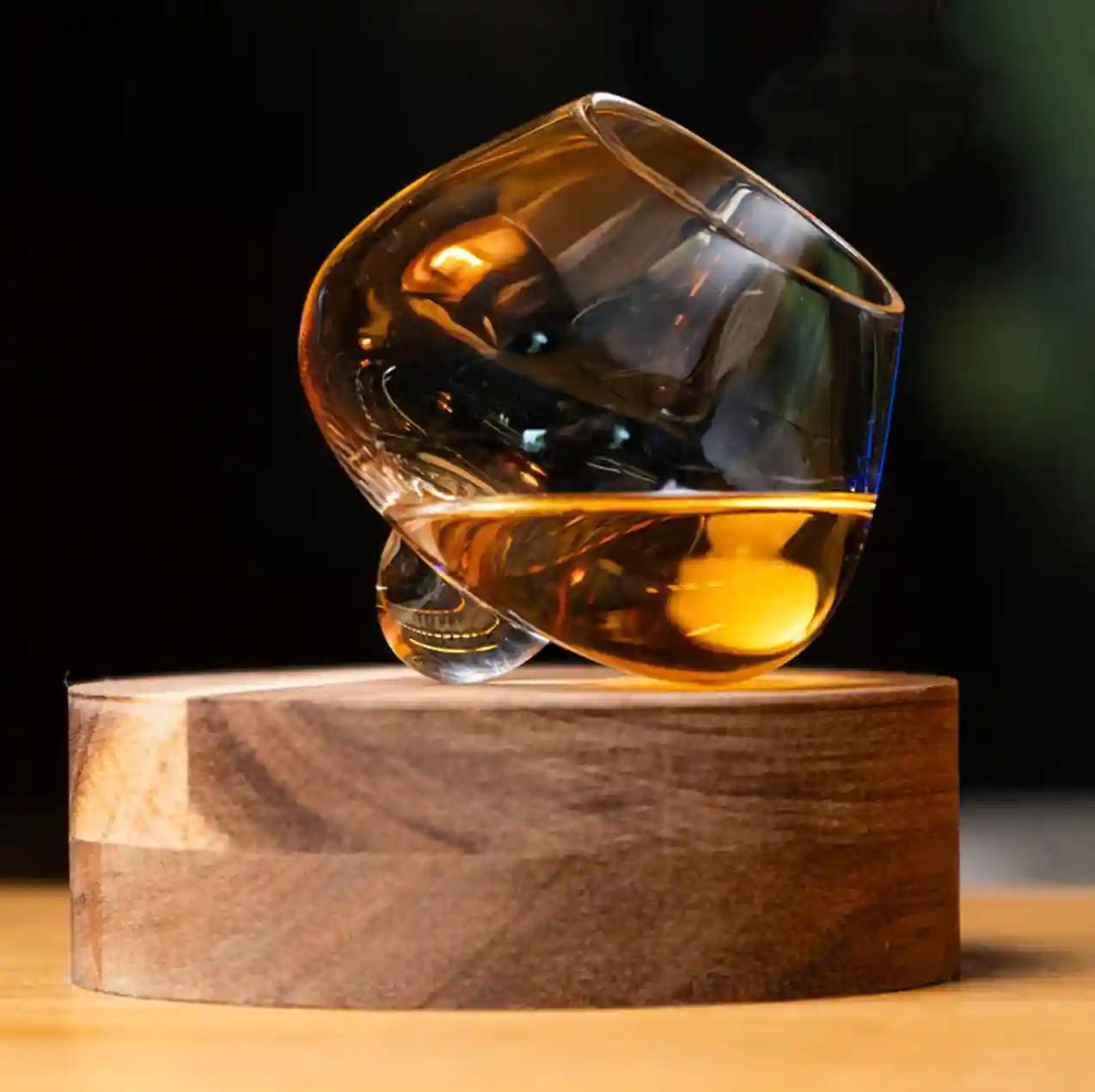
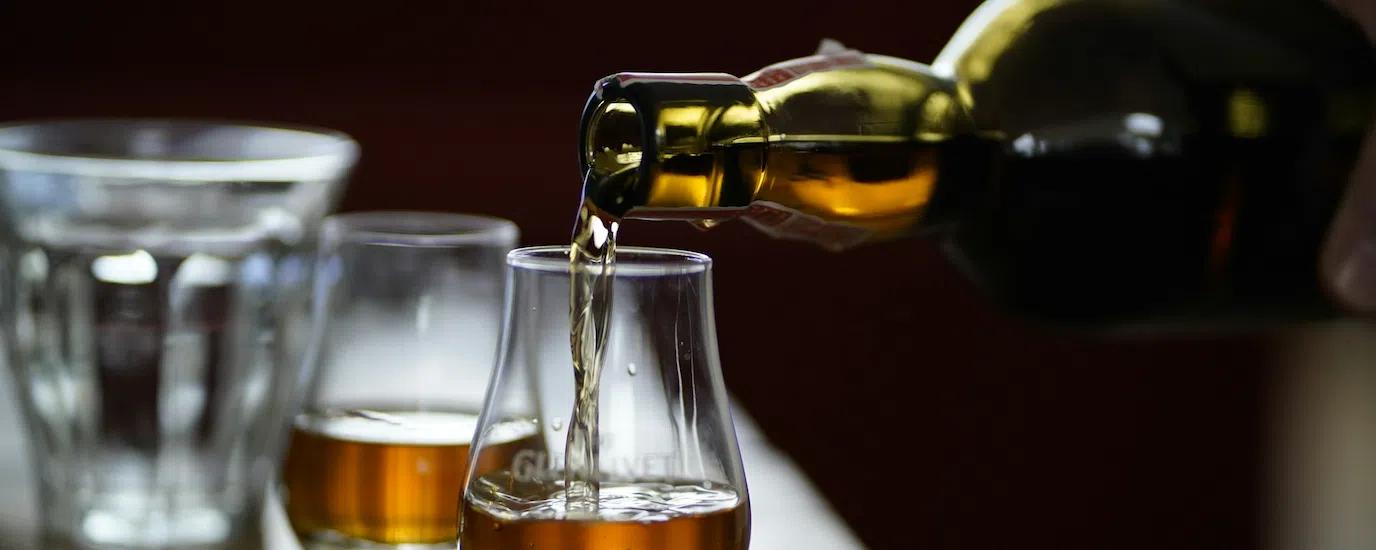
Indirectly, yes. Whiskey glasses come in a range of shapes and sizes. The short, wide-bottomed rocks glass and the tulip-shaped Glencairn, for example, hold different volumes. None of them come with a measurement line.
A wide-bottomed glass tends to invite a heavier freehand pour because the extra surface area makes 2 oz look like less. Over a week of nightly pours, that visual gap can add up to hundreds of extra calories without you noticing.
If you're trying to keep your pours consistent, the habit of measuring is a helpful one to develop.
Also read: Types of Whiskey Glasses for the Perfect Glass of Whiskey
Meet the Glass Built for a Better Pour
The Aequilibrium Spirit Glass — designed for a proper measured pour. Fewer surprises, more of what you intended.
Shop the Aequilibrium CollectionDoes the Type of Whiskey Change the Calorie Count?
Bourbon, Scotch single malt, Irish whiskey, Tennessee whiskey, and Japanese whisky each taste very different. But at the same ABV, their calorie counts are identical.
Calories in a Whiskey Shot (1.5 oz) at 40% ABV
- Bourbon: about 97 calories
- Scotch Single Malt: about 97 calories
- Irish Whiskey: about 97 calories
- Tennessee Whiskey: about 97 calories
- Japanese Whisky: about 97 calories
The reason: all these spirits derive calories almost entirely from ethanol. The character varies dramatically, from the sweet vanilla notes of bourbon to the peaty smoke of Islay Scotch. But the energy content at equal proof is the same across every style.
Flavored whiskey is a different case. Honey, cinnamon, and apple expressions often contain added sugars. These ingredients push calories higher, sometimes by 20 to 40 calories per serving. If you are tracking intake, check the producer's nutritional information.
How Mixers Affect Whiskey Calories
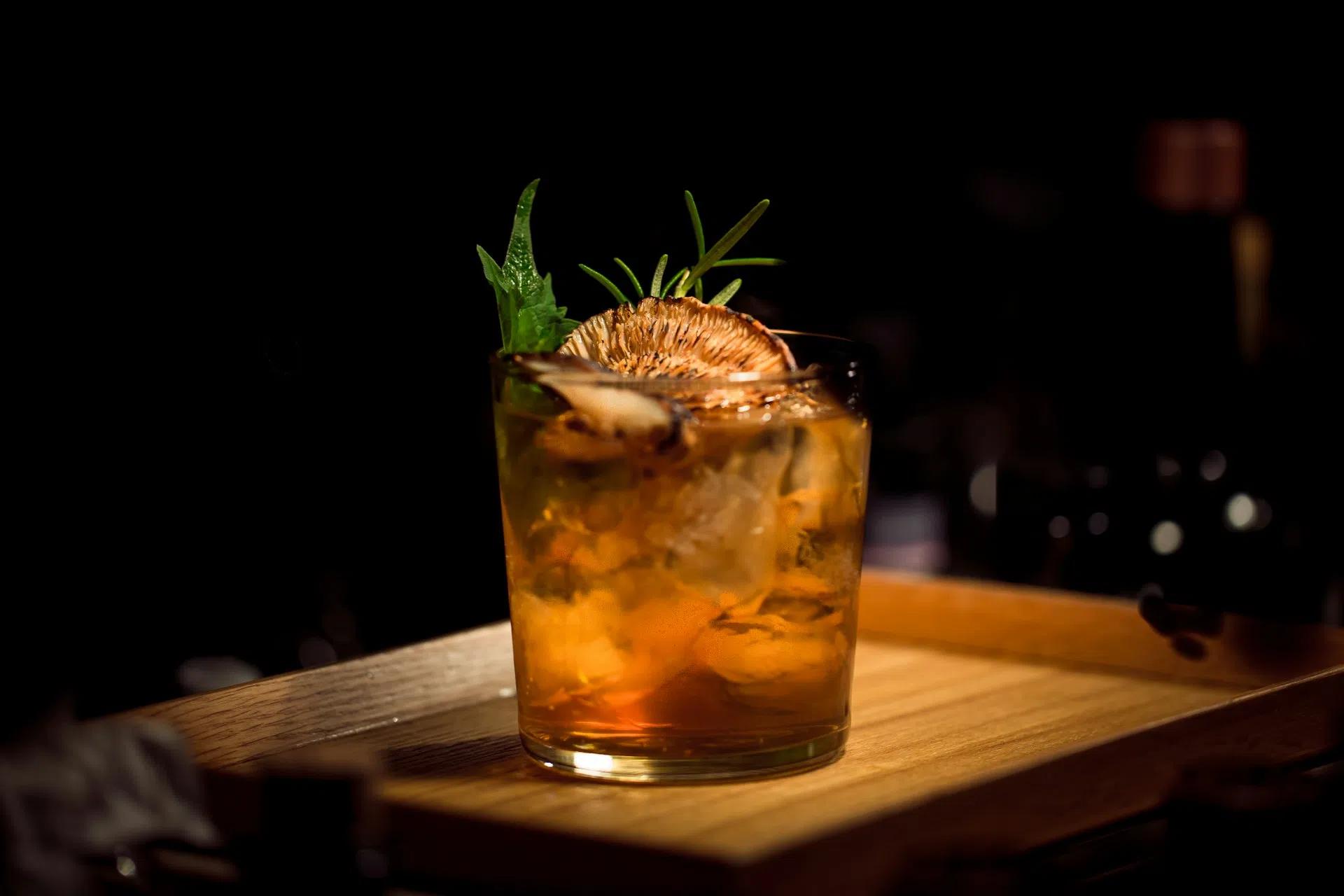
Straight whiskey is a low-calorie spirit, but mixers change that equation. What you add to the glass can double or even triple the calorie count of a single drink.
Mixer Calorie Additions per 4 oz Serving
- Still or Sparkling Water: 0 calories (best choice)
- Ginger Ale: 50 to 65 calories
- Cola: 45 to 55 calories
- Lemon-Lime Soda: 50 to 60 calories
- Ginger Beer: 70 to 80 calories
- Sweet Tea: 55 to 70 calories
A bourbon and ginger ale brings a standard drink to roughly 150 to 165 calories total. A whiskey sour with simple syrup can reach 200 or more depending on the recipe.
Water or soda water keeps the total as low as possible without blunting the experience. A splash of still water can actually open up the flavor of high-proof whiskey, making it a smart choice in more ways than one.
How Whiskey Compares to Beer, Wine, and Other Spirits
Whiskey is one of the lower-calorie alcoholic drinks when enjoyed neat. It is a smart choice for those who want to be mindful of their intake without giving up the pleasure of a well-crafted spirit.
Calories per Standard Drink
- Whiskey Neat, 1.5 oz, 40% ABV: about 97 calories
- Vodka, 1.5 oz, 40% ABV: about 97 calories
- Gin, 1.5 oz, 40% ABV: about 97 calories
- White Wine, 5 oz, 12% ABV: about 120 calories
- Red Wine, 5 oz, 13% ABV: about 125 calories
- Light Beer, 12 oz, 4.2% ABV: about 110 calories
- Regular Beer, 12 oz, 5% ABV: 150 to 160 calories
- IPA, 12 oz, 6.5% ABV: 200 to 230 calories
The advantage of spirits comes partly from serving size. A standard whiskey pour is smaller (1.5 oz) than a standard wine glass (5 oz) and a beer (12 oz). The per-ounce math favors spirits. However, in practice, the social habit of continuous refills erases that advantage.
Drinking Whiskey Mindfully: Getting More From Less
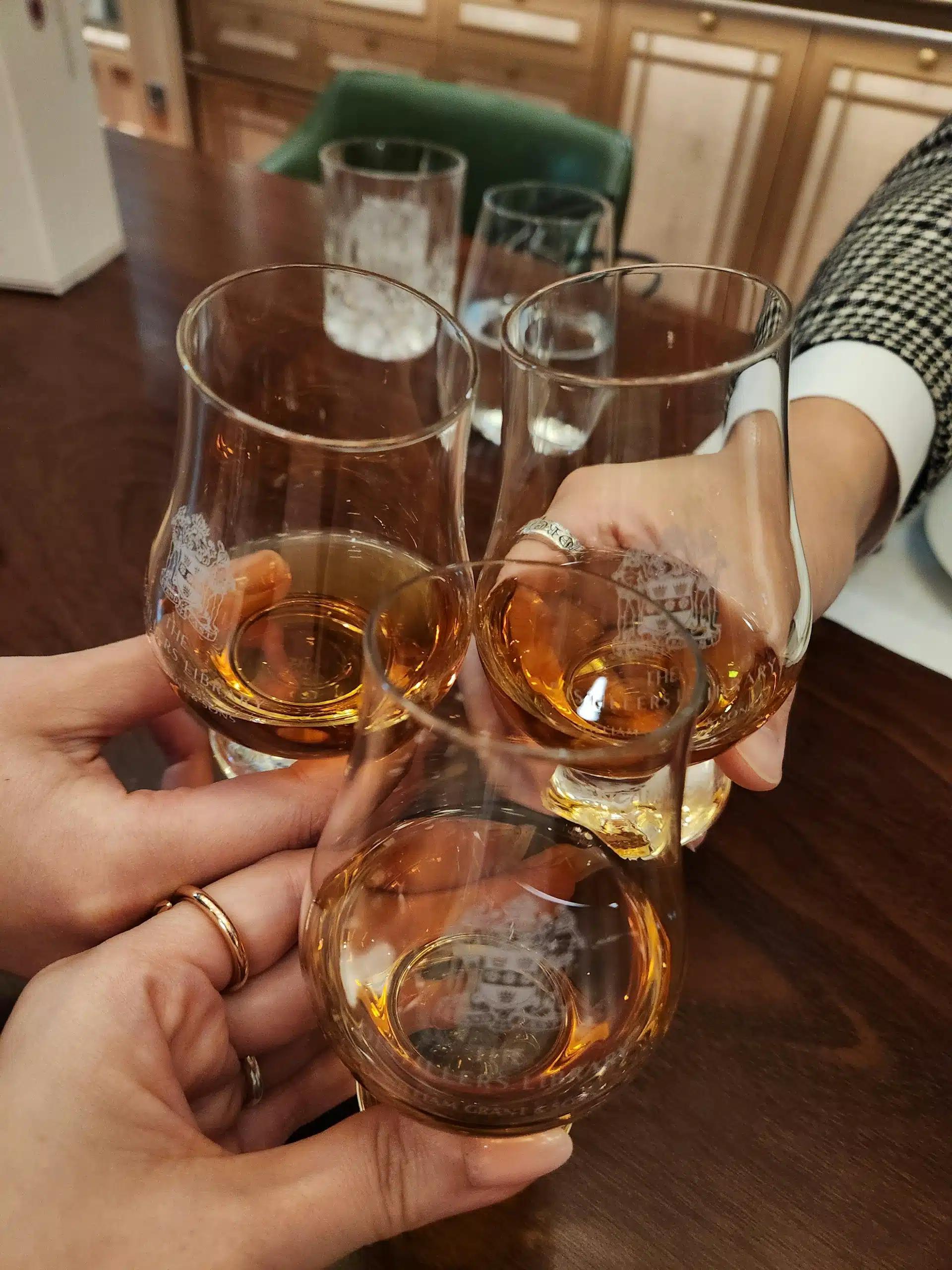
Minding whiskey calories is more about deliberateness than it is about restriction. The most satisfying experiences tend to involve smaller, more considered pours. Paying attention to what is in the glass makes the experience richer, not smaller.
Pour Deliberately
A 1.5 oz pour is the standard unit to track. Freehand pours at home often run 2 to 2.5 oz without the pourer noticing. That gap adds up quickly in both ounces and calories.
Well-proportioned whiskey glasses with a measured pour (like the Aequilibrium Spirit Glass) deliver accuracy and a better nosing surface. You get more from the pour you actually intended to make.
Sip Slowly
Whiskey rewards patience. A slower pace means less consumption over the same stretch of time, and the drink becomes more engaging. When you slow down to nose the glass, notice the finish, and let the flavors develop, you naturally drink less. The whiskey does the work.
Choose Quality Over Quantity
A single exceptional pour is more satisfying than two pours of something mediocre. Your choice of bottle and vessel contribute to this experience, so only choose the best. When the experience is truly good, one pour is enough.
Add Water, Not Mixers
A few drops of still water can open up the flavor of higher-proof whiskey, revealing complexity that closes at full strength. Ethanol molecules bind to flavor compounds at high concentrations, and a small dilution releases them. You get more out of the same pour with no added calories. It is one of the simplest upgrades in whiskey drinking.
Frequently Asked Questions
Does whiskey have carbs or sugar?
No. Straight whiskey contains 0 grams of carbohydrates and 0 grams of sugar. All calories come from alcohol. Flavored whiskeys may contain added sugars, so check the label if that matters to you.
Is whiskey keto-friendly?
Yes. Straight whiskey with no mixers fits a ketogenic diet because it contains no carbohydrates or sugar. Flavored whiskeys and sweetened mixers are the exceptions and can contain significant sugar.
How many calories are in a double whiskey?
A double is typically 3 oz in US bars. At 40% ABV, that works out to approximately 195 calories, which is still less than many regular beers and most craft cocktails.
Does aging whiskey change its calorie count?
Not significantly. Calorie content tracks ABV, not age. An 18-year single malt at 43% ABV has similar calories to a younger expression at the same proof.
Why does higher-proof whiskey have more calories?
Because alcohol is the calorie source. Higher ABV means more alcohol per ounce, which means more calories per ounce. A 100-proof (50% ABV) whiskey has roughly 25% more calories per ounce than an 80-proof (40% ABV) expression.
Is whiskey lower in calories than wine?
Per ounce, yes. But standard serving sizes differ. A typical whiskey pour is 1.5 oz, while a standard wine glass holds 5 oz. The two end up closer in total calories than the per-ounce comparison suggests.
Shop the Aequilibrium Glass Collection
-
Red WineRegular price From $42.99 USDRegular priceUnit price per
$86.00 USDSale price From $42.99 USDSale -
Spirits & LiquorsRegular price From $39.99 USDRegular priceUnit price per
$80.00 USDSale price From $39.99 USDSale -
WoodRegular price From $38.99 USDRegular priceUnit price per
$78.00 USDSale price From $38.99 USDSale -
 Sold outCeramicRegular price From $33.99 USDRegular priceUnit price per
$68.00 USDSale price From $33.99 USDSold out