

Quick Answer: What Is the Best Scotch Whisky Glass?
The best glass for scotch whisky depends on how you drink. Here's a quick breakdown of the three main styles:
- Glencairn — Stemless, tulip-shaped bowl, and a tapered rim. Best for nosing and tasting single malts neat or with a few drops of water.
- Copita — Stemmed, tulip-shaped, and with a smaller opening than the Glencairn. Best for serious tasting sessions and professional nosing.
- Tumbler (Rocks Glass) — Wide, heavy-based, and with an open rim. Best for scotch on the rocks, cocktails, and casual sipping.
Want nosing performance without a purely functional look? The Aequilibrium Spirit Glass by Audacaem (from $39.99) is a hand-blown, lead-free crystal alternative with a 360° pivot base that aerates the spirit as you swirl. It’s built for drinkers who want tasting-glass performance in a more refined, everyday piece.
Aequilibrium: built to aerate, designed to impress.
Why the Glass You Choose Matters
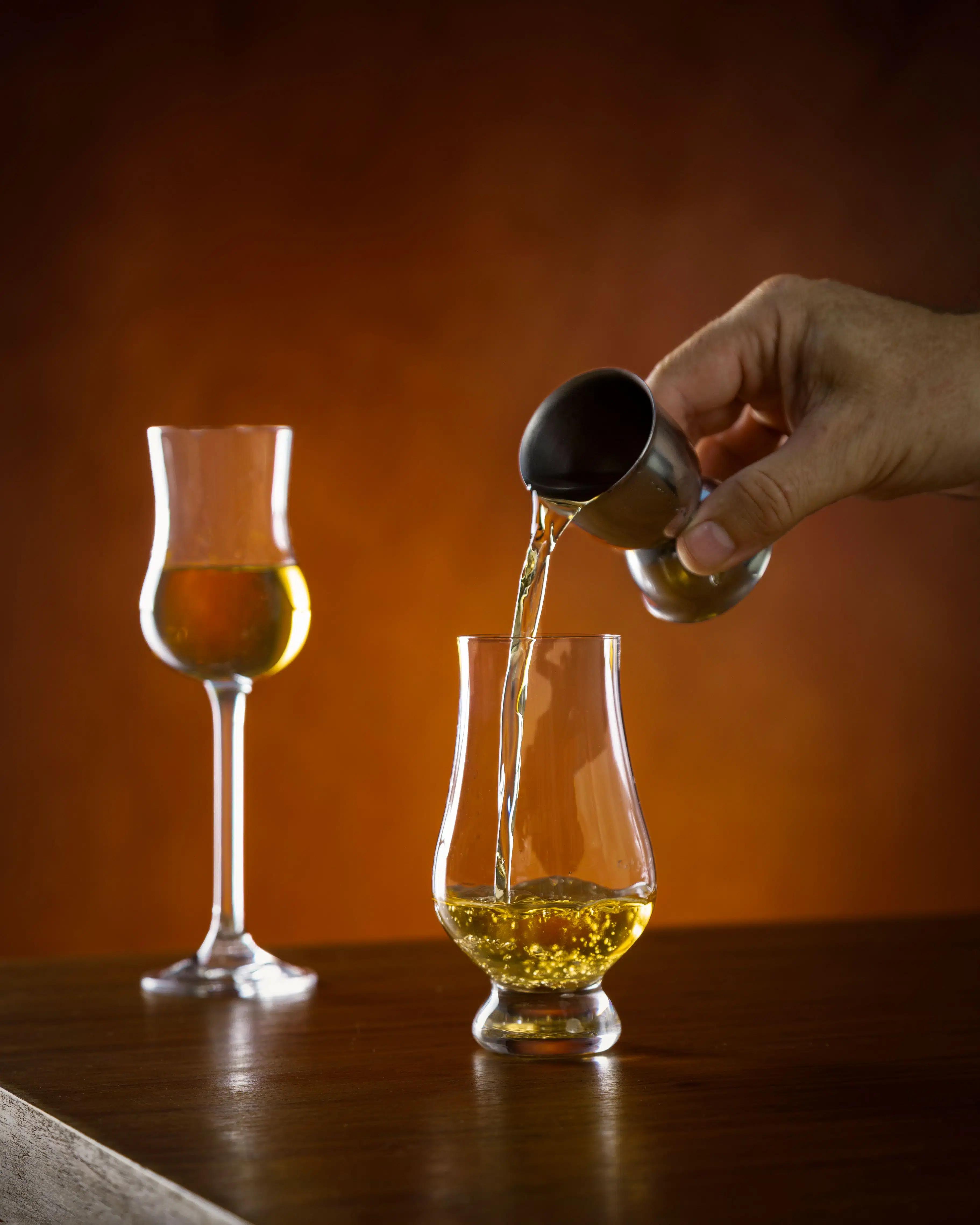
Most of what we experience as flavor is aroma. When you bring a glass to your nose, the shape of the bowl controls how volatile compounds collect and travel upward. Research on glass shape and aroma perception shows that a tapered rim concentrates aromatic molecules. Meanwhile, a wide, open rim lets them disperse before they reach your nose.
Scotch whisky sits at 40–46% ABV for most expressions. Cask-strength bottlings can reach 60% or higher. At those alcohol levels, the glass shape also determines how much ethanol vapor hits the nose before the fruit, malt, and smoke notes do. A well-designed nosing glass separates those heavier aromatic compounds from the lighter ethanol molecules, giving a cleaner, more expressive nose.
The glass also affects how the whisky lands on the palate. A narrow opening focuses the flow to the center of the tongue. A wide opening spreads it broadly. Neither is wrong. They simply produce different experiences from the same dram.
How Much To Pour
A standard dram is 25ml (roughly 0.85 oz). Pour to the widest point of the bowl to give the whisky enough surface area to release aromas and enough headspace to swirl without spilling. Overfilling a Glencairn or copita defeats the purpose of the tapered rim.
Adding Water
A few drops of still water can open up a scotch significantly, especially at higher ABVs. Water breaks the surface tension of the liquid, releasing aromatic compounds that were previously bound to the ethanol. This works in any vessel, but you'll notice the effect most clearly in a nosing glass where the aromas concentrate.
- 30-day warranty
- Secure payments
- Free shipping over $65
One Glass That Does the Nosing Work for You
Crystal, hand-blown, with a pivot base that keeps the spirit moving between sips. No swirling required.
Meet the Aequilibrium Spirit GlassThe Glencairn Whisky Glass: The Modern Standard

In 2001, Glencairn Crystal Ltd., in collaboration with master blenders from five of Scotland's major whisky companies, developed the Glencairn whisky glass. The design draws from the nosing glasses used in distillery labs, the same tools blenders use to check spirit quality every day.
The shape is distinctive: a wide, rounded bowl that narrows into a tapered chimney opening. The bowl gives the whisky room to breathe and swirl. The tapered rim concentrates aromas as they rise, directing them straight to the nose. The solid, stemless base makes it stable and comfortable to hold.
What the Glencairn Does Well
The Glencairn excels at nosing. The tapered opening channels aromas well, so you pick up fruit, malt, smoke, and oak notes clearly before you even take a sip.
It's also easy to swirl. The wide base and low center of gravity make the motion natural. For everyday drinking of single malts neat or with a drop of water, it's hard to beat. Among the many whiskey glasses available today, the Glencairn remains the benchmark for scotch.
Where It Falls Short
The narrow opening makes ice impractical. If you prefer your scotch on the rocks, the Glencairn is the wrong tool.
The stemless base also means your hand warms the bowl directly. This is not a problem for most drams, but worth noting if you're tasting a delicate, temperature-sensitive expression.
Some drinkers also find the opening too small, requiring them to tilt their head back further than feels natural.
Verdict
The Glencairn is the most widely used scotch whisky glass in the world for good reason. It is purpose-built for the spirit, affordable, durable, and improves the nosing and tasting experience. It's the right starting point for anyone building a whisky glass collection.
Best for: Neat single malts, blended scotch, tasting sessions, everyday drinking.
Also read: What Is a Glencairn Whiskey Glass? A Complete Guide
The Copita Glass: The Professional's Choice

The copita whisky glass has a longer history than the Glencairn. It originated as a sherry glass in Spain. The word copita is Spanish for "little cup".
The whisky trade adopted the term centuries ago. Merchants used it at docksides to nose spirits from barrels before accepting or rejecting a shipment. This is why it's also called the dock glass.
The shape is similar to the Glencairn but with a stem. The bowl is round and tulip-shaped, narrowing to a smaller opening than the Glencairn. The stem keeps the hand away from the bowl, preventing body heat from warming the spirit. Master blenders and distillery professionals still reach for the copita when they need to test a whisky with precision.
What the Copita Does Well
The copita's smaller opening concentrates aromas more aggressively than the Glencairn. This makes it the better tool for serious nosing. You pick up more layers, more subtlety, and more of the whisky's development over time.
The stem also makes it easier to swirl cleanly. If you're tasting multiple whiskies in a session, the copita gives you the most analytical experience.
Where It Falls Short
The small opening requires you to tilt your head back more than feels natural for casual drinking. The stem also makes it feel more formal. Some drinkers find it fussy for an evening dram at home.
Like the Glencairn, it is not designed for ice. And the delicate stem means it's more fragile than a stemless glass.
Verdict
The copita is the better glass if nosing precision matters more than convenience. It's the choice of professionals for a reason.
For home use, it is most valuable when you're tasting something new. It also works well when comparing expressions side by side, or working through a complex, aged single malt that rewards careful attention.
Best for: Formal tasting sessions, comparing multiple whiskies, aged single malts, professional evaluation.
The Tumbler: For Rocks, Cocktails, and Casual Pours
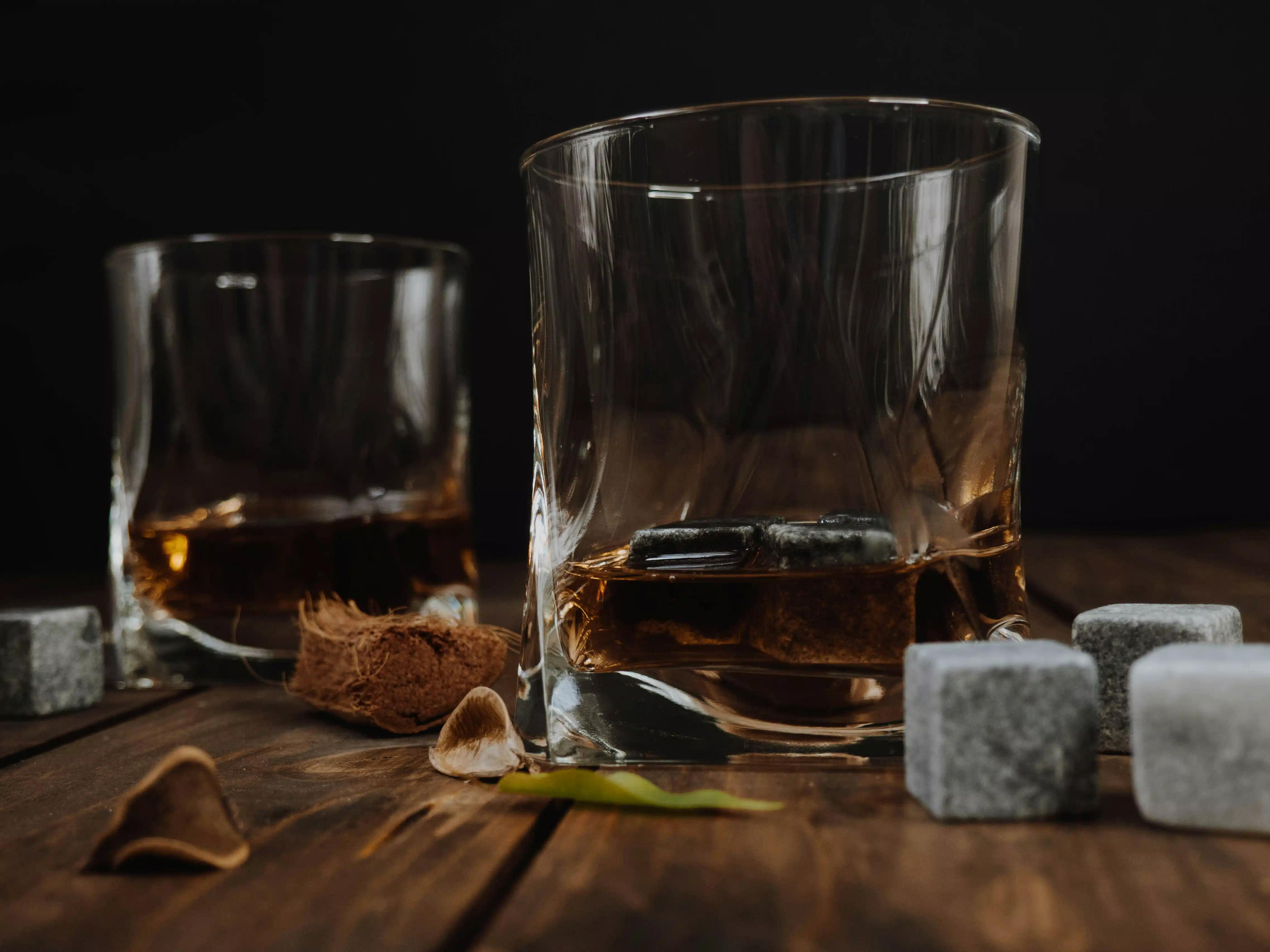
The tumbler—also called the rocks glass, lowball, or Old Fashioned glass—is the most recognizable whiskey glass in the world. Its iconic silhouette has become synonymous with whisky culture. Its wide, heavy base and open rim make it the most versatile vessel in the scotch drinker's cabinet.
The tumbler was not designed for nosing. Its wide opening lets aromas disperse quickly. This means you lose much of the spirit's aromatic complexity before it reaches your nose. What you get instead is a clean, unfiltered hit of the spirit, which is exactly what you want when you're drinking scotch on the rocks or mixing a cocktail.
What the Tumbler Does Well
The tumbler is the only scotch glass where ice feels right. The wide opening accommodates large ice cubes or spheres without awkwardness. The heavy base gives it a satisfying weight in the hand.
It is also the correct glass for classic scotch cocktails, such as the Rob Roy, the Rusty Nail, and the Blood and Sand. The wide rim allows the drink to breathe and the aromas to open up freely.
Where It Falls Short
Drinking a fine single malt neat from a tumbler is not wrong. You won't ruin the whisky, but you will miss a significant portion of its aromatic complexity.
The wide rim lets volatile compounds escape before they reach your nose. If you've paid for a 15-year Speyside or a peated Islay expression, a nosing glass will give you more of what you paid for.
Verdict
Tumbler whiskey glasses are essential, not optional. It's the right glass for ice, cocktails, and relaxed evening pours where you're not trying to analyze the whisky. Pair it with a Glencairn or copita for tasting, and you have everything you need.
Best for: Scotch on the rocks, cocktails, casual sipping, highball serves.
The Aequilibrium Spirit Glass — A Crystal Alternative
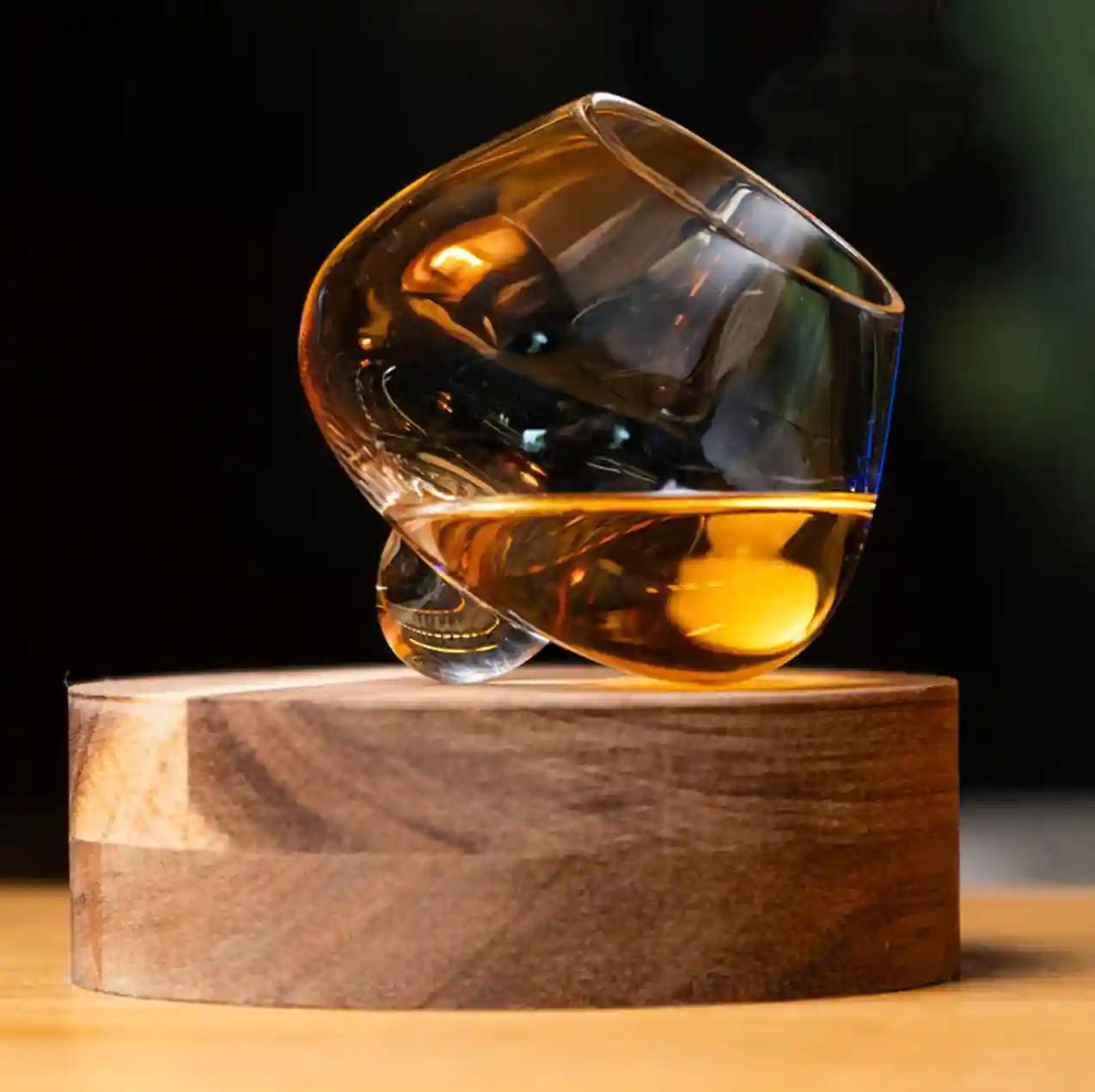
Glass material also plays a role in the experience. Lead-free crystal is thinner and clearer than standard glass. This improves both the visual presentation of the whiskey and the feel of the rim against your lips.
The Aequilibrium Spirit Glass uses 100% lead-free hand-blown crystal with a 360° pivoting base that keeps the spirit in gentle continuous motion between sips.
The glass passively aerates the liquid without a separate decanting step. It offers an elegant middle ground between analytical nosing performance and refined presentation.
Also read: Spinning Whiskey Glass Guide: The Aequilibrium Spirit Glass
- 2,200+ verified reviews
- Hand-blown by master artisans
- Reliable shipping
This Is the Glass You've Been Nosing For
Hand-blown crystal, 360° pivot base, zero swirling required. The verdict is in — now try it yourself.
Shop the AequilibriumOther Scotch Whisky Glasses Worth Knowing
The Glencairn, copita, and tumbler cover most situations. But a few other glass styles appear regularly in the scotch world and are worth understanding.
The Snifter

The snifter has a wide balloon bowl and a tight, narrow rim. It best suits brandy and cognac, but many have used it for aged scotch for decades.
The wide bowl increases surface area and encourages aromatic release. The problem is the tight rim. It can trap ethanol vapors and deliver an overwhelming alcohol hit before you reach the more interesting notes. This whiskey glass works best with very old, low-ABV expressions where the alcohol is no longer dominant.
The NEAT Glass
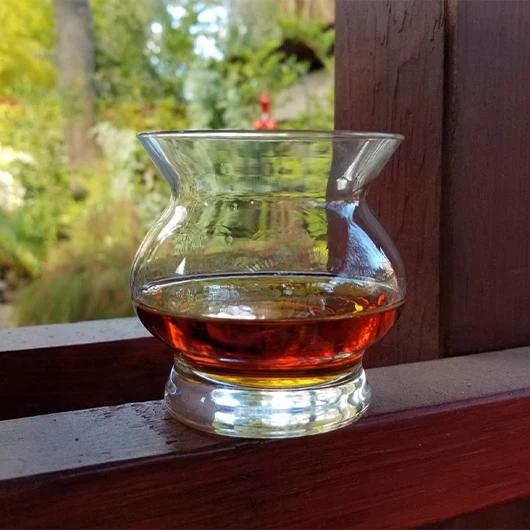
NEAT stands for Naturally Engineered Aroma Technology. The NEAT glass has a flared, outward-curving rim that disperses lighter ethanol molecules away from the nose. This leaves the heavier aromatic compounds behind.
The NEAT is the official tasting glass of several major spirits competitions. It's a good option for drinkers who find high-ABV scotch too harsh on the nose, or for anyone new to the category.
The Highball Glass

The highball glass is the tall sibling of the tumbler. It's designed for long drinks, such as scotch and soda, scotch and ginger ale, or the Japanese-style highball that has become one of the most popular scotch serves in the world.
The tall, narrow shape keeps carbonation intact and allows plenty of ice. It's not a nosing glass, but it's the right tool for mixed scotch drinks.
Also read: Best Crystal Whiskey Glasses for Every Pour
How to Choose the Right Scotch Whisky Glass
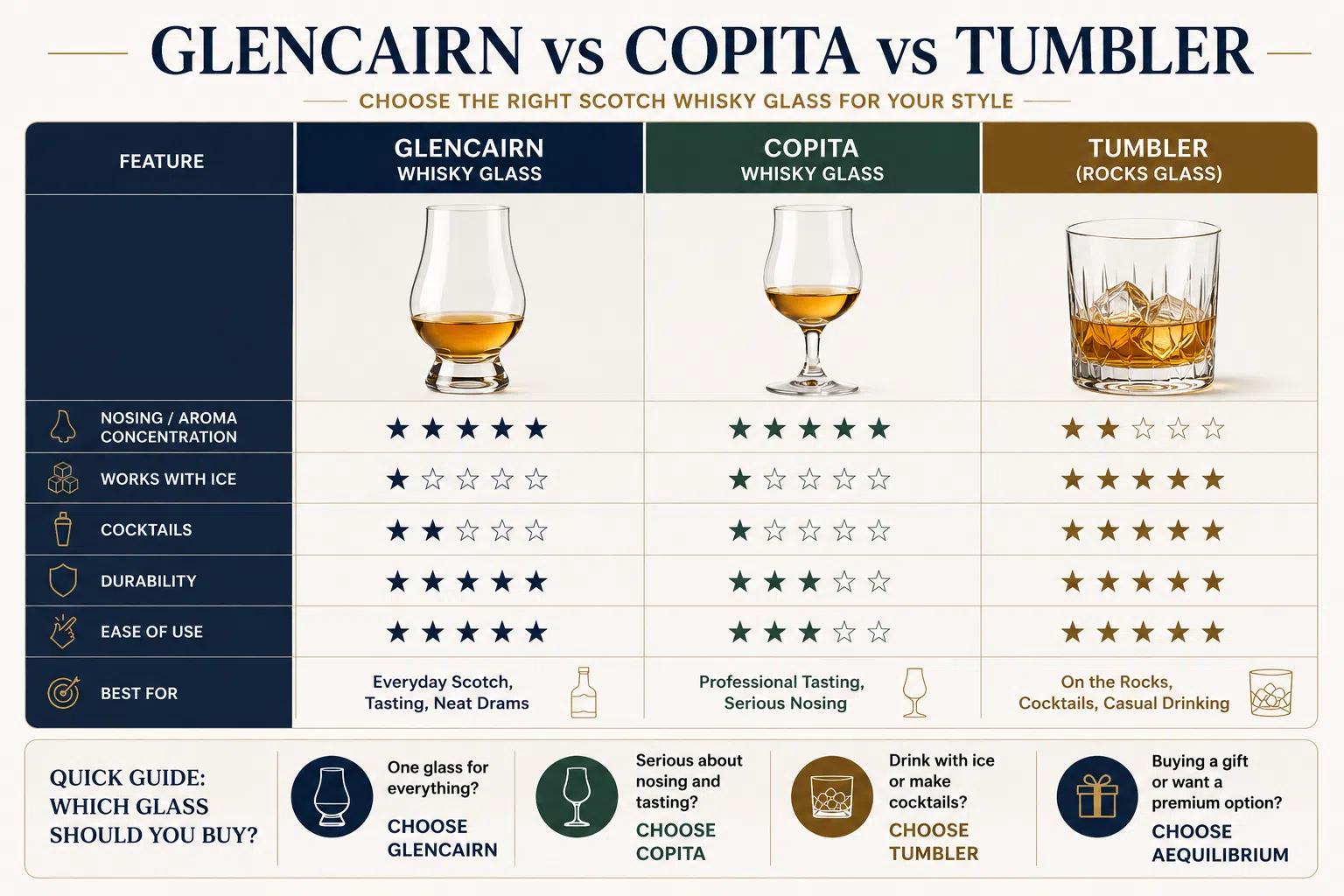
Choosing the right scotch whisky glass depends on how you enjoy your whisky. There's no single correct answer, but there are clear patterns.
If You Drink Neat or With Water
Start with a Glencairn whisky glass. It's the most practical nosing glass for home use: durable, affordable, and purpose-built for scotch. If you want to go deeper on nosing and tasting, add a copita.
The two whiskey glasses complement each other. Use the Glencairn for everyday pours and the copita when you're paying close attention.
If You Drink on the Rocks or in Cocktails
A heavy-based tumbler is the right choice. Look for one with a thick, weighted base. It feels more substantial in the hand and keeps the glass stable when you're muddling cocktail ingredients.
Lead-free crystal tumblers offer better clarity and a finer rim than standard glass.
If You’re Buying as a Gift
A set of two Glencairns is the safest and most appreciated gift for any scotch drinker. If you want something more distinctive, a pair of lead-free crystal tumblers or a copita set shows that you understand the category. A set of Aequilibrium Spirit Glass also balances presentation and function.
Avoid novelty glasses with etched patterns. They look impressive, but the carving makes it harder to see the whisky's color and legs.
If You’re New to Scotch
Consider the NEAT glass. Its flared rim disperses harsh ethanol vapors, which makes high-ABV scotch more approachable on the nose.
Once you're comfortable with the spirit, move to a Glencairn. You'll notice the difference in aromatic complexity immediately.
Also read: The 7 Best Whiskey Glasses for Better Taste
For Memorable Whisky Moments
-
Red WineRegular price From $42.99 USDRegular priceUnit price per
$86.00 USDSale price From $42.99 USDSale -
Spirits & LiquorsRegular price From $39.99 USDRegular priceUnit price per
$80.00 USDSale price From $39.99 USDSale -
UniversalRegular price From $42.99 USDRegular priceUnit price per
$86.00 USDSale price From $42.99 USDSale -
Spirits & Red WineRegular price From $110.00 USDRegular priceUnit price per


Delightful glasses that allow a good single malt to breathe. And great fun.
How to Care for Scotch Whisky Glasses

Whisky glasses, especially crystal ones, require a little more attention than everyday glassware. The right care keeps them clear, odor-free, and structurally sound.
Hand Wash, Don’t Dishwash
Dishwashers damage crystal over time. The high heat and harsh detergents etch the surface, causing cloudiness and reducing clarity.
Hand wash with warm water and a small amount of unscented dish soap. Rinse thoroughly. Any soap residue will affect the aroma of your next pour.
Dry Immediately
Air drying leaves water spots, especially on crystal. Dry with a clean, lint-free cloth immediately after washing. Hold the glass by the base or stem, not the bowl, to avoid leaving fingerprints on the surface.
Store Upright, Not Inverted
Store whiskey glasses upright rather than rim-down. Storing them inverted on a shelf can trap musty odors inside the bowl, which will transfer to your drink. If you store them in a cabinet, leave the door slightly open or store them upright with a small gap for air circulation.
Also read: Types of Whiskey Glasses for the Perfect Glass of Whiskey
Final Thoughts: Choosing the Best Scotch Whisky Glass for You
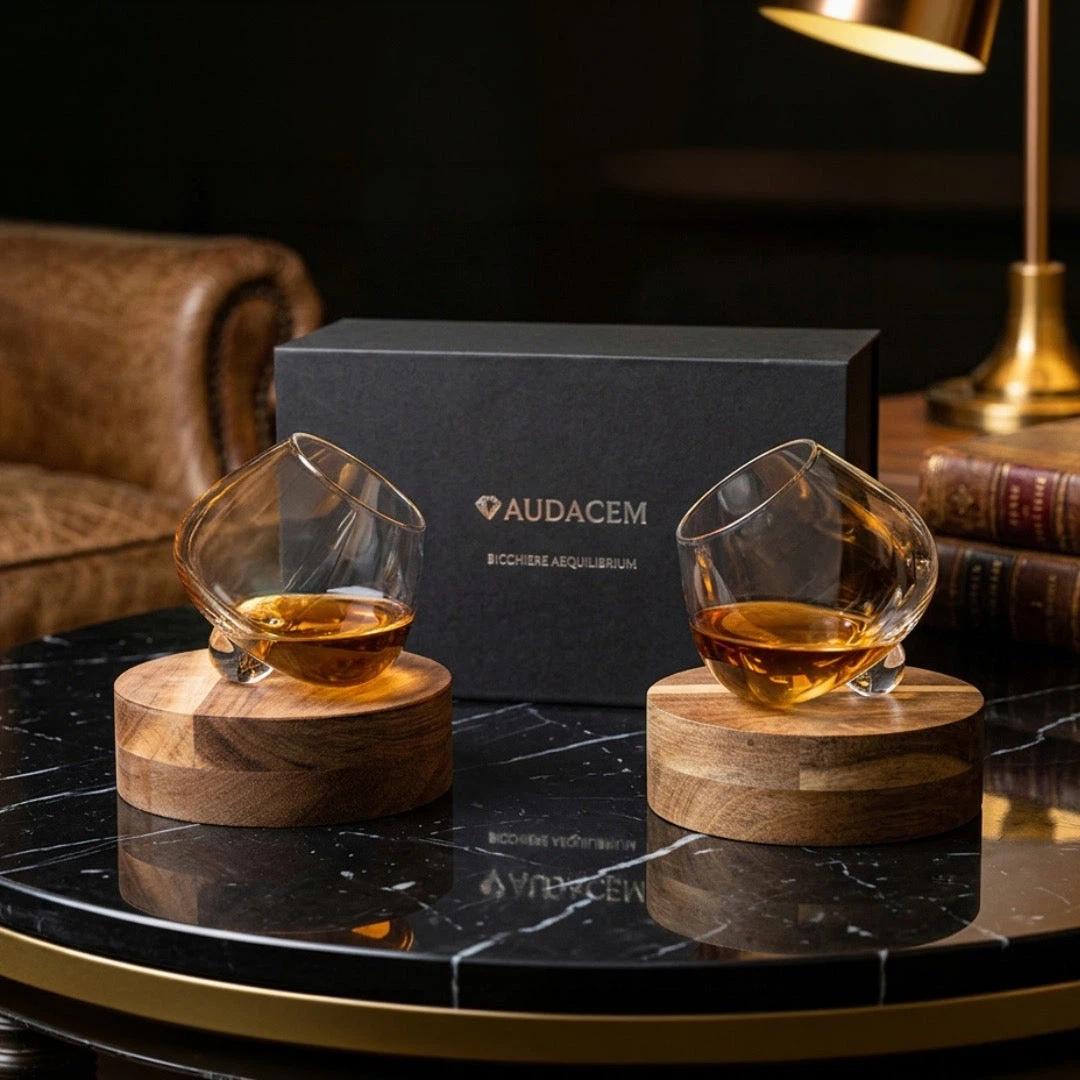
The Glencairn, copita, and tumbler each earn their place for a reason: they're purpose-built for how you drink. A Glencairn for everyday single malts. A copita when you're nosing something worth the extra attention. A tumbler when ice or a cocktail is on the table.
But if you're looking for a single glass that carries you through most of those moments, one that concentrates aroma like a nosing glass while still looking at home on a bar cart or dinner table, the Aequilibrium Spirit Glass is worth a look. Its pivoting base keeps the spirit gently aerating between sips, so you get much of the nosing benefit without needing a second glass just for presentation.
The right choice ultimately comes down to how you drink, how often you entertain, and how much ceremony you want around a pour. Whichever glass you land on, the goal is the same: get more out of every dram.
Frequently Asked Questions
What is the best glass for scotch whisky?
The Glencairn is the most widely recommended glass for scotch whisky. Its tulip-shaped bowl and tapered rim concentrate aromas effectively, making it the best all-around choice for nosing and tasting single malts neat or with a few drops of water. For more precise tasting, the copita is the professional standard. For scotch on the rocks or cocktails, a heavy-based tumbler is the right tool.
What is the difference between a Glencairn and a copita glass?
Both glasses share a tulip shape designed to concentrate aromas, but they differ in two key ways. The Glencairn is stemless with a solid base, making it more durable and easier to hold casually. The copita has a stem, which keeps the hand away from the bowl and prevents body heat from warming the spirit. The copita also has a slightly smaller opening, which concentrates aromas more aggressively. The Glencairn is better for everyday use, while the copita is better for serious tasting.
Can you drink scotch from a tumbler?
Yes. A tumbler is the correct glass for scotch on the rocks, scotch cocktails, and casual pours. It's not ideal for nosing a fine single malt neat, because the wide opening lets aromatic compounds disperse before they reach your nose. But there's nothing wrong with drinking scotch from a tumbler. It's a matter of what you want from the experience.
Does the glass really affect how scotch tastes?
Yes, measurably so. The shape of the glass controls how aromatic compounds collect and travel to your nose. A tapered nosing glass like the Glencairn or copita concentrates volatile compounds, giving a more expressive and layered nose than a wide-rimmed tumbler. The effect is most noticeable with complex, aged single malts where the aromatic profile is the main event.
Should you add water to scotch whisky?
Adding a few drops of still water to scotch is a legitimate and widely practiced technique. Water breaks the surface tension of the liquid, releasing aromatic compounds that were previously bound to the ethanol. This is especially useful with cask-strength expressions above 50% ABV, where the alcohol can mask subtler notes. Start with two or three drops and nose the whisky again. The difference is often significant.
What glass do professional whisky tasters use?
Most professional blenders and distillery tasters use a copita-style nosing glass. Its stemmed design keeps body heat away from the bowl, and its small opening concentrates aromas for precise evaluation. The ISO tasting glass, a standardized tulip-shaped glass used in formal spirits competitions, is also widely used in professional settings. The Glencairn is common at distillery visitor centers and whiskey events.
Is crystal better than glass for whisky?
Lead-free crystal is thinner, clearer, and has a finer rim than standard glass. The thinner walls improve the tactile experience, and the clarity makes it easier to assess the whiskey's color. Crystal does not chemically affect the spirit. The practical difference is in feel and presentation rather than flavor. Crystal glasses need hand washing and more careful handling than standard glass.
What is the NEAT glass and is it worth buying?
The NEAT glass (Naturally Engineered Aroma Technology) has a flared, outward-curving rim that disperses lighter ethanol molecules away from the nose, leaving heavier aromatic compounds behind. It's the official tasting glass of several major spirits competitions. It's worth considering if you find high-ABV scotch too harsh on the nose, or if you're new to the category. Experienced drinkers often prefer the Glencairn or copita for the more concentrated aromatic experience those glasses provide.
Shop the Aequilibrium Glass Collection
-
Red WineRegular price From $42.99 USDRegular priceUnit price per
$86.00 USDSale price From $42.99 USDSale -
Spirits & LiquorsRegular price From $39.99 USDRegular priceUnit price per
$80.00 USDSale price From $39.99 USDSale -
UniversalRegular price From $42.99 USDRegular priceUnit price per
$86.00 USDSale price From $42.99 USDSale -
Spirits & Red WineRegular price From $110.00 USDRegular priceUnit price per