
Tiffany Wine Glasses: At a Glance
Tiffany & Co. offers crystal wine glasses that range from $55 per glass (Home Essentials line) to $670 per glass (Jardin hand-etched collection). They are well-made, visually striking, and come in the iconic Tiffany Blue Box.
As everyday drinking glasses, however, they face stiff competition from purpose-built wine glass brands at lower prices. Here is what you need to know before you buy.
- Best for Gifting — Tiffany crystal wine glasses from the Home Essentials collection (set of two, from $110)
- Best for Performance — Riedel VINUM or Zalto Denk'Art Universal (better aroma delivery, lower price per glass)
- Best for a Distinctive Gift — Audacem Aequilibrium Glass collection's hand-blown lead-free crystal with a pivot base that aerates wine between pours
In this Tiffany wine glasses review, we assess the brand's collections based on craftsmanship, wine performance, durability, presentation, and overall value.
So, are Tiffany wine glasses worth it? Yes, if the brand name and presentation matter. No, if pure drinking performance is the priority.
What Are Tiffany Wine Glasses?
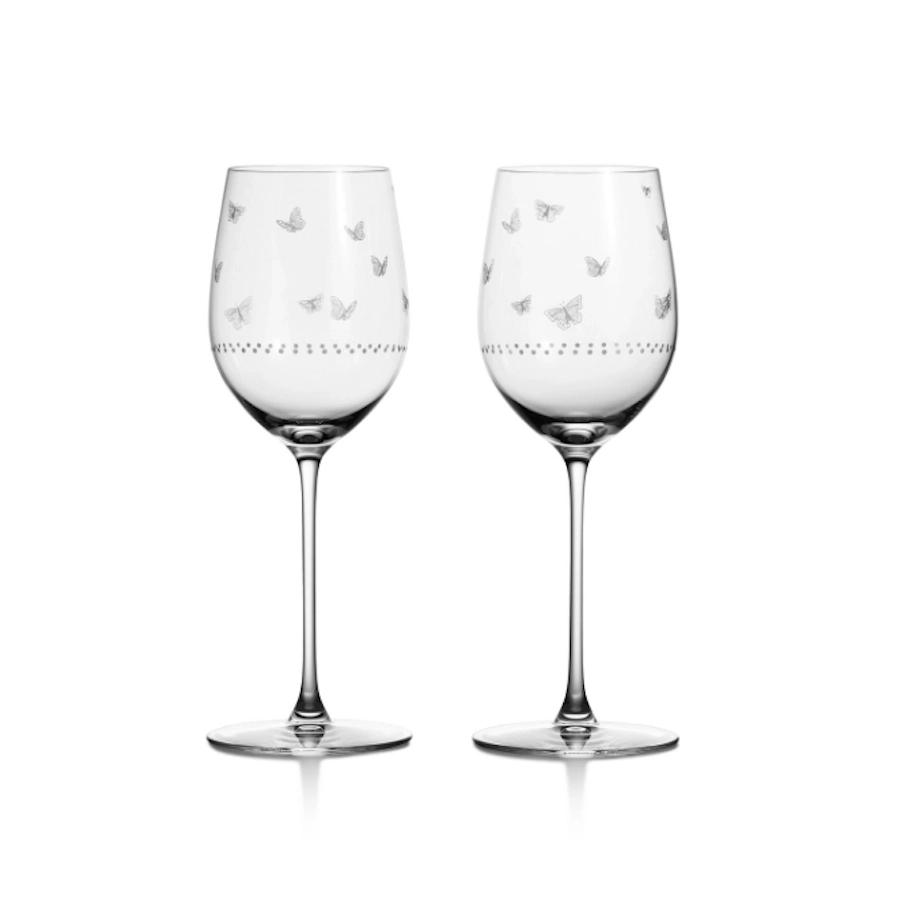
Tiffany & Co. has sold glassware since the late 19th century. Today, the brand offers several wine glass collections under its home accessories line. Selections range from entry-level crystal sets to hand-etched, hand-blown statement pieces.
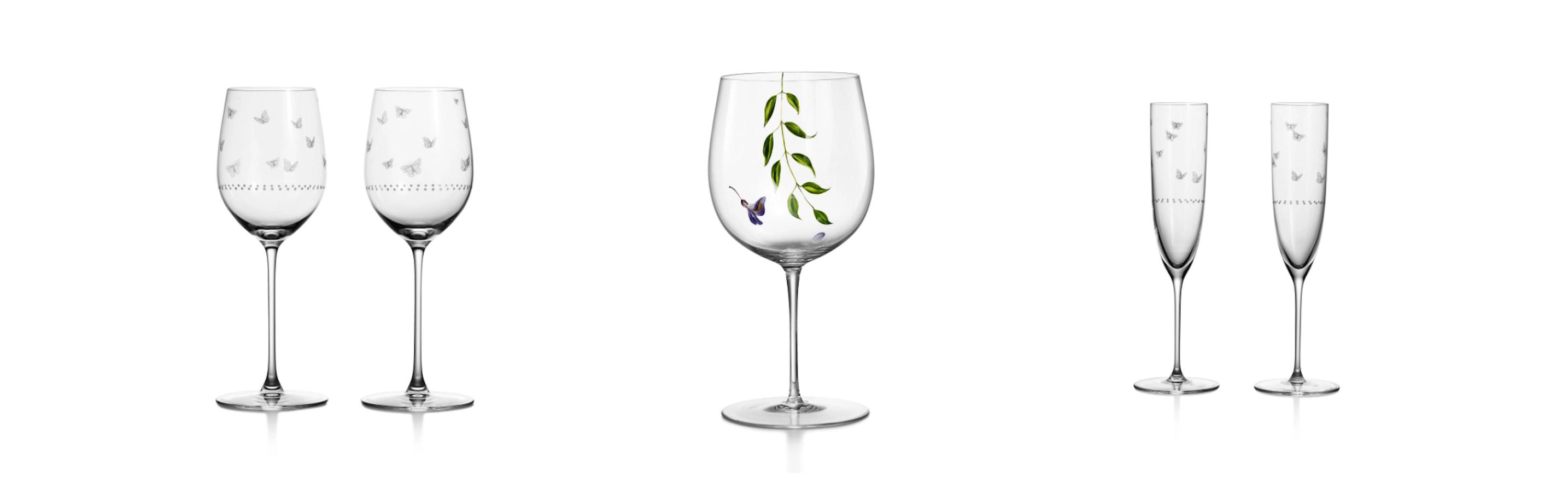
The most widely searched and purchased are the Home Essentials and Connoisseur lines, crystal wine glasses sold in sets of two or four, priced between $110 and $200 per set. At the higher end, the Jardin collection features hand-etched glass with nature-inspired motifs, and individual glasses can reach $670.
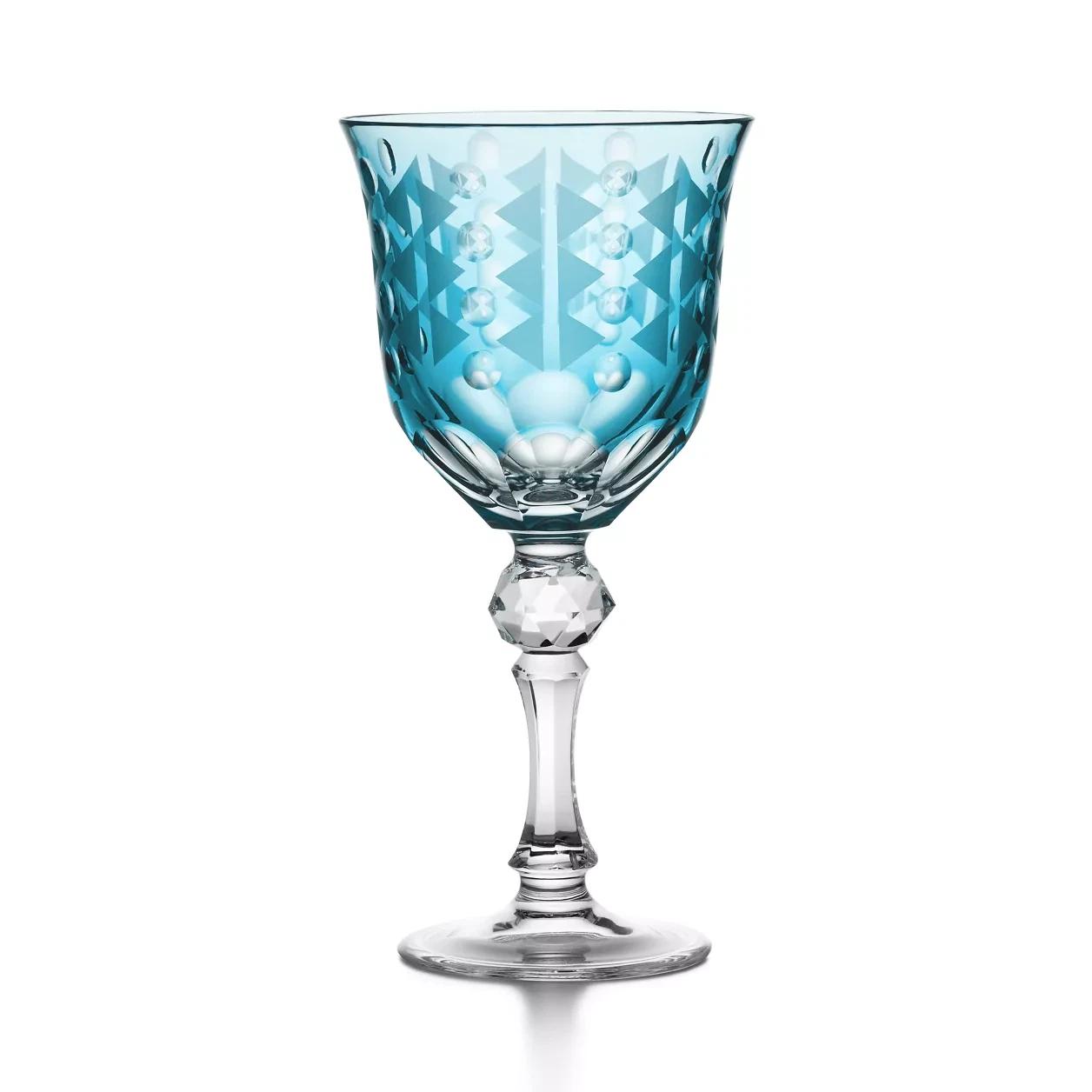
The Wisteria and Twist lines sit in the middle, at $225 to $390 per glass. The Berries collection uses lead crystal in Tiffany Blue or amethyst purple, priced at $360 to $420 per glass. Every purchase arrives in the signature Tiffany Blue Box.
The Tiffany Wine Glass Collections
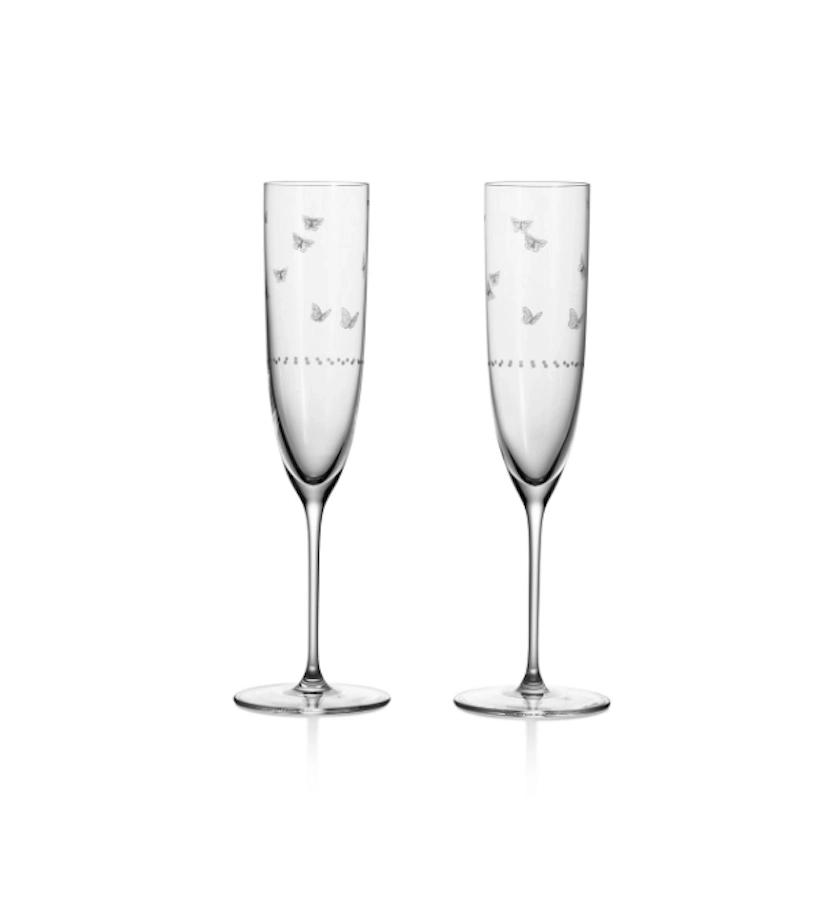
- Home Essentials — Machine-made crystal. Red wine, white wine, Pinot Noir, and champagne glasses. Sets of two from $110. The most accessible entry point.
- Connoisseur — Sets of four, varietal-specific shapes including Riesling. Crystal glass, $200 per set.
- Moderne and Twist — Individual glasses with geometric or twisted stem designs. $170 to $225 per glass.
- Wisteria — Delicate floral-inspired glass. Red and white wine, coupe. $390 per glass.
- Jardin — Hand-etched glass with botanical motifs. The most decorative and expensive line. $200 per set of two, or $670 per individual hand-etched glass.
- Berries — Lead crystal in Tiffany Blue or amethyst purple. Decorative rather than functional. $360 to $420 per glass.
*All prices indicated in this article are estimates and may change over time.
Also read: Wine Glass Types: A Complete Guide to Every Style
What Are Tiffany Wine Glasses Made Of?
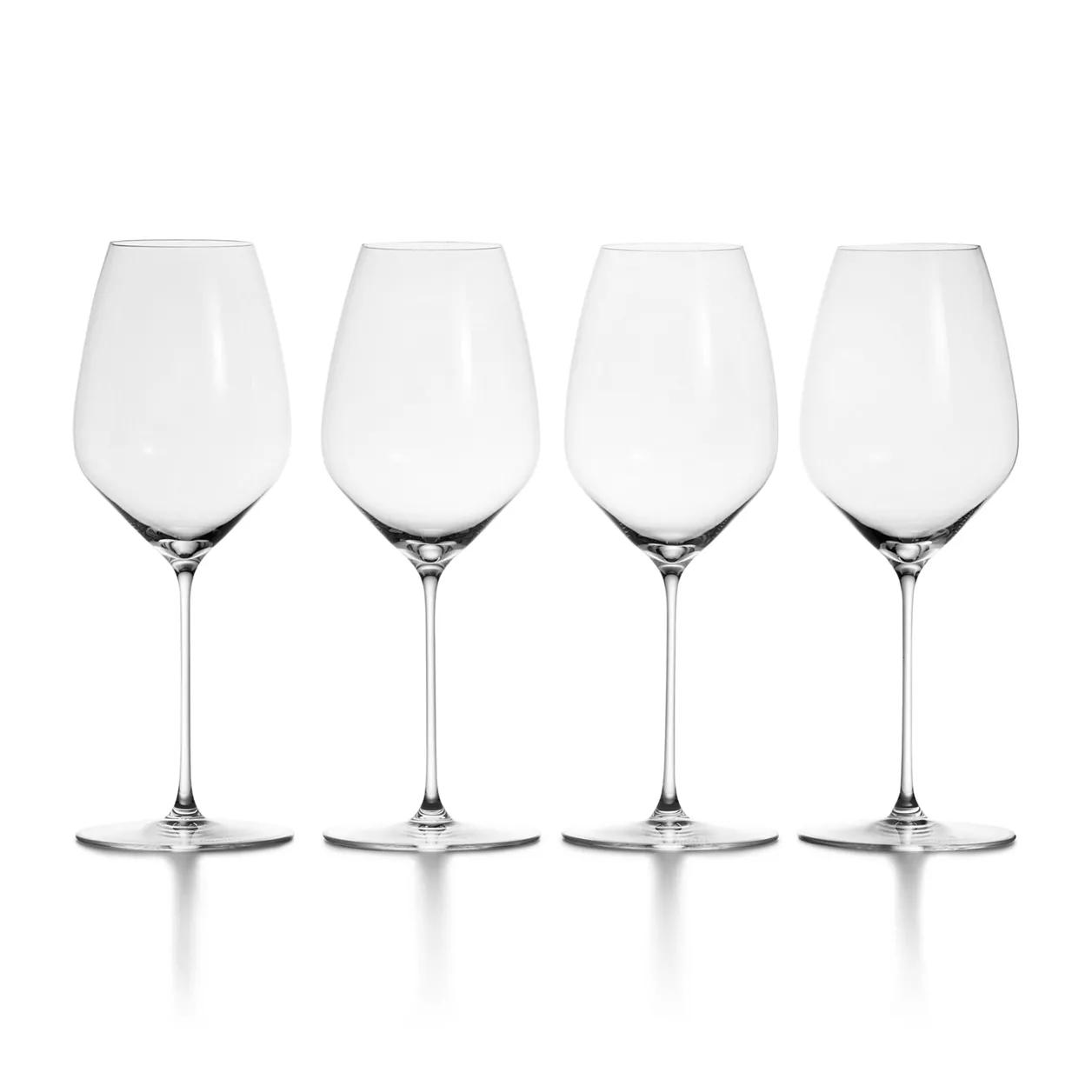
Most Tiffany wine glasses use crystal glass, a category that sits above standard soda-lime glass in clarity, weight, and light refraction. Crystal glass contains minerals, typically barium oxide or zinc oxide in modern lead-free versions. These components increase density and give the glass its characteristic ring when tapped.
The Berries collection uses lead crystal, which is the older formulation. Lead crystal is heavier and has a higher refractive index. However, it is no longer the industry standard for wine glasses. Most premium wine glass makers have moved to lead-free crystal, which is lighter, more durable, and dishwasher-safe.
The Home Essentials and Connoisseur lines use lead-free crystal glass. These are machine-made, which means consistent wall thickness but less of the ultra-thin rim quality you find in hand-blown glasses.
Crystal vs. Glass: Why It Matters for Wine
Crystal glass has a smoother surface at the microscopic level than standard glass. In wine glasses, the smoother interior wall allows aromas to release more freely. The glass also feels thinner and lighter in the hand, even at the same wall thickness.
The rim is the other critical factor. A thin, fire-polished rim delivers wine to the palate more cleanly. Tiffany's machine-made lines have a beaded rim. It is functional, but not as refined as the cut rims on hand-blown glasses.
Also read: Crystal vs Glass: What’s the Difference?
How Do Tiffany Wine Glasses Perform?
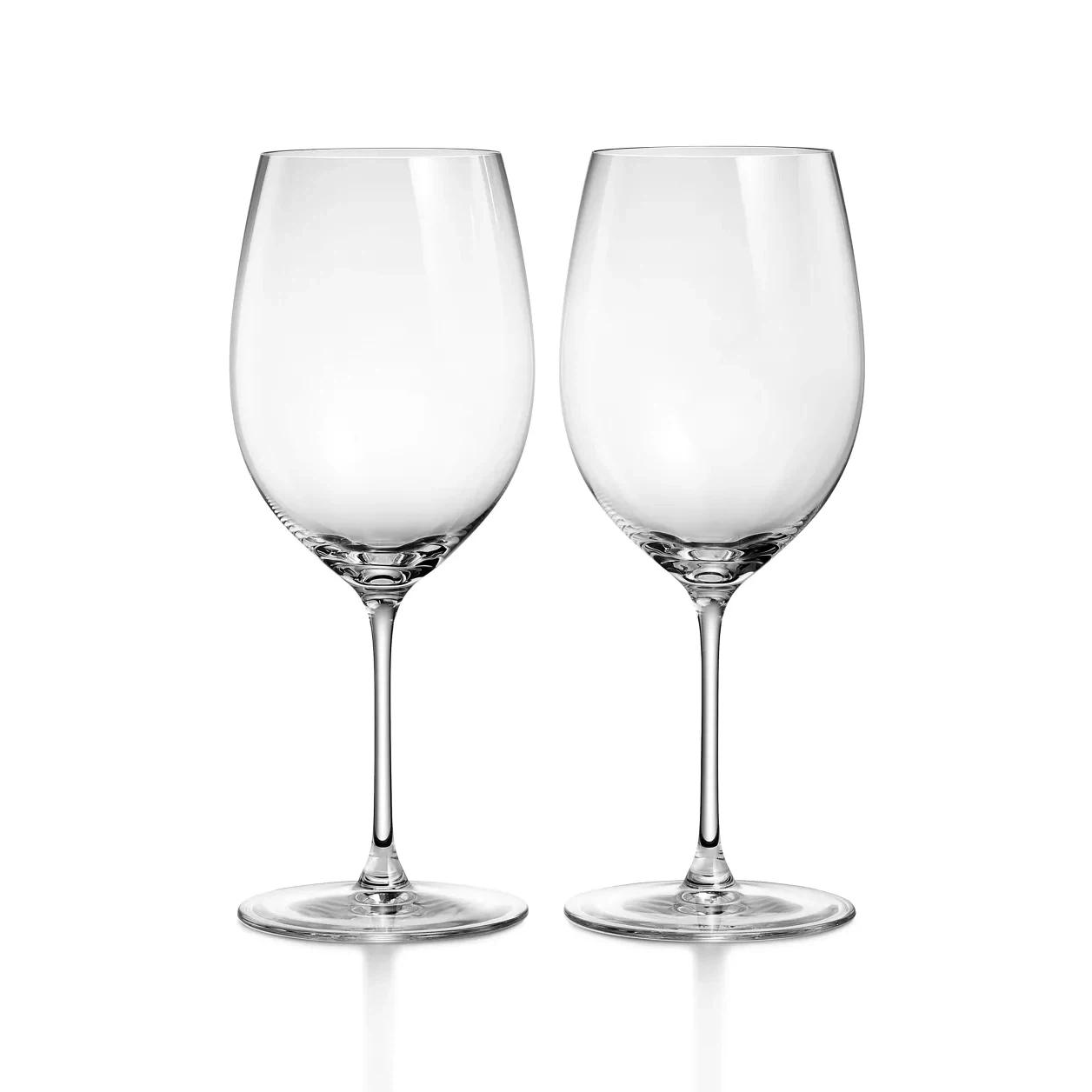
Tiffany wine glasses perform well for the category, but not exceptionally for the price.
The Home Essentials red and white wine glasses have a classic tapered bowl shape that works for most wine styles. The crystal construction gives them good clarity and a pleasant weight. At $55 per glass (from a $110 set of two), they are in the same range as Riedel VINUM, which is widely considered the benchmark for everyday crystal wine glasses.
Where Tiffany glasses fall short is in rim thickness, bowl geometry, and aroma concentration. The Riedel VINUM, Zalto Denk'Art, and Gabriel-Glas StandArt are all engineered to enhance how wine smells and tastes. Tiffany glasses are specifically made to look beautiful and carry the brand name. Those are different design priorities.
The higher-end Tiffany lines (Wisteria, Twist, Jardin) are decorative objects as much as they are drinking glasses. At $225 to $670 per glass, they are not competing with Zalto on performance. They are competing with art glass and luxury tableware.
Tiffany vs. Riedel vs. Zalto: A Direct Comparison
- Riedel VINUM ($42 per glass) — Machine-made crystal. Varietal-specific shapes. Thin rim. Dishwasher-safe. Consistently rated the best everyday wine glass by sommeliers and wine publications. Better aroma delivery than Tiffany Home Essentials at a lower price per glass.
- Zalto Denk'Art Universal ($78 per glass) — Hand-blown lead-free crystal. Nearly weightless. Ultra-thin rim. Exceptional aroma concentration. Dishwasher-safe. The benchmark for serious wine drinkers. More expensive than Tiffany Home Essentials, but delivers a better tasting experience.
- Tiffany Home Essentials ($55 per glass) — Machine-made crystal. Classic bowl shape. Beaded rim. Comes in the Tiffany Blue Box. Good performance, strong brand presentation. The right choice when the gift experience matters as much as the glass itself.
The pattern is clear: Tiffany wins on brand and presentation. Riedel and Zalto win on drinking performance.
Also read: The Best Crystal Wine Glasses, Reviewed and Ranked
Are Tiffany Wine Glasses a Good Gift?
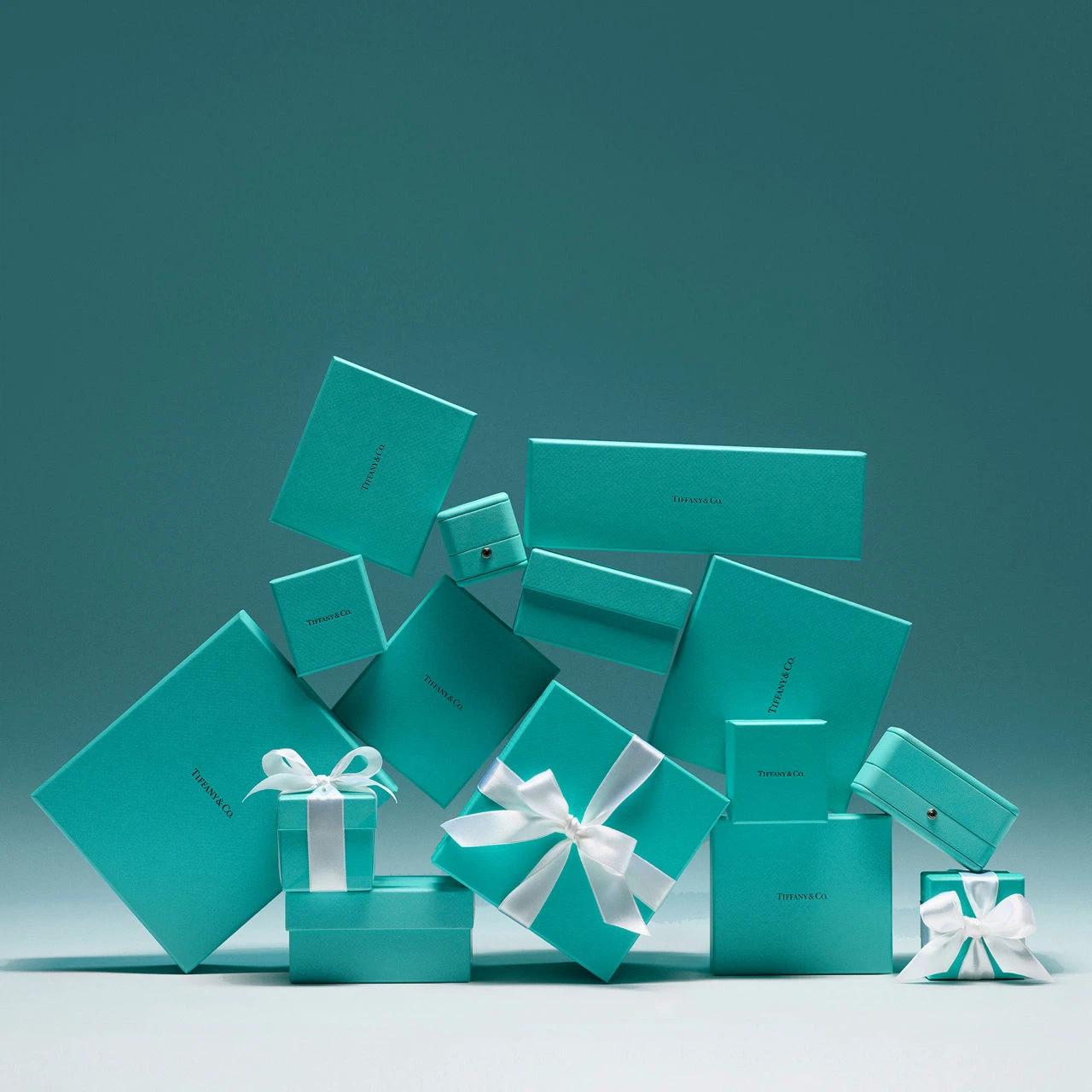
For most people, yes. The Tiffany Blue Box does a lot of work. It signals care, occasion, and a level of thoughtfulness that a plain brown shipping box cannot replicate. If you are buying for a wedding, anniversary, housewarming, or milestone birthday, the unboxing experience alone justifies the price.
The glasses themselves look and feel refined. They are not cheap glassware dressed up in luxury packaging. The crystal construction, the weight, and the clarity are all above average. Most recipients who receive Tiffany wine glasses as a gift report loving them, even when they were not on the registry.
The caveat: If the recipient is a serious wine enthusiast who already owns Riedel or Zalto glasses, they may appreciate the gesture but quietly prefer their existing set for actual drinking. Tiffany glasses tend to become display pieces or special-occasion glasses rather than everyday workhorses.
Who Should Buy Tiffany Wine Glasses
Buy Tiffany Wine Glasses If
- The brand name matters to the recipient.
- You want a gift that arrives beautifully packaged.
- You are buying for a wedding or formal occasion where presentation is part of the gift.
Skip Tiffany Wine Glasses If
- The recipient is a wine enthusiast who prioritizes drinking performance.
- You want the best glass for the money.
- You are buying for everyday use.
Consider an Alternative If
- You want a gift that combines luxury presentation with genuine functional distinction.
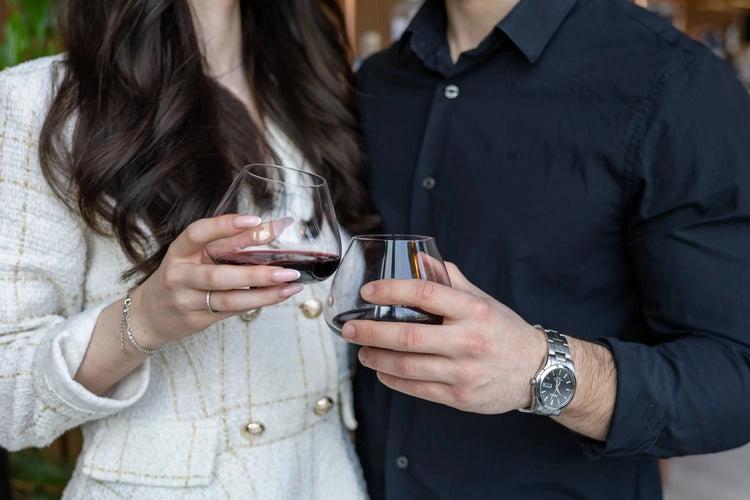
Consider a lead-free, hand-blown crystal glass with a design feature the recipient will notice every time they pour. The pivot base on the Audacem Aequilibrium collection is a great example. It keeps wine in gentle motion between sips and can be a more memorable choice than a brand name alone.
Distinctive by Design
A hand-blown crystal glass that combines refined craftsmanship with everyday function.
Shop the Aequilibrium CollectionWhere To Buy Tiffany Wine Glasses
The full Tiffany wine glass range is available directly at tiffany.com. Tiffany also operates retail stores in major US cities where you can see the glasses in person before buying.
Tiffany wine glasses occasionally appear at off-price retailers like TJ Maxx and Marshalls, typically from discontinued lines. These can be a good way to pick up a set at a significant discount, though selection is unpredictable.
Vintage and discontinued Tiffany crystal wine glasses also appear on the secondary market. Experts estimate the resale value of vintage Tiffany crystal wine glasses at $80 to $90 per glass, which suggests the brand holds its value well.
Can You Get Tiffany Wine Glasses Engraved?
Yes. Tiffany offers engraving on select glassware through its in-store and online personalization service. You can add initials, a date, or a short message. This is a popular option for wedding gifts and anniversaries. It adds a meaningful personal touch that justifies the premium price for many buyers.
How To Care for Tiffany Wine Glasses
Tiffany recommends hand washing for most of its wine glasses, particularly the hand-etched and decorative lines. The Home Essentials crystal glasses are dishwasher-safe, though hand washing is best for long-lasting clarity.
Washing
Wash crystal wine glasses in warm (not hot) water with a small amount of unscented dish soap. Avoid abrasive sponges. Rinse thoroughly, as soap residue affects the taste of wine and the formation of bubbles in sparkling wine.
Drying
Dry immediately with a lint-free microfiber cloth to prevent water spots. Hold the glass by the bowl when drying the stem, not the other way around. Twisting the stem while holding the bowl is the most common cause of breakage.
Storage
Store wine glasses upright, not inverted. Storing them rim-down on a shelf can cause micro-chips on the rim over time. If you store them in a cabinet, leave space between glasses to prevent contact chips.
Frequently asked questions
Are Tiffany wine glasses worth the money?
It depends on what you value. As a gift, Tiffany wine glasses deliver strong brand recognition, beautiful packaging, and genuinely good crystal construction. As a pure drinking glass, brands like Riedel and Zalto offer better aroma delivery and rim quality at a lower price per glass. If the brand name and presentation matter, they are worth it. If drinking performance is the priority, there are better options.
What are Tiffany wine glasses made of?
Most Tiffany wine glasses are made from crystal glass — a denser, clearer material than standard soda-lime glass. The Home Essentials and Connoisseur lines use lead-free crystal. The Berries collection uses lead crystal. The Jardin line uses hand-etched glass. All are above-average in clarity and weight compared to everyday glassware.
How much do Tiffany wine glasses cost?
Tiffany wine glasses range from $110 for a set of two Home Essentials crystal glasses (about $55 per glass) to $670 for a single hand-etched Jardin glass. The most popular mid-range options — the Moderne and Twist lines — run $170 to $225 per glass. The Berries lead crystal glasses are $360 to $420 per glass.
Are Tiffany wine glasses dishwasher-safe?
The Home Essentials crystal line is described as dishwasher-safe, though Tiffany recommends hand washing for long-lasting clarity. The hand-etched Jardin line and the lead crystal Berries collection should be hand washed only. When in doubt, hand wash with warm water and a small amount of unscented dish soap, and dry immediately with a lint-free cloth.
Are Tiffany wine glasses a good wedding gift?
Yes, for most couples. The Tiffany Blue Box is one of the most recognizable luxury gift presentations in the world, and the glasses themselves are well-made. Most recipients love them even when they are not on the registry. If you want something more distinctive, a hand-blown crystal set with a functional design feature — like the Audacem Aequilibrium collection — can make an equally memorable impression.
How do Tiffany wine glasses compare to Riedel?
Riedel VINUM glasses are engineered specifically for wine performance — varietal-specific bowl shapes, thin rims, and precise geometry that concentrates aromas. Tiffany glasses are designed to be beautiful and carry the brand name. At a similar price per glass, Riedel delivers a better drinking experience. Tiffany delivers a better gift experience. Both are legitimate choices depending on your priorities.
Can Tiffany wine glasses be engraved?
Yes. Tiffany offers personalization on select glassware, including engraving of initials, dates, or short messages. This service is available in-store and through the Tiffany website. Personalized items typically require an additional two to three business days for processing.
What is the best alternative to Tiffany wine glasses?
For drinking performance, Riedel VINUM or Zalto Denk'Art are the standard recommendations. For a gift that combines luxury presentation with a distinctive functional design, the Audacem Aequilibrium Glass Collection offers hand-blown lead-free crystal with a pivot base that passively aerates wine between pours — a detail that wine drinkers notice immediately.
Shop the Aequilibrium Glass Collection
-
Red WineRegular price From $42.99 USDRegular priceUnit price per
$86.00 USDSale price From $42.99 USDSale -
Spirits & LiquorsRegular price From $39.99 USDRegular priceUnit price per
$80.00 USDSale price From $39.99 USDSale -
WoodRegular price From $38.99 USDRegular priceUnit price per
$78.00 USDSale price From $38.99 USDSale -
 Sold outCeramicRegular price From $33.99 USDRegular priceUnit price per
$68.00 USDSale price From $33.99 USDSold out