
Quick Answer: How Many Ounces in a Glass of Wine?
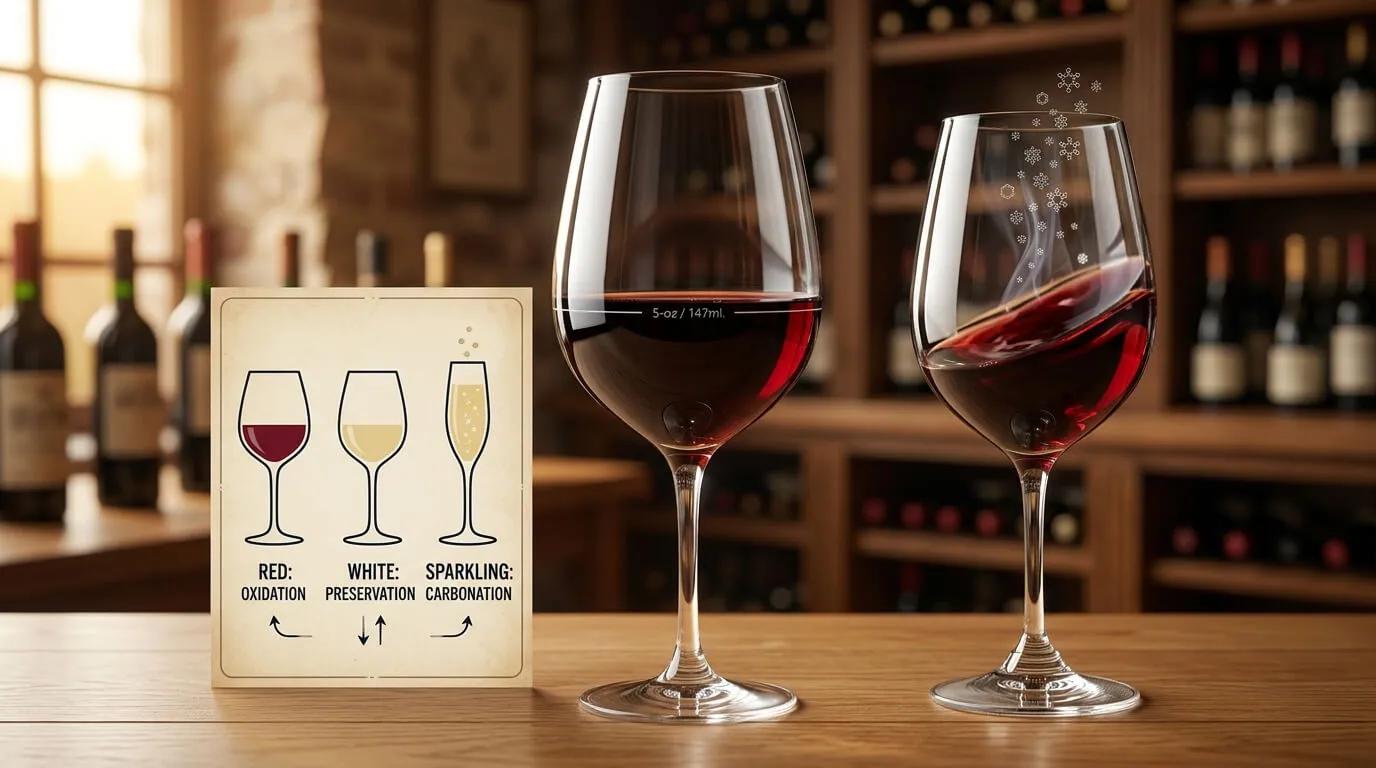
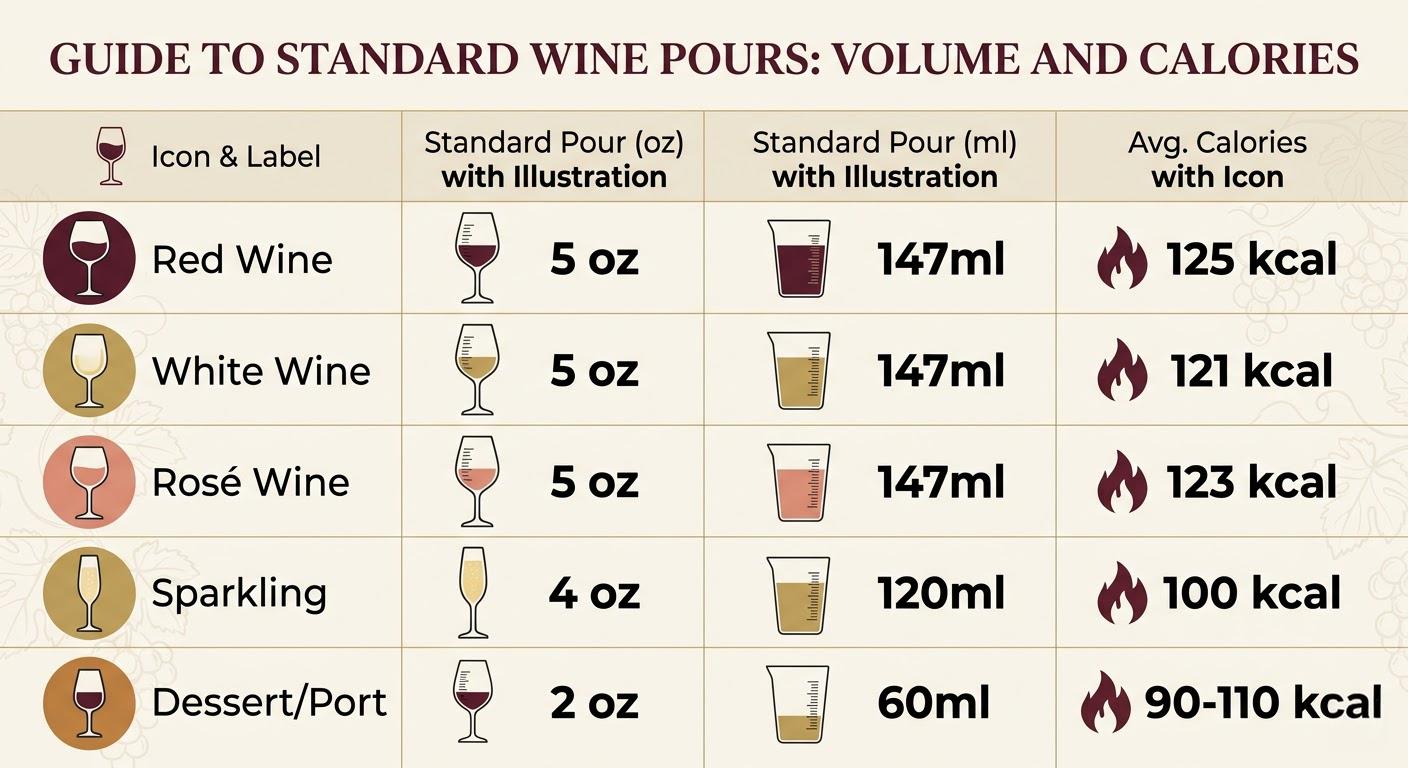
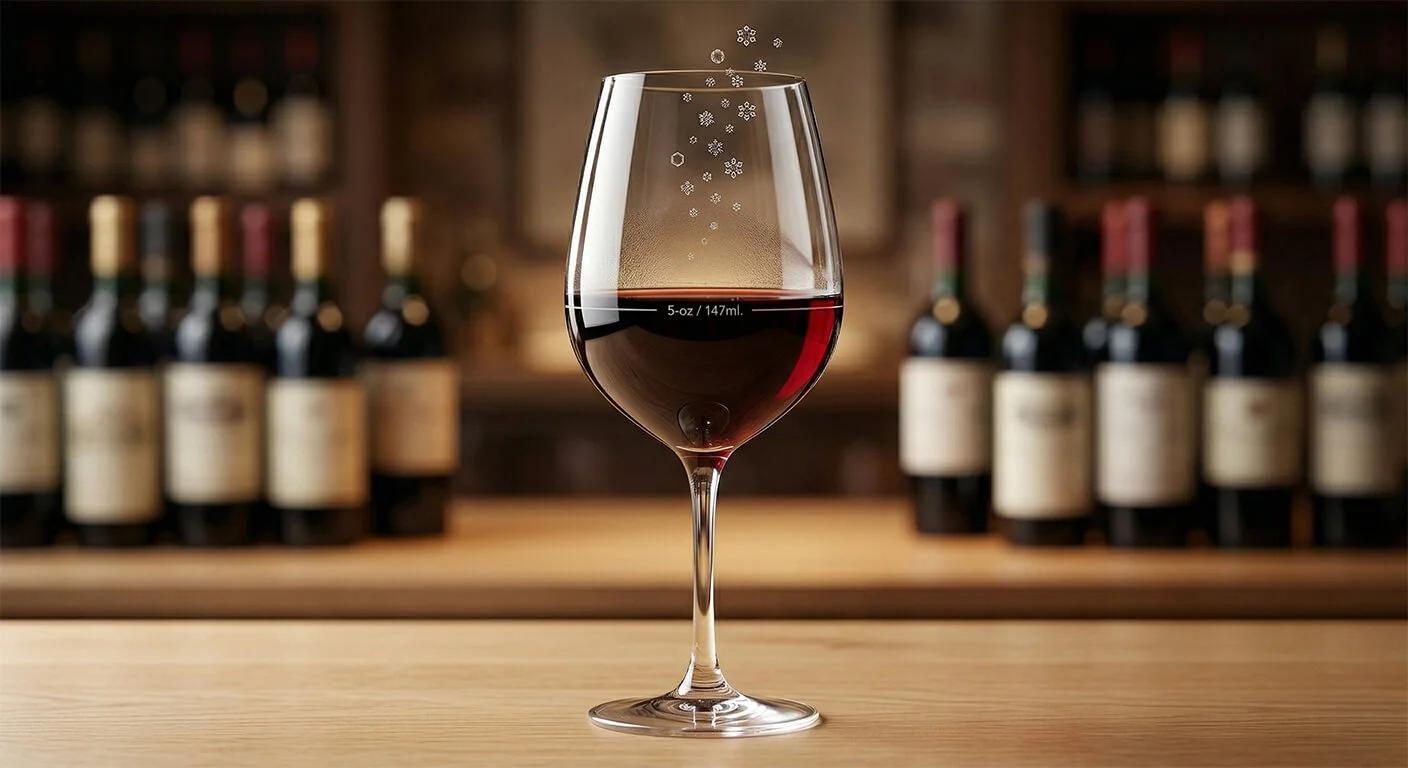
A standard wine pour is 5 ounces / 147ml. This measurement provides approximately five glasses per 750ml bottle. Sticking to this volume ensures enough "headspace" in the glass for delicate aromas to collect, while a standard 5-ounce / 147ml glass of red wine contains roughly 125 calories.
How many ounces in a glass of wine?
Pouring with precision isn't just about etiquette; it’s the mark of a host who truly understands the science of the cellar. While a heavy pour might look generous, that 5-ounce / 147ml standard is actually a functional requirement. It’s designed to leave enough "headspace" in the bowl-the empty air above the liquid-where those delicate aromas can gather and concentrate before they ever reach your nose.
In a professional setting, this 5-ounce / 147ml measurement ensures total consistency, both for the taster’s palate and for managing caloric intake. Most dry table wines sit at roughly the same volume-to-calorie ratio, though the high sugar content in fortified or dessert wines can shift these numbers dramatically. For the home enthusiast, pouring exactly 147ml ensures the wine can breathe without being crowded by the glass walls.
The following table breaks down the technical specifics for standard pours across different varietals:
Understanding these volumes is the foundation of managing a cellar or planning a dinner party. When calculating how many glasses in a bottle of wine, remember to account for the type of wine and any sediment often tucked away in aged reds. A standard bottle of Pinot Noir should yield exactly five glasses, whereas a vintage Port is meant for much smaller, more intense servings.
How to hold a wine glass?
The stem of a wine glass is far more than a design choice; it is a critical piece of sensory engineering. Professionals always grip the glass by the stem-ideally near the base-using just the thumb and first two fingers. This specific grip serves two vital purposes: thermal stability and visual clarity.
Your hands sit at a steady 37°C / 98.6°F, which is much warmer than the ideal serving temperature for any bottle. If you cup the bowl, your body heat transfers directly into the wine. This causes the alcohol to volatilize too quickly, effectively "smothering" the more subtle fruit notes. Holding the stem keeps a chilled Chardonnay or a room-temperature Syrah right in its intended thermal window.
Beyond the temperature, gripping the bowl leaves oils and fingerprints all over the crystal. In the world of sensory science, looking at the wine’s clarity and its "tears" (or legs) is the very first step of an evaluation. Smudges on the glass just get in the way, ruining the visual beauty of a high-end table setting.
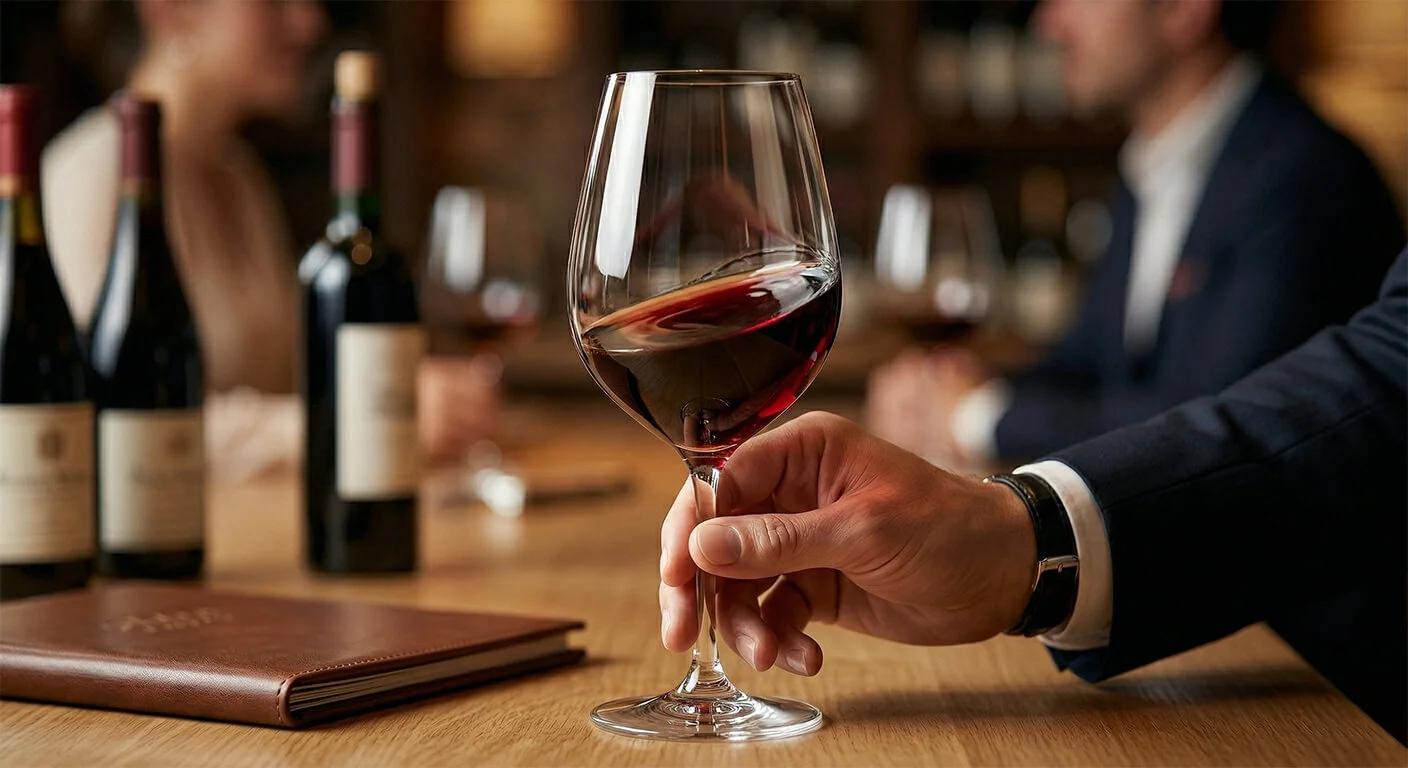
For a visual demonstration on mastering these techniques, we recommend this Wine Folly’s guide on How To Hold A Wine Glass (Like a Pro) [00:19], which explores varied grip styles and explains how a proper hold facilitates the swirling motion necessary to release a wine's full aromatic profile.
What is the difference between red and white wine glasses?
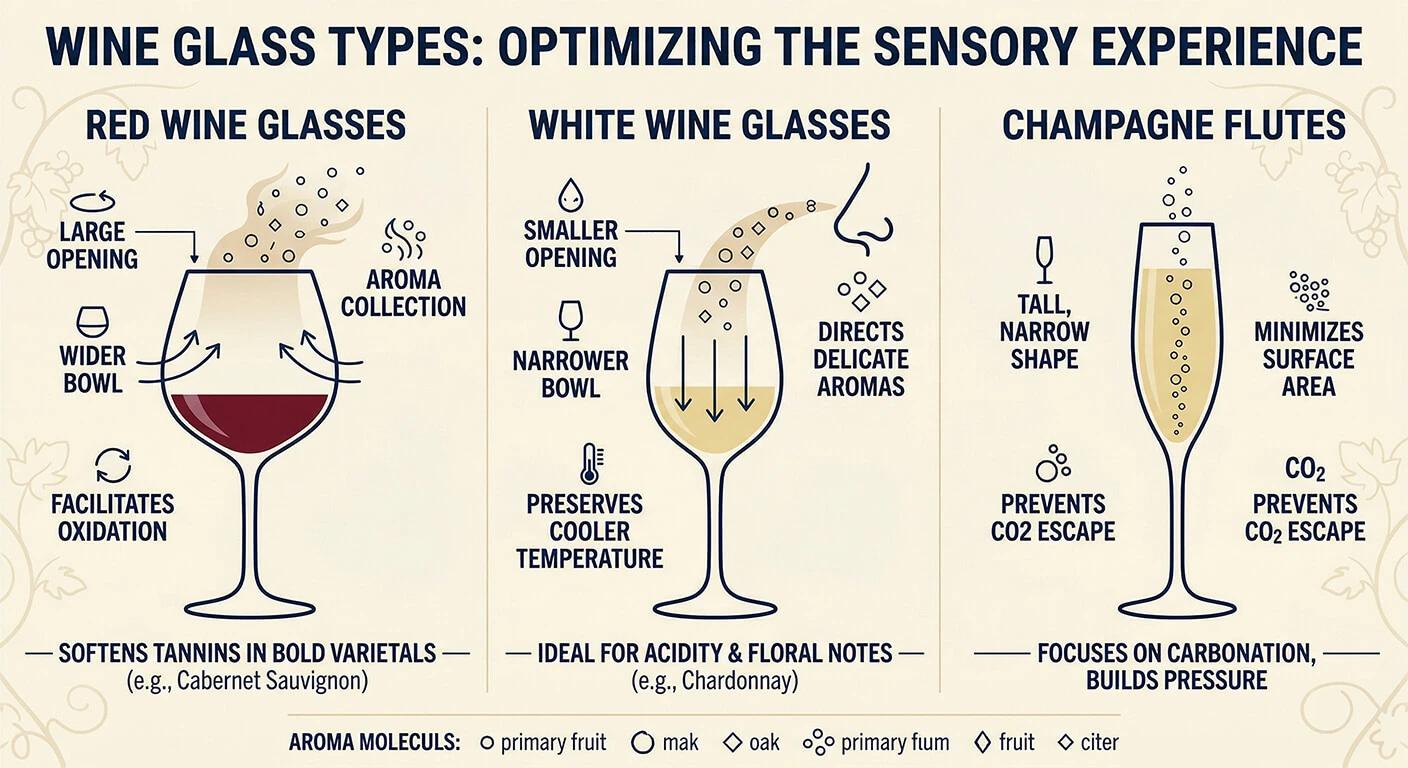
Glass architecture is all about managing the "nose"-how we perceive flavors and aromas through the back of the palate. Red wine glasses are built with a wider bowl and a larger opening. This design encourages oxidation, allowing the ethanol to blow off and softening the aggressive tannins found in bold varietals like Cabernet Sauvignon.
By comparison, white wine glasses are generally smaller and more U-shaped. This compact design does two things: it preserves the wine’s cooler temperature and directs those delicate aromas straight to your olfactory sensors. Since white wines rely on high acidity and floral notes rather than a heavy tannin structure, they don't need the same intense oxygen exposure as a heavy red and white wine selection might.
Champagne flutes represent a completely different branch of engineering. They focus almost entirely on carbonation. The tall, narrow shape keeps the surface area small, which prevents the CO2 from escaping too fast. That said, many modern experts are now moving toward a wider tulip glass for prestige sparkling wines to better catch those complex notes of brioche and yeast.
If you want to dive deeper into the fluid dynamics of these vessels, Wine Folly’s guide to glass shapes offers a fantastic visual look at how geometry changes your perception of flavor. Choosing the right glass isn't about following rules; it’s about unlocking the chemical potential of the bottle you just opened.
The Materials: Crystal vs. Glass
When you’re choosing stemware, the battle between lead-free crystal and standard glass is where quality is won or lost. Crystal is infused with minerals that make it strong enough to be spun or blown incredibly thin. This thinness is essential; a thick, rolled rim creates a "speed bump" that disrupts the flow of wine as it hits your palate.
Crystal also has a microscopic texture-invisible to us-that creates turbulence when you swirl. This agitation helps release aromatic compounds into the headspace. And while many think crystal is too fragile to touch, most modern premium versions are reinforced to be dishwasher safe.
Standard glass is thicker and non-porous. It’s durable for a busy restaurant but far less effective for a serious tasting. For a host who cares about the details, investing in hand-blown crystal is the fastest way to make a mid-tier wine feel like a premium experience. The weight and balance of a high-end glass change how you psychologically perceive the wine’s quality.
Beyond the Static Pour: The Evolution of Kinetic Aeration
We’ve used traditional decanting for centuries to "open up" a wine, but let’s be honest: it’s a slow and imprecise science. Static decanting relies on passive air contact, which can take hours to produce a real change. In our experience, the real future of enology lies in kinetic aeration-using controlled motion to speed up molecular interaction.
The Audacem Aequilibrium is a total paradigm shift in this category. Unlike a standard, static glass, this vessel is built on a 360° Pivot Base. It allows the wine to stay in a state of constant, gentle motion. This oscillatory movement creates a continuous "wave" against the crystal walls, significantly increasing the rate of oxygenation without needing a separate decanter.
Why Oscillatory Movement Beats Traditional Decanting
The engineering of a pivot-based glass is rooted in the laws of fluid dynamics. Swirling a glass manually usually leads to inconsistent motion and uneven aeration. The oscillatory movement of a precision-weighted base, however, ensures a rhythmic, controlled agitation. It breaks the surface tension of the wine much more effectively than just letting it sit.
Plus, this method aerates the wine while you’re actually drinking it. With a traditional decanter, the wine starts oxidizing the moment you pour it in; by the time you reach the last glass, it might be over-exposed. Kinetic aeration in the glass ensures every single sip stays fresh and vibrant.
This also solves the issue of "bottle shock" or those tight tannins you find in young reds. By keeping the wine in a gentle orbit, the Audacem Aequilibrium softens the structure in real-time. It’s a functional tool for the modern enthusiast who loves both the science of the pour and the art of the presentation.
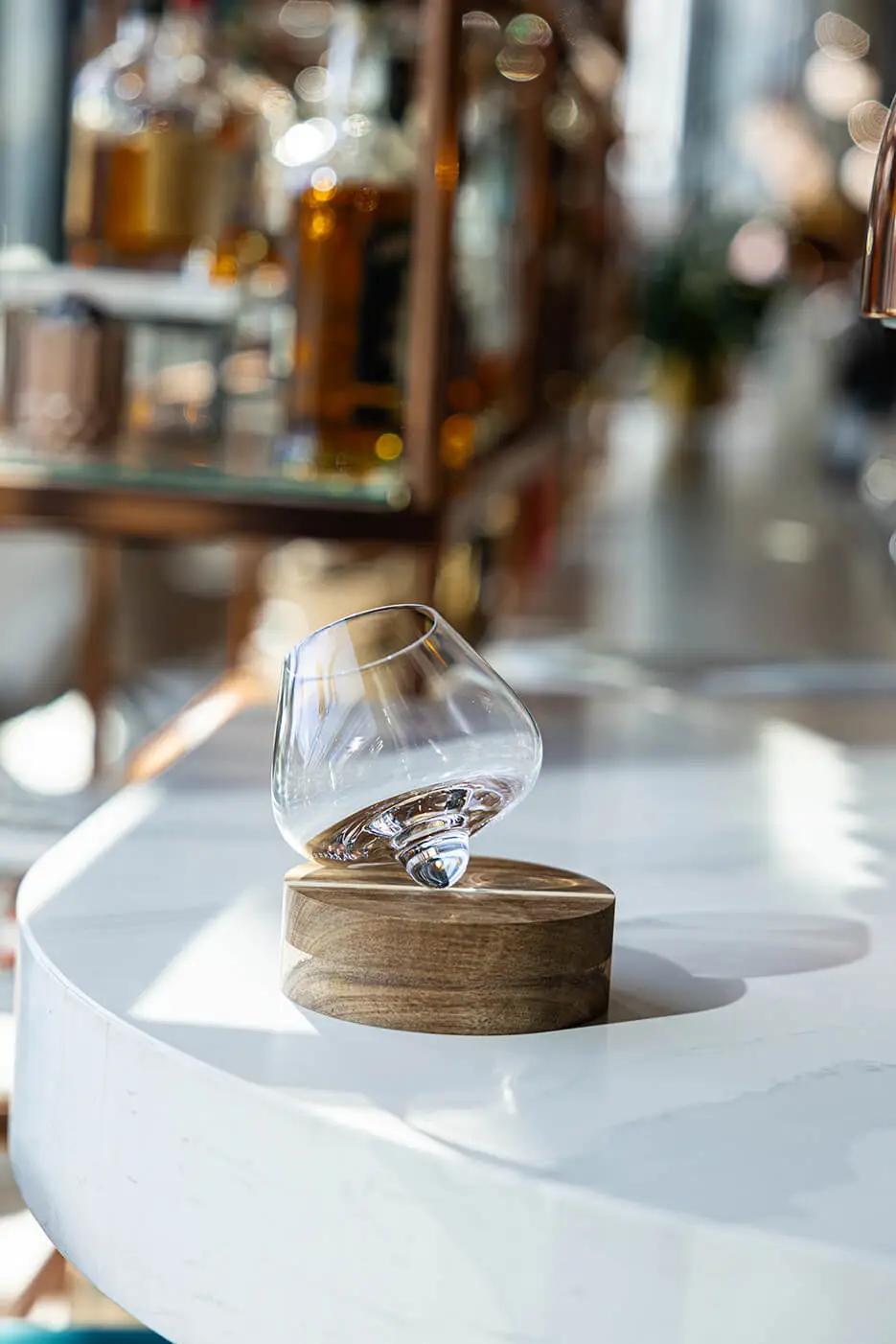
This kinetic energy is the best way to handle ethanol masking. By gently stimulating the liquid, those sharper alcohol vapors move aside, letting the primary fruit and oak notes take center stage. The Audacem Aequilibrium wine glass is built for the enthusiast who expects technical precision from their tools.
Maintaining Your Stemware: The Technical Side
If you want your glasses to be a lifetime investment, maintenance is everything. Even if a brand says they are dishwasher safe, the intense heat of a commercial cycle can eventually etch the crystal. For the best results, we always suggest hand-washing with fragrance-free detergent and a soft microfiber cloth.
If the dishwasher is your only option, make sure the glasses are spaced out so they don't vibrate against each other. Use a dedicated stemware rack and avoid the heated dry cycle, as extreme temperature fluctuations can cause micro-fractures in the material. For more on the long-term care of these tools, the Riedel resources on glassware provide deep insights into the standards held by Master Sommeliers.
Drying is the final, essential step. Use two cloths: one to hold the base and one to polish the bowl. Whatever you do, never "torque" the glass by twisting the base and bowl in opposite directions-that is the number one cause of broken stems. A polished glass isn't just for show; it ensures no leftover soap odors mess with the wine’s profile.
The Path to a Superior Sensory Experience
Learning the physics of wine glasses is the bridge between being a casual drinker and a true connoisseur. The pour, the geometry, and the temperature all have to hit perfectly to create that moment of sensory clarity. Once you grasp the "why" behind the stem and the "how" of the aeration, you’ve unlocked the real potential of your cellar.
Moving from a standard glass to a tool like the Audacem Aequilibrium Glasses is more than just an aesthetic choice. It’s an investment in the science of taste itself. By bringing kinetic aeration into your routine, you move past the limits of a traditional decanter and into a world of pure precision.
Frequently Asked Questions
How many glasses in a bottle of wine?
A standard 750ml bottle holds 25.4 ounces / 750ml. Using the industry-standard 5-ounce / 147ml pour, you get exactly five glasses per bottle. If you're doing a tasting flight with 2-ounce / 59ml pours, you can serve up to 12 guests from a single bottle.
How many calories has a glass of red wine?
How many calories in a glass of red wine? On average, a 5-ounce / 147ml glass of dry red contains 125 calories. That number can climb if the wine has a higher ABV or residual sugar, which you’ll often find in commercial blends.
How many calories in a glass of white wine?
While a red sits at 125, a standard 5-ounce / 147ml glass of white wine usually has around 121 calories. Of course, this depends entirely on the sugar levels and the specific type of wine.
How many ml in a glass of wine?
The standard 5-ounce pour is roughly 147ml. Keeping to this volume ensures there’s enough room in the glass to catch the delicate aromas and enjoy the full profile of the wine.
Are crystal wine glasses dishwasher safe?
Most modern lead-free crystal is marked as dishwasher safe. But to keep them from getting cloudy or breaking, hand-washing with warm water and a specialized cleaner is always the safer bet. Just be sure to avoid high-heat settings.
Ready to Experience Kinetic Aeration?
Experience the future of enology. Elevate your collection with the Audacem Aequilibrium for a superior sensory pour.
Shop the Aequilibrium Collection Now