
What is Whiskey Made Of and How is it Produced?
Whisky is a distilled alcoholic drink. It is made from fermented grain mash. The mash most often uses barley, corn, rye, or wheat.
It is aged in wooden containers, usually charred white oak. The main ingredients are simple. The final flavor depends on the distillation method and local aging conditions.
The word itself derives from the Gaelic uisce beatha, meaning "water of life." These etymological roots reflect its past role as a medicinal tonic.
It later became the global pillar of luxury spirits we know today. To truly appreciate a dram, look past the amber hue. Understand the strict chemistry and centuries-old traditions that guide its creation.
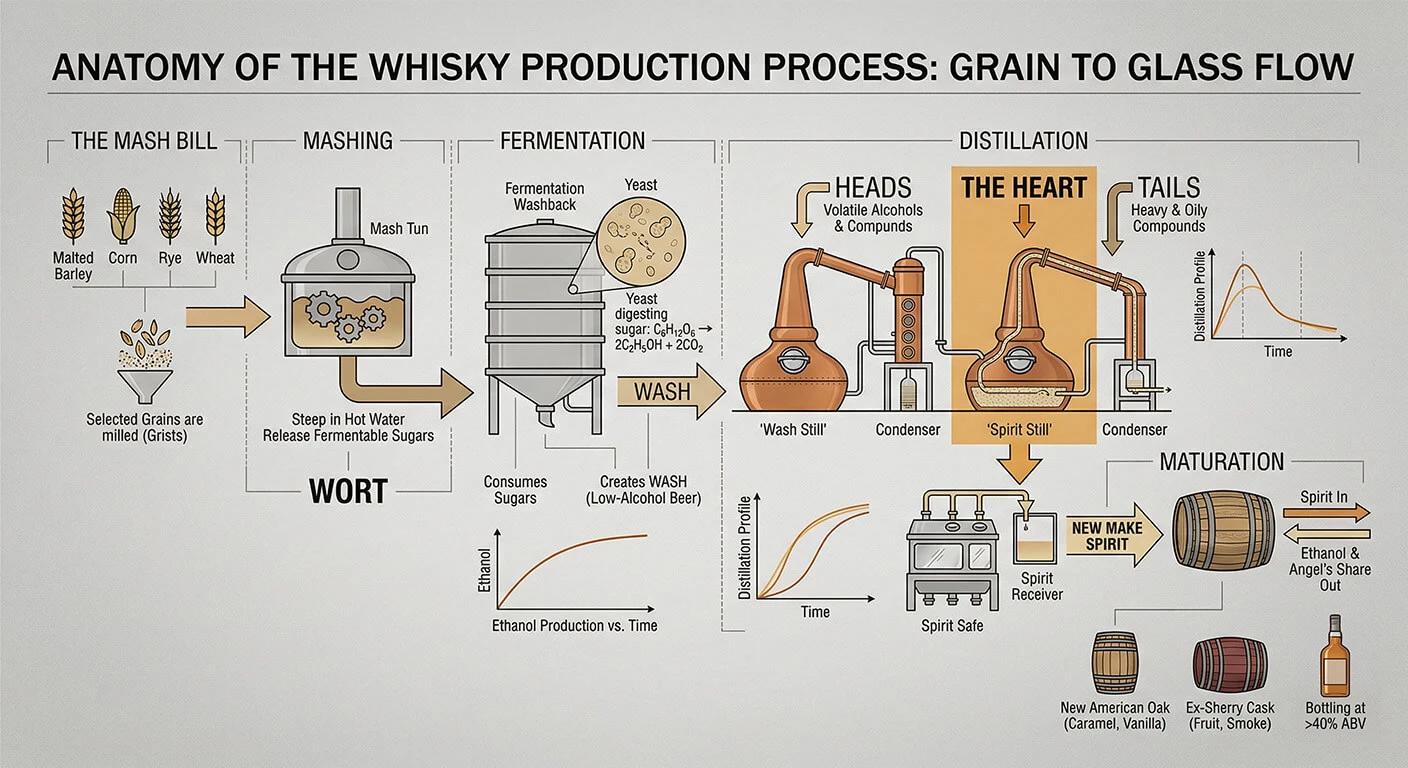
At its most fundamental level, whisky is the result of converting starch into sugar, sugar into alcohol, and alcohol into a refined essence through thermal separation. We categorize the production cycle into four critical stages that define the spirit’s "DNA."
- The Mash Bill: This is the recipe of grains. Single malt whisky must be 100% malted barley, while bourbon whisky requires at least 51% corn. The grain selection dictates the base sweetness or spice.
- Mashing and Fermentation: Grains are steeped in hot water to release fermentable sugars, creating a liquid called "wort." Yeast is introduced to consume these sugars, producing a low-alcohol beer known as "wash."
- Distillation: The wash is heated in copper stills. Because alcohol boils at a lower temperature than water, it evaporates first. It then travels through the still and condenses into a high-proof liquid.
- Maturation: The "new make" spirit is clear and harsh. It gains 60% to 80% of its flavor and 100% of its color from the wood. Interaction with oak, and air moving through the wood’s pores, mellows the ethanol. It also adds vanillin and tannins.
What is the Difference Between Scotch and Whiskey?
The distinction between scotch whisky and other whiskies is a matter of both geography and strict legal mandate. Under the Scotch Whisky Regulations 2009, a spirit cannot be called “Scotch” unless it is made in Scotland. It must be made only from water and malted barley.
While all Scotch is whisky, not all whiskey is Scotch. The spelling often shows the origin. "Whisky" is used by the Scottish, Japanese, and Canadians. "Whiskey" (with an "e") is standard for American and Irish distillers.
The Role of Terroir and Ester Profiles
In our experience, the environment-or terroir-plays a massive role in the chemical composition of the spirit. A Scotch aged in the salty, damp air of Islay will develop a vastly different ester profile than a Bourbon aged in the intense, dry heat of Kentucky.
Scotch Whisky must be aged for a minimum of three years in oak casks.
Bourbon, conversely, must be aged in new charred oak containers, which imparts a much faster infusion of caramel and toasted wood notes compared to the recycled casks often used in Scotland.
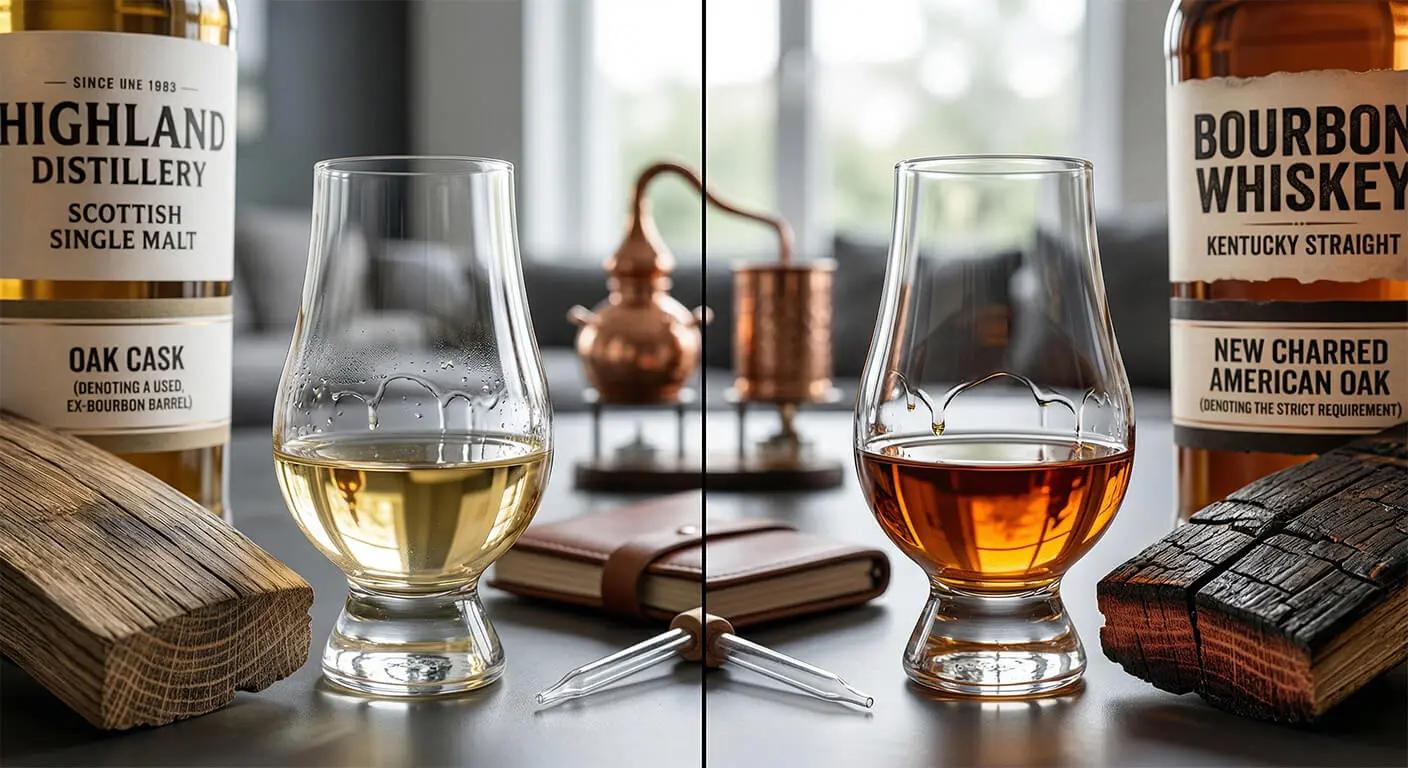
For a practical breakdown of how these legal definitions translate to the palate, we recommend this guide on What is Whiskey vs Scotch vs Bourbon? [00:28], which clarifies the 'umbrella' nature of whiskey and the specific grain requirements that distinguish a sweet, corn-based Bourbon from a malty, barley-driven Scotch.
How Many Calories are in a Whisky Shot?
For the health-conscious host, understanding the nutritional density of spirits is essential. Whisky is a “clean” spirit because it has no fats and very few carbs. Distillation leaves most sugars behind. Most calories come from the alcohol itself.
Spirit TypeProof (Avg)Calories (1.5oz Shot)Scotch Whisky80 - 9297 - 105 kcalBourbon Whisky80 - 10097 - 110 kcalRye Whiskey80 - 9098 - 105 kcalCanadian Whisky8097 kcal
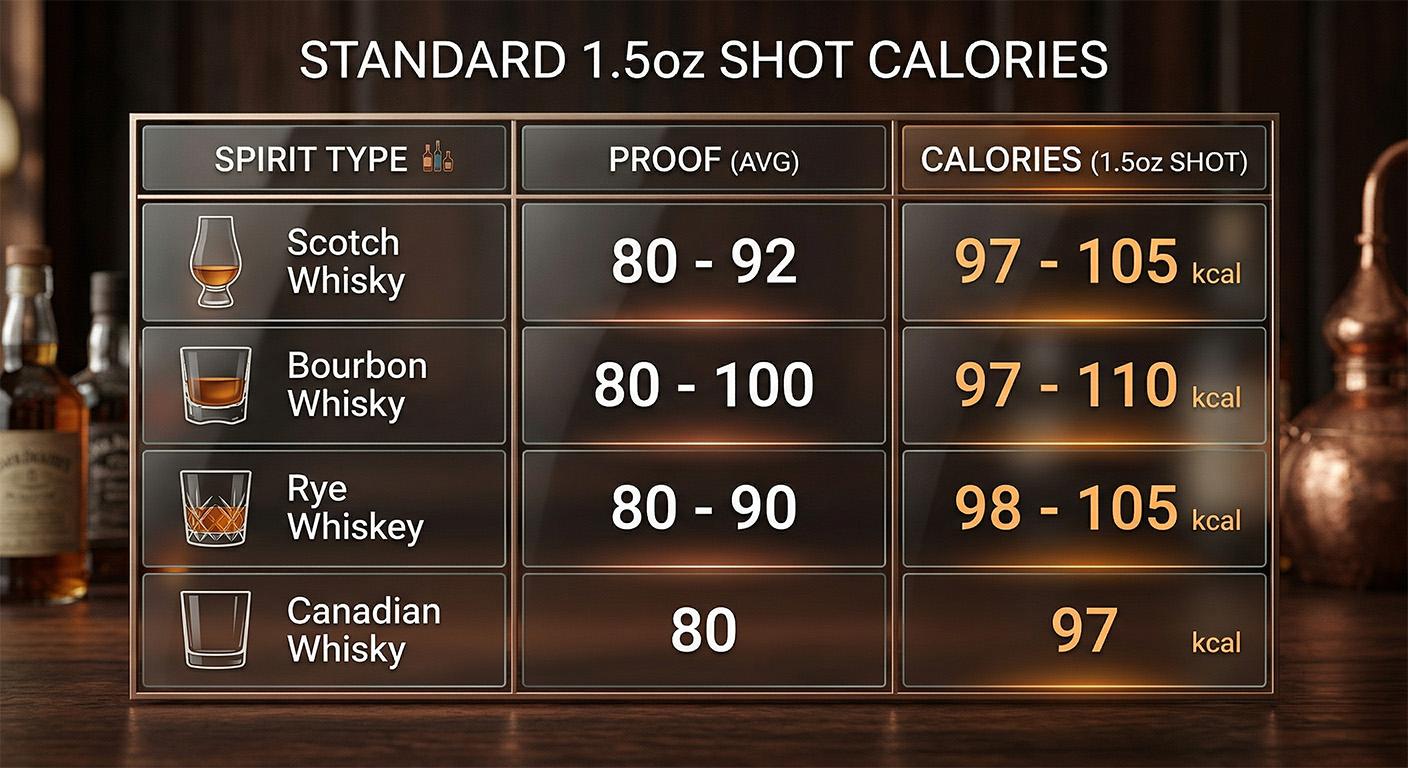
While the differences are marginal, higher-proof "Cask Strength" expressions will naturally carry a higher caloric load. We have found that the spirit’s purity makes it a top choice. It suits those avoiding hidden sugars in wine or beer.
The Physics of the Glass: How Modern Innovation Unlocks Aroma
The traditional "neat" pour in a static glass often fails to do justice to the complexity of the spirit. When we shift from making products to enjoying them, the vessel becomes the connoisseur’s most important tool.
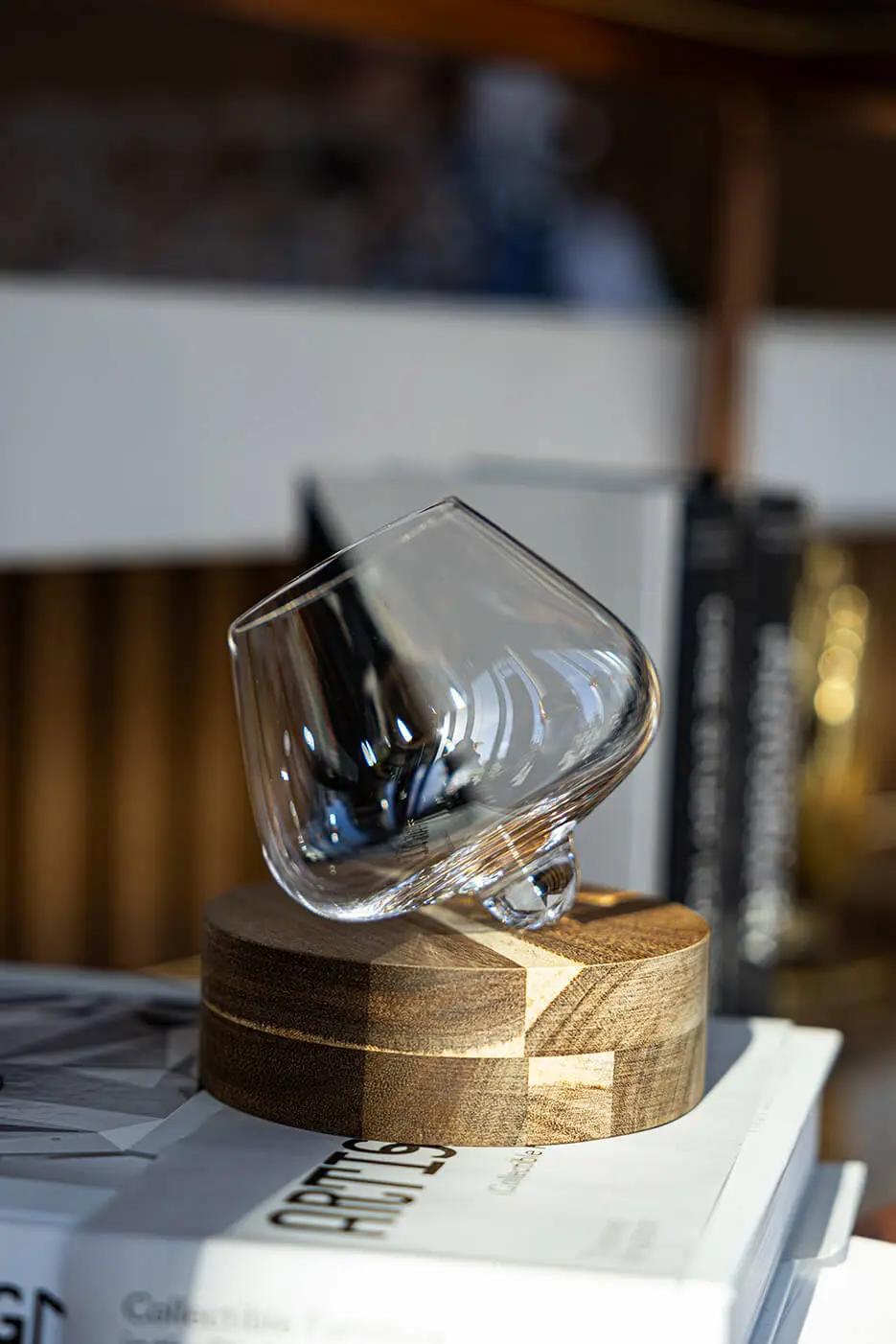
The Aequilibrium Spirit Glass represents a paradigm shift in how we interact with high-proof spirits. Its application as a Tasting Vessel for whisky is profound. The hand-blown, lead-free crystal is shaped to concentrate aromatics, but the true innovation lies in its 360° Pivot Base.
Why Oscillatory Movement is Essential for High-ABV Spirits
High-proof whiskies, particularly those exceeding 46% ABV, suffer from a phenomenon known as "alcohol burn." This can happen when strong ethanol vapors overwhelm your nose. They can hide the delicate floral or fruity notes in Macallan 12. They can also hide the complex notes in a rye.
The Kinetic Orbit on Aequilibrium’s pivot base lets users gently swirl the spirit with a finger flick. This consistent, oscillatory movement serves a dual chemical purpose:
- Accelerated Aeration: It increases the surface area contact with oxygen, breaking the surface tension of the liquid.
- Molecular Release: It forces heavy molecules, like Ardbeg’s peat smoke or Buffalo Trace’s deep vanillins, to rise. This lets them bypass lighter, more volatile ethanol molecules.
By keeping the spirit moving, you stop ethanol from pooling at the rim. This helps your first scent be grain and wood, not an alcohol sting.
Technical Standards and Global Regulations
To protect the category, groups like the Scotch Whisky Association (SWA) and the U.S. TTB enforce strict quality rules. For example, the SWA defines Scotch as a spirit bottled at least 40% ABV.
The chemistry here is fascinating. At lower concentrations, essential oils that add flavor can fall out of solution. This can make the liquid look cloudy and unappealing.
This is why many commercial brands use chill filtration. We prefer non-chill filtered expressions for better mouthfeel and texture.
As explained in Britannica’s entry on distillation physics, separating the "heads" and "tails" from the "heart" is precise. The "heads" contain toxic alcohols, and the "tails" contain heavy, oily alcohols. The "heart" is the drinkable spirit. A master distiller must decide exactly when to make these "cuts" to ensure the final product is both safe and flavorful.
FAQ: Understanding the Essentials
When was whiskey invented?
The first written record of distillation in Scotland dates to 1494. It appears in the Exchequer Rolls. They note that "eight bolls of malt" were given to Friar John Cor. He used it to make aqua vitae. However, many believe Irish monks brought distillation knowledge from the Mediterranean earlier, likely in the 12th century.
What does whiskey taste like?
The flavor profile is a spectrum. Bourbon tends to be sweet with notes of vanilla, caramel, and corn. Scotch can range from light and grassy (Lowlands) to intensely smoky and medicinal (Islay). Rye offers a spicy, peppery kick, while Japanese whisky you cekebrate for its balance and floral refinement.
Is scotch a whiskey?
Yes. All Scotch is whisky, but you have to produce it in Scotland and follow the SWA's strict guidelines regarding ingredients and aging.
Elevate the Sensory Experience
Move beyond the static pour. Use Aequilibrium glasses to unlock hidden aromas through the science of kinetic orbit.
Shop the Aequilibrium Glasses